Desert Online General Trading LLC
Dubai, United Arab Emirates
Desert Online General Trading LLC
Dubai, United Arab Emirates


Full description not available



G**D
A complex book which is simply outstanding
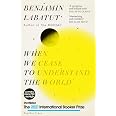
This book was longlisted for the 2021 International Booker Prize, one of two books by Pushkin Press – who publish “the world’s best stories, to be read and read again.”The book starts with a almost entirely non-fictional chapter “Prussian Blue”, which has heavy overlap with Sebald's "Rings of Saturn" (for example starting with silkworms) and takes in (largely via the German scientist, Noble Prize winner but also alleged war criminal) Fritz Haber such ideas as German end WW2 mass suicides, artifical pigmentation, WW1 gas attacks (including Hitler as a victim), the amphetamine dependency of the Nazi war machine, Zyklon-B, nitrogen-based fertilisers both natural/historic and artificial (via the synthesis of ammonia), poisons and so on. The author has the section contains only one fictional paragraph which I think could be the last one – where Haber’s true lack of remorse for his War actions (which in WW1 even lead to the suicide of his wife) was said to instead have regretted his role in allowing the risk of fertiliser enhanced nature to take over the world.The second chapter concentrates on Karl Schwarzschild and his remarkable work on solving Einstein’s General Relativity Equations while posted on the Russian front (my pun – he could have been said to have solved the Field Equations while in the field), and despite suffering from a completely debilitating genetic auto-immune disease which may have been triggered by a gas attack (linking of course to the first chapter). Symbolically though the many different ideas in the chapter are inexorably drawn to one central idea Schwarzschild first originated – the Black Hole. A physical singularity which is a necessary consequence of the mathematical equations of space-time but which is difficult if not impossible for us to really conceive of in any conventional terms; and something which at first – and particularly to Einstein - seemed a paradox, an anomaly, a consequence of either over-simplification or of applying a formula beyond the limits and bounds where it can be correctly parameterised – but which in science has gradually accepted as being real and fundamental to our understanding of physics. The even greater power in this chapter though is the corollary drawn (I am not clear if really by Schwarzschild or by Schwarzschild interpreted by Labatut that human psyche (if sufficiently warped and concentrated on a single purpose) could perhaps produce an equally terrible singularity “a black sun dawning over the horizon, capable of engulfing the entire world”, something even more terrible than WW1 – which is of course a prophecy of the rise of Nazi-ism.The third chapter in my view was the weakest – about the Japanese mathematician Mochizuki and his predecessor the master of abstraction Alexander Grothendieck. Thematically the chapter fits well – with the idea of mathematical concepts which while seemingly true seem impossible for most people to understand, and the idea that at the centre (for the few who do comprehend them) is something terrible and dangerous; but I just did not feel it came to life as well as the other chapters or had particularly strong mathematical descriptions (a quick Wiki look up helped me grasp A+B = C much better than the chapter). Here I think a largely factual basis has a number of fictional elements (particularly I think around Grothendieck’s last days).The fourth section is the longest – by now the gradual blending of fiction and fact has come to something of a balance.The factual scaffolding of this section is the two rival schools of interpretation of Quantum mechanics – Erwin Schrödinger and his Uncertainty Principle, and Werner Heisenberg and his Copenhagen interpretation as developed with his mentor Niels Bohr - rival schools which were not just about different mathematical formulations but about different mathematical/physical worldviews as explained in a preface “while Schrödinger had needed only a single equation to describe virtually the whole of modern chemistry and physics, Heisenberg’s ideas and formulae were exceptionally abstract, philosophically revolutionary, and so dreadfully complex” – further Heisenberg we are told (in a return to one of the author’s key themes) had “glimpsed a dark nucleus at the heart of things”.Much of the rest of this section is then a fictional imagining of (quoting the author’s own description of this part) “the conditions under which each one of them had their particular epiphany”. Schrödinger’s sensuous time on a ski resort, his “lover’s …..pearls inside his ears to concentrate”, Heisenberg’s solitary time with horrendous hayfever on Heglioland – scene of course post-war of one of the largest ever man-made explosions, a non-nuclear and peace time explosion by the victorious British of surplus armaments. Now of course (partly my link partly the author’s) had Heisenberg not failed in his development of the German WW2 Atomic Weapons programme (in contrast to Haber’s success in the German WW1 Chemical Weapons programme) a very different explosion (nuclear, war-time, by the Germans) may have taken place instead and the history of the World been very different.These fictional sections – Heisenberg’s in particular, mix dreams and visions with quantum physics – returning to another recurring theme of the book, that many great mathematical and mathematical physics discoveries (particularly those relating to the mysterious world of higher mathematics and quantum mechanics) begin with a literally imaginative and visionary leap beyond conventional thinking with then the harder work being to put the mathematical framework behind it (this very idea of a factual scaffolding holding up but also inspired by an imaginative piece also mirroring the very structure of this fourth section).And one of the key visions that Heisenberg has ends in a nightmarishy way – when he later meets with Bohr he tells him everything that lead up to his developments of his quantum theory other than this part."but for a strange reason he could explain neither to himself nor to Bohr, for it was one he would not understand until decades later, he was incapable of confessing his vision of the dead baby at his feet, or the thousands of figures who had surrounded him in the forest, as if wishing to warn him of something, before they were carbonized in an instant by that flash of blind light."And we of course see know that this vision is linked to and maybe even acted as a warning to Heisenberg not to contemplate the German Atomic weapons programme. I was of course reminder of Michael Frayn’s brilliant play “Copenhagen” which tells and retells the story of Heisenberg and Bohr’s meeting in 1941 and what it meant for both the US and German programmes.The last chapter rounds the book off neatly – a first party and entirely fictional account, where the narrator, in Chile, meets a night-time gardener, an ex-mathematican and the two discuss many of the ideas in earlier chapters and the book’s overall themes.The book is translated (extremely naturally I have to say) by Adrian Nathan WestA brilliant book.
B**M
Admirable and educational if not wholly enjoyable
I'm not surprised that this book was shortlisted for a major literary prize - I'm more surprised that it didn't win. It's exactly the sort of complex, hard-to-define book that stands out and you feel the ambition and originality of the author should be rewarded. It's closer to a collection of short stories than novels, each focussing on one or more great physicists of the 20th century. It explains both their scientific ideas and their personal lives, in a way that is extremely (surprisingly) readable. It flows freely, moving from one physicist to another seamlessly, not allowing time for the reader to get bored.The writing blends fiction and non-fiction - something I generally dislike although here I have to admit it makes a compelling read out of the most impenetrable subject matter. I always feel a bit cheated though by fiction about the lives of real people, unless it is clearer than this book in the acknowledgements/introduction about where the boundaries lie. Were the lives of these physicists as extraordinary as the book suggests - it's not beyond possibility that they were. But we know at least some of it is made up and I don't have the time or inclination to do the research to find out what.Perhaps the most extraordinary thing about this work is how it takes the most difficult and abstract concepts in physics - things that even the professors themselves struggle to comprehend - and explains them in a way that is (just about) understandable at a basic level. I'd heard of some of these things 'relativity', 'quantum physics', 'the uncertainty principle', but I certainly couldn't have told you what any of them actually referred to. Whereas now I have at least a vague idea. By tying up the work with the personal struggles of the scientists and the toll their work took on them, the technical detail sticks better in the mind. It would be a worthwhile read for A-level physics students for that reason alone.Overall I found this an admirable and educational book, even though not exactly an enjoyable one. Credit should go to the translator as well as the author, as I'd imagine it can't have been easy to translate with all the technical concepts and the need to keep the flowing, conversational style intact. I would recommend it to anyone with a curious mind or who would like to understand physics a bit better or with an interest in 20th century European history. It does require a fair amount of concentration, more than the average book, so choose a time to read it when you can give it full attention (I started trying to read it on a flight but gave up until I got home).
B**E
Good book
Bought for my son
Trustpilot
2 months ago
1 week ago
2 months ago
3 days ago