Desert Online General Trading LLC
Dubai, United Arab Emirates
Desert Online General Trading LLC
Dubai, United Arab Emirates
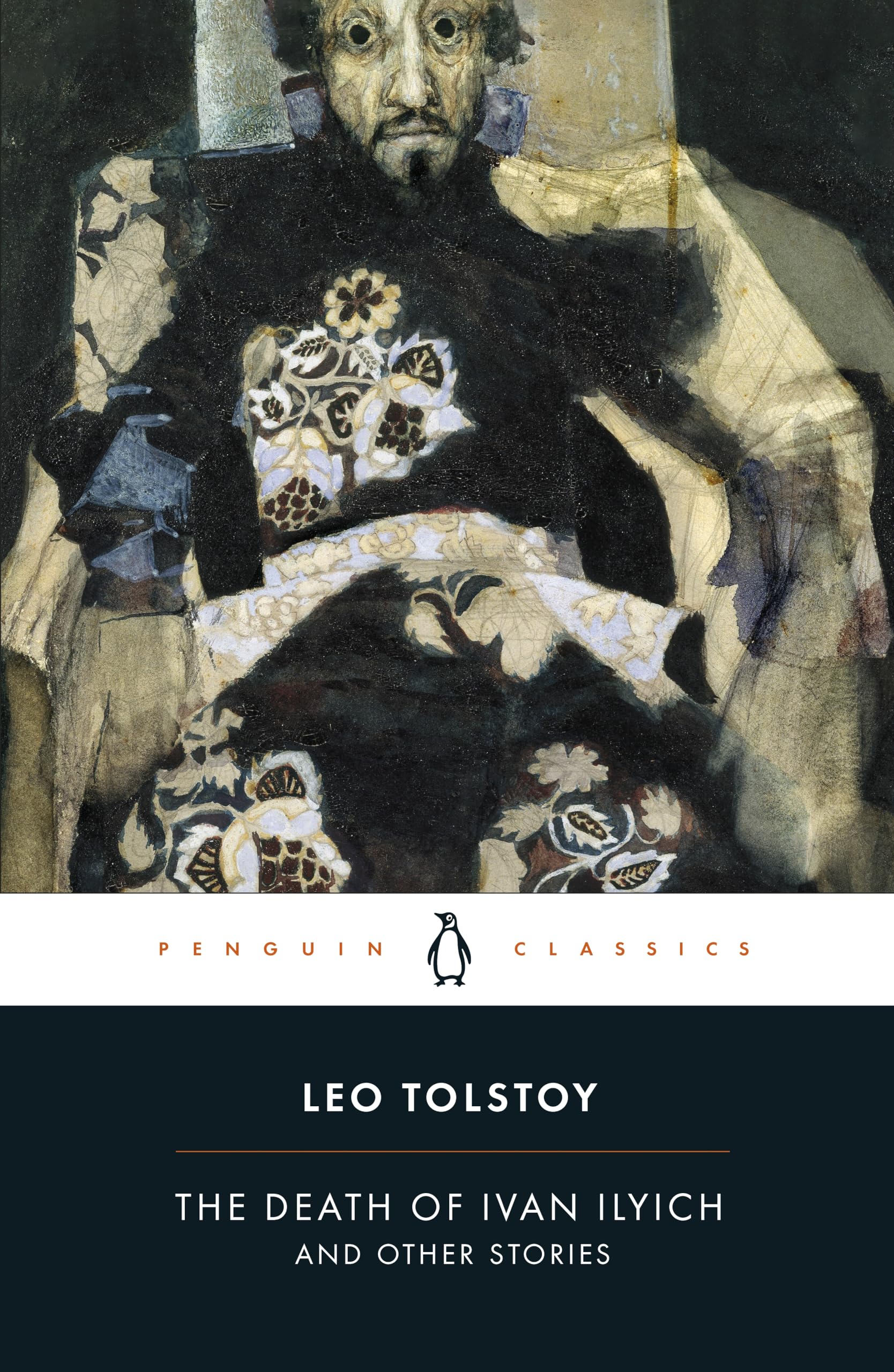
Full description not available
A**U
Five Stars
very good
W**D
Powerful stuff
I discovered this book after enjoying ‘War and Peace’ and ‘Anna Karenina’. It would be unfair to compare these stories to the two epics. They are shorter so the characters are less developed. Therefore, I didn’t feel as ‘close’ to them compared to the likes of Pierre Bezukhov, Natasha Rostova, Konstantin Levin et al. which was a standout quality of Tolstoy’s epics. All in all, I found the stories enjoyable, albeit some more than others. (Note – this is *my* impression. Others, I am sure, will have different experiences!)The meaning of life was the dominant theme that I took away from ‘War and Peace’ and ‘Anna Karenina’. These stories, on the other hand, reflect more on the meaning of death. I know what you’re thinking…it all sounds a little melancholy and heavy-going for an evening read before bed. The stories certainly aren’t jolly. But I was surprised about how accessibly death was discussed and portrayed. The language is simple and light (albeit heavy in meaning), witty at times, giving a colourful, almost poetic, portrayal of mortality. It reminded me of Shakespeare’s Richard II; death can be explored so alluringly! Whether it’s disease, suicide, battle or murder, the stories (mostly) gripped me.‘The Death of Ivan Ilyich’ impressed me the most. How Tolstoy gets inside the head of a successful bureaucrat as he is suddenly struck with disease is masterful. The sentences gradually become shorter and blunter as he panics and weakens. The fascinating thought-process of the character also made this the most philosophical regarding the meaning of death. What is power and success in life when it can do nothing to protect you against mortality? The sarcasm and ridicule shown towards the numerous bigoted doctors who attempt to diagnose his condition is also interesting – is it satire? Heartbreak? Both. The story’s complex of emotions is grand.‘The Forged Coupon’ was also impressive. Again, the story is so simple – quite unlike Tolstoy – yet so powerful, explaining how a schoolboy’s forged coupon (i.e. cheque) goes onto ruin the lives in ever worsening ways of a whole host of characters, introduced sequentially, after he purchases something with it in a shop.‘Polikushka’ was also a moving tale. The mistress of a manor must decide which peasants are to be conscripted. A peasant seeks to mend his drunken, thieving ways by agreeing to collect some money in a nearby town for the mistress who has a soft spot for him. He loses – by accident – the money just as his task nears completion. Tolstoy generates such sympathy towards him as his life begins to capsize.Perhaps I got the most out of these three stories because they are the longer of the collection (roughly 70 pages each), giving Tolstoy more time to develop the scenes and emotions. I got the least from ‘The Raid’ and ‘Woodfelling’ although Tolstoy’s past experiences of army life clearly shine through in these short military stories.Overall, while I can’t compare these stories in power to Tolstoy’s two epic novels , I nevertheless left reading each story – especially ‘Ivan Ilyich’ – with a strong moral message, a quality which makes Tolstoy’s works shine.
Trustpilot
1 week ago
1 month ago
1 week ago
5 days ago