
DOWNLOAD THE APP


Customer Services
Copyright © 2025 Desertcart Holdings Limited
DOWNLOAD THE APP
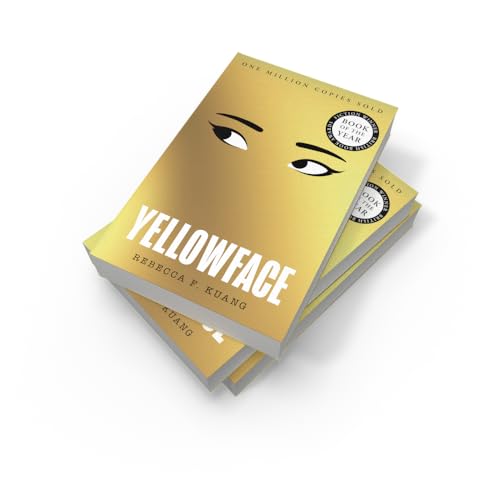
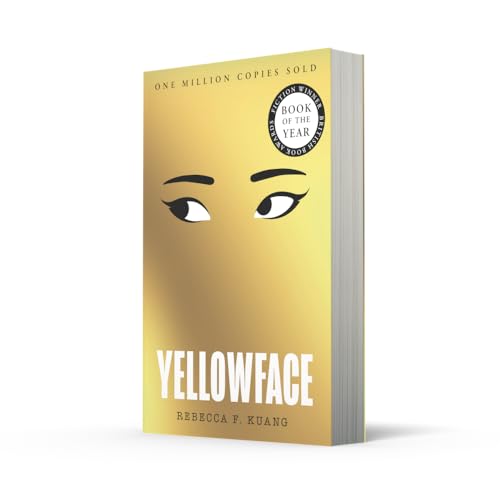
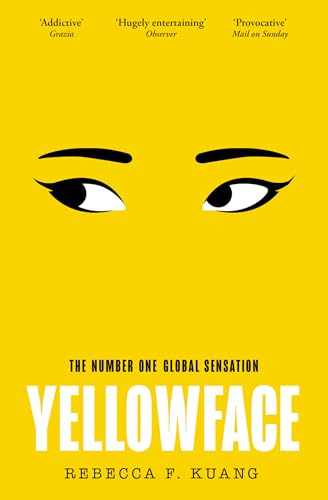
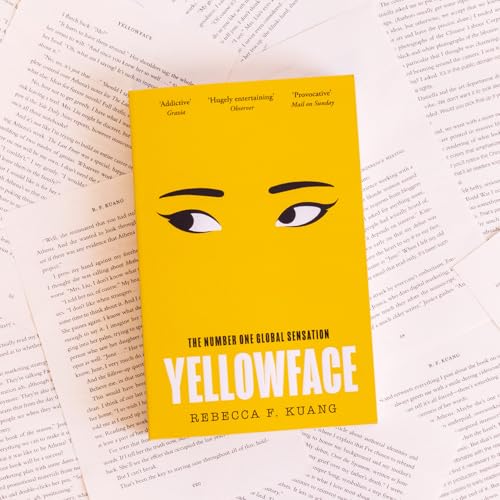


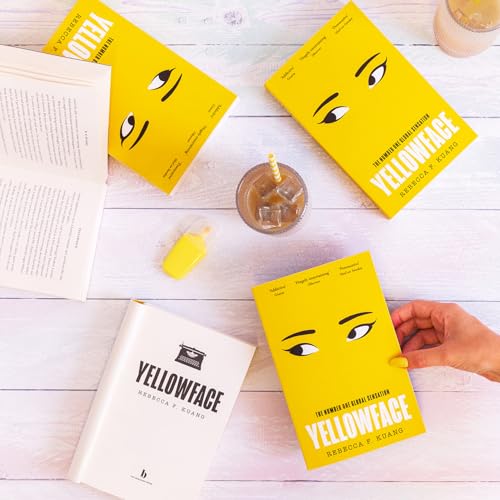


Yellowface: The instant #1 Sunday Times bestseller and Reese Witherspoon Book Club pick from author R.F. Kuang (colour may vary) : Kuang, Rebecca F: desertcart.co.uk: Books Review: The state of the world in 2020s - If you are over 50, read my take on this. If you are a millenial, please skip to the next review. This book gave me an insight into the ways and words of those aged between 20 and 40. Firstly, they are still as critical as any past generation, they just do not say it to your face (the protagonist herself did this to some young students and was accused of bullying). They do it via Twitter (which dates the book (no bad thing, making it a fictional history of the time) as it is now called X). Secondly, they seem less chilled and more easily offended. The Twitter exchanges were so brutal, so cruel, I was horrified. It was tough to read. I and my friends of the same age would never have said those things to somebody's face, or in an email, or via a letter. But it seems ok to do now via an anonymous account on Twitter? Why not just let people be? Why be so harsh to complete strangers? Does it matter? Thirdly, the language of the 2020s is something us oldies will never get, so please those aged below 40 stop cancelling us for it. I learnt what a cishet is for example, this is used twice in the book. I will make no comment on this. As for the book, it moves very fast. It seems to be written to become a Netflix series, especially the drama at the end on the staircase, Its standard of writing is very, well standard, almost too easy to read - but I guess at least it is not overly hard to read like that of the dead writer was apparently. The ending feels like the author was not sure what the politically correct way to end it was, so it is a mish-mash of two ideas - it does not make a stand either way. I guess that might be a good thing in these divisive times. Anyway, this is the opinion of someone who is no longer relevant, so no hate please! It was that all said very entertaining, finished it in 3 days, so this is a good holiday read rather than one to savour high-brow literature from. Pop fiction. Review: Scarily plausible - are you sure you want to be a writer? - I can see why this has been a book that has divided readers. I think, if you work in or around the publishing industry, you will appreciate some elements of the story more than this who remain blissfully unaware on the outside of all that goes on. Then again, if you pay even the remotest bit of attention to what goes on in the sordid world of social media then you can perhaps understand many elements of this story. After all there have been many careers made, and ruined, at the hands of social media keyboard warriors, and so many aspects of this story, so many of the key themes, are fresh, current and, for some, still very raw. You don't need to be in publishing to recognise dogpiling when you see it, or to understand the negative side of 'fame'. Or maybe, in this case, infamy. For me, kind of on the outside as a reader, but not entirely, I really enjoyed this book. Understood some of what the author was portraying, laughed along in all the right (wrong) places, became infuriated in the right ones too, and recognised this story for what it is. A warts an all portrayal of an industry that is far more complex, and cut throat, than many people might realise. Exaggerated for effect? Possibly. But behind every exaggeration is a seed of truth. For most authors, who don't have legacy backlist and a longstanding reputation and fan base to hang their hat on, you live and die by your last sales total, dropped from the schedule the moment your figures don't meet expectations, or when there is a hint of a scandal that, even by the best spin doctor, cannot be exploited for commercial gain. And that, for most, is a very hard place to exist. This is the story of June Hayward, and author whose only title had a mediocre reception at best, and who is struggling to find that next big story that will see her gain the adoration she feels she deserves. She is best friends with Athena Liu whose fortunes have proven far greater than June's. When a very unfortunate foodie incident (yes really) sees Athena meet a premature end, June is left with a dilemma. She has in her possession the only copy of Athena's very final manuscript. Will she do the right thing and hand it over to Athena's estate? Or will she take advantage of the fact that no-one else knows about the book, and use it to further her own career? Now, if she did the right thing, this would be a very short book. In fairness to her, she does rewrite huge elements of the text, but the core -the inspiration, the tone, the story - still belongs to Athena. When her agent, and a prominent Indie publisher, snap up the book, it's too late to turn back, and what follows is a mixture of karma, pride, arrogance and revenge, a sorry tale that escalates beyond anything June could ever have foreseen. The opening of this book is slower in pace as the characters and the central thread of the story is established. If you come expecting big thrills and high stakes tension, you'll be bitterly disappointed. If anything the book initially mirrors the slow and painstaking process of creating that perfect story to begin with. The story is told from June's perspective, so from the outset we get a very skewed view of events, everything geared towards her own justification for her actions and that mental back and forth between the rights and wrongs of her decisions really has an alarming feeling of authenticity. A moral dilemma indeed, but the promise, and presence, of a healthy advance soon provides a balm to sooth June's conscience. I can't say I liked June - I didn't much like any of the characters to be honest with you, other than probably Athena's mother. But it's not important for this book to succeed that we like any of them. In fact, it feels almost the direct opposite is true. The story that June 'enhances' is one that Athena was ethically well placed to write, one to which June has little to no connection - the story of Chinese labourers used for the war effort. It opens up discussion and consideration, not only in the book but on a wider scales, about cultural appropriation. Is it okay for a white American woman to write a book about Chinese immigrants as long as the portrayal is sympathetic and authentic, or is it simply exploitation and something that Chinese-American readers can feel rightfully outraged about. Of course, June, and her publisher, would argue the former, but the use of an ethnically ambiguous name somewhat muddies the waters, allowing readers to make assumptions about the author that may not be true. And there are other elements that June allows to happen that start to create conflict in an already contentious situation. Plagiarism, or manuscript theft, aside, This is a very complex situation, not helped by June's defensiveness, something else that creates a rift that may yet prove to be her undoing. So many elements of this book - the cultural appropriation argument is just a drop in the ocean - ring true. The dogpiling on social media, the needs of certain characters to rip apart June for nothing more than their own smug satisfaction, felt almost uncomfortably true to life. I've seen it myself - active campaigns against a particular author or celebrity because they shared an opinion that differs from someone else's. There is, at the end of the day, no defending June's initial actions, but there is no defending the campaign against her either. The author's exploration of the impact of social media on mental health, that constant nagging need to see what is being said about you despite knowing that it will not be good for your soul, is so en-pointe that I'm sure for many author's it will cut to the bone. If the 'antagonist' (and there is a very loosely defined antagonist in this book) could claim their actions are coming entirely from the moral high ground then I might have felt more sympathy for them. But they weren't and I didn't. They acted in a way as indefensible as June. In fact, I kind of despised them a little. More than a little. Quite a lot actually. There is a comedic element to this story too, and for anyone in the know you will find yourself smiling a grudging smile. References to an author's nemesis "GoodReads" made me chuckle. It does have a reputation as being a cesspit for reviewers who have no filter and who delight in slamming books for nothing more than their satisfaction. It's a site where you can even leave a one star review for a book that isn't even available in proof form, which some folks seem to delight in doing. I know - call me a hypocrite - I post there too, but largely as a way to counter the negativity with a little bit of light. But, debates about review sites aside, there are many other moments which made me smile. Many folks would be forgiven for thinking that authors are loaded, living the dream on yacht's and in luxury apartments around the globe. The height of June's ambition from spending her royalties is being able to afford an Ikea sofa to match the rest of her recently acquired Ikea furniture. I'm saying nothing more ... Funny yet sometimes dark, this is a fresh, beautifully written foray into the mind of a very troubled, young, author. I really enjoyed this book. I can see why many authors enjoyed this too. Maybe it is a little bit conflated, with tongue in cheek exaggeration, but there is so much of this book that feels scarily authentic that there's a danger Rebecca Kuang will have people thinking twice about pursuing a career as an author. Or maybe that was the point. After all, less competition can only be a good things for sales, right?


| Best Sellers Rank | 1,105 in Books ( See Top 100 in Books ) 9 in Satires 10 in Parodies (Books) 35 in Cultural Heritage Fiction |
| Customer reviews | 3.7 3.7 out of 5 stars (66,412) |
| Dimensions | 12.9 x 3.1 x 19.8 cm |
| Edition | Heruitgave |
| ISBN-10 | 0008532818 |
| ISBN-13 | 978-0008532819 |
| Item weight | 294 g |
| Language | English |
| Print length | 336 pages |
| Publication date | 9 May 2024 |
| Publisher | The Borough Press |
A**Z
The state of the world in 2020s
If you are over 50, read my take on this. If you are a millenial, please skip to the next review. This book gave me an insight into the ways and words of those aged between 20 and 40. Firstly, they are still as critical as any past generation, they just do not say it to your face (the protagonist herself did this to some young students and was accused of bullying). They do it via Twitter (which dates the book (no bad thing, making it a fictional history of the time) as it is now called X). Secondly, they seem less chilled and more easily offended. The Twitter exchanges were so brutal, so cruel, I was horrified. It was tough to read. I and my friends of the same age would never have said those things to somebody's face, or in an email, or via a letter. But it seems ok to do now via an anonymous account on Twitter? Why not just let people be? Why be so harsh to complete strangers? Does it matter? Thirdly, the language of the 2020s is something us oldies will never get, so please those aged below 40 stop cancelling us for it. I learnt what a cishet is for example, this is used twice in the book. I will make no comment on this. As for the book, it moves very fast. It seems to be written to become a Netflix series, especially the drama at the end on the staircase, Its standard of writing is very, well standard, almost too easy to read - but I guess at least it is not overly hard to read like that of the dead writer was apparently. The ending feels like the author was not sure what the politically correct way to end it was, so it is a mish-mash of two ideas - it does not make a stand either way. I guess that might be a good thing in these divisive times. Anyway, this is the opinion of someone who is no longer relevant, so no hate please! It was that all said very entertaining, finished it in 3 days, so this is a good holiday read rather than one to savour high-brow literature from. Pop fiction.
J**R
Scarily plausible - are you sure you want to be a writer?
I can see why this has been a book that has divided readers. I think, if you work in or around the publishing industry, you will appreciate some elements of the story more than this who remain blissfully unaware on the outside of all that goes on. Then again, if you pay even the remotest bit of attention to what goes on in the sordid world of social media then you can perhaps understand many elements of this story. After all there have been many careers made, and ruined, at the hands of social media keyboard warriors, and so many aspects of this story, so many of the key themes, are fresh, current and, for some, still very raw. You don't need to be in publishing to recognise dogpiling when you see it, or to understand the negative side of 'fame'. Or maybe, in this case, infamy. For me, kind of on the outside as a reader, but not entirely, I really enjoyed this book. Understood some of what the author was portraying, laughed along in all the right (wrong) places, became infuriated in the right ones too, and recognised this story for what it is. A warts an all portrayal of an industry that is far more complex, and cut throat, than many people might realise. Exaggerated for effect? Possibly. But behind every exaggeration is a seed of truth. For most authors, who don't have legacy backlist and a longstanding reputation and fan base to hang their hat on, you live and die by your last sales total, dropped from the schedule the moment your figures don't meet expectations, or when there is a hint of a scandal that, even by the best spin doctor, cannot be exploited for commercial gain. And that, for most, is a very hard place to exist. This is the story of June Hayward, and author whose only title had a mediocre reception at best, and who is struggling to find that next big story that will see her gain the adoration she feels she deserves. She is best friends with Athena Liu whose fortunes have proven far greater than June's. When a very unfortunate foodie incident (yes really) sees Athena meet a premature end, June is left with a dilemma. She has in her possession the only copy of Athena's very final manuscript. Will she do the right thing and hand it over to Athena's estate? Or will she take advantage of the fact that no-one else knows about the book, and use it to further her own career? Now, if she did the right thing, this would be a very short book. In fairness to her, she does rewrite huge elements of the text, but the core -the inspiration, the tone, the story - still belongs to Athena. When her agent, and a prominent Indie publisher, snap up the book, it's too late to turn back, and what follows is a mixture of karma, pride, arrogance and revenge, a sorry tale that escalates beyond anything June could ever have foreseen. The opening of this book is slower in pace as the characters and the central thread of the story is established. If you come expecting big thrills and high stakes tension, you'll be bitterly disappointed. If anything the book initially mirrors the slow and painstaking process of creating that perfect story to begin with. The story is told from June's perspective, so from the outset we get a very skewed view of events, everything geared towards her own justification for her actions and that mental back and forth between the rights and wrongs of her decisions really has an alarming feeling of authenticity. A moral dilemma indeed, but the promise, and presence, of a healthy advance soon provides a balm to sooth June's conscience. I can't say I liked June - I didn't much like any of the characters to be honest with you, other than probably Athena's mother. But it's not important for this book to succeed that we like any of them. In fact, it feels almost the direct opposite is true. The story that June 'enhances' is one that Athena was ethically well placed to write, one to which June has little to no connection - the story of Chinese labourers used for the war effort. It opens up discussion and consideration, not only in the book but on a wider scales, about cultural appropriation. Is it okay for a white American woman to write a book about Chinese immigrants as long as the portrayal is sympathetic and authentic, or is it simply exploitation and something that Chinese-American readers can feel rightfully outraged about. Of course, June, and her publisher, would argue the former, but the use of an ethnically ambiguous name somewhat muddies the waters, allowing readers to make assumptions about the author that may not be true. And there are other elements that June allows to happen that start to create conflict in an already contentious situation. Plagiarism, or manuscript theft, aside, This is a very complex situation, not helped by June's defensiveness, something else that creates a rift that may yet prove to be her undoing. So many elements of this book - the cultural appropriation argument is just a drop in the ocean - ring true. The dogpiling on social media, the needs of certain characters to rip apart June for nothing more than their own smug satisfaction, felt almost uncomfortably true to life. I've seen it myself - active campaigns against a particular author or celebrity because they shared an opinion that differs from someone else's. There is, at the end of the day, no defending June's initial actions, but there is no defending the campaign against her either. The author's exploration of the impact of social media on mental health, that constant nagging need to see what is being said about you despite knowing that it will not be good for your soul, is so en-pointe that I'm sure for many author's it will cut to the bone. If the 'antagonist' (and there is a very loosely defined antagonist in this book) could claim their actions are coming entirely from the moral high ground then I might have felt more sympathy for them. But they weren't and I didn't. They acted in a way as indefensible as June. In fact, I kind of despised them a little. More than a little. Quite a lot actually. There is a comedic element to this story too, and for anyone in the know you will find yourself smiling a grudging smile. References to an author's nemesis "GoodReads" made me chuckle. It does have a reputation as being a cesspit for reviewers who have no filter and who delight in slamming books for nothing more than their satisfaction. It's a site where you can even leave a one star review for a book that isn't even available in proof form, which some folks seem to delight in doing. I know - call me a hypocrite - I post there too, but largely as a way to counter the negativity with a little bit of light. But, debates about review sites aside, there are many other moments which made me smile. Many folks would be forgiven for thinking that authors are loaded, living the dream on yacht's and in luxury apartments around the globe. The height of June's ambition from spending her royalties is being able to afford an Ikea sofa to match the rest of her recently acquired Ikea furniture. I'm saying nothing more ... Funny yet sometimes dark, this is a fresh, beautifully written foray into the mind of a very troubled, young, author. I really enjoyed this book. I can see why many authors enjoyed this too. Maybe it is a little bit conflated, with tongue in cheek exaggeration, but there is so much of this book that feels scarily authentic that there's a danger Rebecca Kuang will have people thinking twice about pursuing a career as an author. Or maybe that was the point. After all, less competition can only be a good things for sales, right?
B**X
Intriguing Insight into the world of publishing
I really enjoyed this book. I found it fascinating, I was drawn in from the beginning. June was a terrible person but I still found myself invested in her story, I couldn't decide if I wanted her to get found out or not as the more that was revealed about Athena the more I disliked her too! I felt June's loneliness and although that didn't allow her to steal someone's work I could see the reasons she did it at the beginning. The end was a little too much for me and I was left wanting to know what happened to June and whether she had been able to salvage anything from the mess she created. I really wanted a proper resolution for her character whether that was good or bad! The Insight into the publishing world was really interesting and I loved watching the process of bringing the book to life. 3.5 stars for me just because I felt the end didn't quite complete the book. ⭐⭐⭐💫
S**N
R.F. Kuang is a Chinese-American writer, young, and blessed with talent. Her previous novels were fantasy, her characters were fantastical and exaggerated. In Yellowface, Kuang takes a candid jab at the publishing industry, for their repeated and performative treatment of ethnic characters. It’s metafiction on the nose, and the nose is pointed! Since 2020, publishers have pledged to represent ethnic minorities with authenticity, instead of pressing them into reductive and ornamental molds. Kuang’s twisty plot reveals her audacious theme, and her theme is a response to publishing’s failure to pivot as they vowed. The industry continues to tokenize people of color (YF focuses on Chinese American POC), presenting them as one-dimensional figures, sugary and saccharine and simple. It’s condescending and cringey. Ms. Kuang took a deserved thwack at the industry, and the outcome is a wild and frantic ride inside the publishing houses. Yellowface is suspenseful, plot-propelled, a cat-and mouse drama with satirical varnish. Kuang is a siren when she creates characters---I thought they might walk off the page! It has a staccato pace and a comical touch in all the fatal, tragic places. The voice is light, so the book isn’t turgid, despite the torment of protagonist June Hayward. June is a white American writer who wants success, awards, fame. She’s gotten, instead, a first-book flop. Her nemesis is brainy, beautiful, and self-possessed Chinese American Athena Liu, a celebrated novelist with a Netflix series on the way. Kuang created a complex character in Athena, breaking the stereotypical “good girl” that publishers crank out with Asian characters. Fictionally, the character of Athena allows herself to be tokenized by publishing giants in order to prevail as a celebrity best-selling author. Kuang pulls no punches--Athena is cunning and egocentric. And so is June, her white frenemy who steals her secret manuscript when Athena chokes and dies on a pancake (that’s in early pages). A lot of the suspense comes from Twitter screech, where people are not afraid to be their uglies selves. The story moves at a game clip, and we watch June use her first and middle names for the manuscript she steals and cleans up from Athena, and now her heritage sounds more ambiguous. Her first name is Juniper and her middle name is Song, given to her by her hippie mother, but fortuitous for the moment—folks may think it is Asian, as the story, The Last Front (a bit of irony there) refers to a history of the Chinese Labor Corps recruited by the British Army and sent to the Allied Front during WWI. The reader is kept guessing as each new event raises the stakes for June/Juniper. The last 40 or so pages were a bit too much telling and it didn’t sustain the earlier pace or suspense, it got breathless but less credible, a the plot seemed to fall over itself at times. It was fervent and long-winded, with a lot of crowded add-on that was jammed with info. It’s a minor irritant in what was an otherwise engaging thriller of competition and cultural controversy within an industry that yet remains covetous and veiled to outsiders. One of my favorite reveals is when Athena states she is "ethically troubled" because her parents and grandparents lived through the pain of their history, yet, in her privileged position of looking back from a comfortable life, Athena admits that "I have the indulgence to look back, and be a storyteller" (and get wealthy off their story). But June states, "I've always found that line to be a cop-out...We're all vultures, and some of us--and I mean Athena here--are simply better at finding the juiciest morsels of a story, at ripping through bone and gristle to the tender bleeding heart and putting all the gore on display."
M**I
I am excited to read it but, I order the first time and the book was in a bad condition then ,I returned and I ask for replacement however, it came the same problem in bad condition because the papers of the book is not good I am confused now I hate the book when it’s not in appropriate way I can’t read it I feel that is something wrong.
H**.
Llego impecable y en perfectas condiciones. Excelente libro, muy recomendado.
T**S
I honestly don’t know how I feel about this book. One thing I can say for sure is that it is well written and kind of like a train wreck. I had to keep reading to see what happened next. Juniper Song was a delusional, possibly psychotic, person whose ability to cast herself as the victim was nothing short of legendary. A good perspective of racism in literature and the toxicity of social media keyboard warriors from many different angles. In my humble opinion, of course 💙
M**M
The book was packaged nicely and of course it was a nice read
Trustpilot
1 day ago
2 days ago