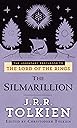

📖 Own the legend that shaped a universe — don’t just read Tolkien, live it!
The Silmarillion by J.R.R. Tolkien is a 480-page mass market paperback published by Del Rey in 2002, offering an essential deep dive into the mythic origins of Middle-Earth. Featuring up to 59 illustrations across editions, it enriches the lore behind The Lord of the Rings with profound themes and a 4.8-star rating from over 24,000 readers, making it a timeless cornerstone for any serious fantasy collection.


| Best Sellers Rank | #40,113 in Books ( See Top 100 in Books ) #58 in Epic Fantasy (Books) #122 in Classic Literature & Fiction #250 in Action & Adventure Fantasy (Books) |
| Customer Reviews | 4.8 out of 5 stars 24,327 Reviews |
H**Y
An Amazing Story of the History of Elves and Middle-Earth
The Silmarillion was great, it deepened my knowledge and understanding of world and characters we meet in The Lord of the Rings. The book provided a vast and integral history of Tolkiens world, from the creation of the world with Ilúvatar and the Children of Ilúvatar, to the beginning of the elves, men, dwarves and various other creatures. The Silmarillion tells of the history of Valinor in the West and the beginning of Middle-Earth. The Silmarils are briefly mentioned in LOTR, but this books tells their story, and just like the One Ring, it was tragic how many killed and died for them. The way the Curse of Mandos unfolded was also so incredibly well written the way everything was doomed to fall apart. If you are looking to study Tolkien or fantasy and world building, this book is essential, even if you merely wish to read more of Middle-Earth, this book is a great choice to start diving deeper into Tolkiens Legendarium, after LOTR. After reading LOTR I had so many questions about the Elves and the lands in the West they journey to. I wanted to know why the Elves felt the way they do about dwarves and man and why so many of them removed themselves from the dealings of man. The Silmarillion answered all of these questions and more. It showed me just how vast and complex Tolkien's world-building is. I'm greatly interested in Tolkien's idea's of death and it being a "gift of man," we see this in LOTR, but this book dived deeper into this idea. When the creation of man is described and it talks about them having the gift of freedom and with that they live short lives, felt very revealing of Tolkien's views on death. I also found it interesting when the says that the Elves felt that Man most resembled Melkor (Morgoth), that seemed to say a lot about Mans capacity for evil. Morgoth is a powerful and resilient enemy, even greater than Sauron. It seemed as though all forms of darkness and evil originated with him, the way he influenced the evolution of the world was so interesting, as was the powers that arose to stand against him. I was so disappointed when Manwë pardoned him, but I understood why he did it and also relent to the fact that if he hadn't so many of these characters wouldn't exist. As much power as Morgoth had, some of the worst tragedies were a result of the ways he'd lie and manipulate and sow doubt and hatred in others, putting them on a path of destruction, conveying themes of the cost of greed, pride and nature of corruption; teaching lessons on the power of not entertaining negative thoughts. This theme and so many others make this just as timeless a read as LOTR.
B**L
Hardcover versions compared
This is a review of the editions, with an image, not the text itself. If I'm wrong about anything let me know and I'll correct it. 1998 edition: Cover: “Maglor casts a Silmaril …” (male throwing white gem against red background) 18 illustrations by Ted Nasmith Readable, nice, can be found around $20-$30 used. Crazy that this edition is almost 35 years old. Art: 1. The Sea 2. The Lamp of the Valar 3. At Lake Cuiviénen 4. The Light of Valinor on the Western Sea 5. Fingolfin Leads the Host across the Helcaraxe 6. The First Dawn of the Sun 7. Maedhros's Rescue from Thangorodrim 8. Eöl Welcomes Aredhel 9. Felagund among Beor's Men 10. By Moonlight in Neldoreth Forest 11. Lúthien Escapes upon Huan 12. Morgoth Punishes Húrin 13. Túrin and his Band are Led to Amon Radh 14. Finduilas is Led past Túrin at the Sack of Nargothrond 15. Ulmo Appears before Tor 16. Eärendil the Mariner 17. The Eagles of Manwe 18. The Ships of the Faithful Front over: Maglor Casts a Silmaril into the Sea Back cover: Beren and Luthien are carried to Safety 2004 edition: Cover: “White Ships of Valinor” (white boats sailing in fair weather, island in background) 45 illustrations by Ted Nasmith Glossy paper, which can be a positive or negative I guess Can be found around $25 new, which is a DEAL. This is mine for reading without fear of damaging a collector’s item. Art: 1. The Sea 2. The Lamp of the Valar 3. Aule Prepares to Destroy His Children 4. At Lake Cuiviénen 5. The Light of Valinor on the Western Sea 6. The Ships of the Teleri Drawn by Swans 7. The Kinslaying at Alqualonde 8. Fingolfin Leads the Host across the Helcaraxe 9. The First Dawn of the Sun 10. The Burning of the Ships 11. Maedhros' Rescue from Thangorodrim 12. The Gates of Sirion 13. Eöl Welcomes Aredhel 14. Eöl is Led to the Walls 15. Felagund among Beor's Men 16. Fingolfin's Wrath 17. The Orc-Host is Ambushed in Brethil 18. Tarn Aeluin 19. By Moonlight in Neldoreth Forest 20. Lúthien Escapes upon Huan 21. Transformed 22. Beren and Lúthien are Carried to Safety 23. Huan's Leap 24. Morgoth Punishes Húrin 25. The Hill of Slain 26. Saeros' Fatal Leap 27. Túrin and his Band are Led to Amon Rûdh 28. Beleg is Slain 29. Túrin Bears Gwindor to Safety 30. Finduilas is Led past Túrin at the Sack of Nargothrond 31. Túrin Reaches the Abandoned Homestead 32. Up the Rainy Stair 33. Húrin Finds Morwen 34. Tuor Follows the Swans to Vinyamar 35. Ulmo Appears before Tuor 36. Tuor and Voronwe see Turin at the Pools of Ivrin 37. The Escape from Gondolin 38. Maglor Casts a Silmaril into the Sea 39. Earendil the Mariner 40. White Ships from Valinor 41. The Eagles of Manwe 42. Tar-Miriel and the Great Wave 43. The Ships of the Faithful 44. The Forging of the One 45. The White Tree 2021 edition: Cover: “Ships of the Faithful” ship sailing amidst storm/red sky 49 illustrations by Ted Nasmith Can be found closer to $40 Regular flat paper, not glossy. More standard book-shaped, whereas the 2004 version is more square, like a coffee table book. Mine was used and did NOT include a fold-out map, but the colorized Christopher Tolkien Beleriand map is in the front plate and endplate (inside the cover, both ends). Art: 1. The Sea 2. The Lamp of the Valar 3. Aule Prepares to Destroy His Children 4. At Lake Cuiviénen 5. The Light of Valinor on the Western Sea 6. The Ships of the Teleri Drawn by Swans 7. The Kinslaying at Alqualonde 8. Fingolfin Leads the Host across the Helcaraxe 9. The First Dawn of the Sun 10. The Burning of the Ships 11. Maedhros' Rescue from Thangorodrim 12. The Gates of Sirion 13. Eöl Welcomes Aredhel 14. Eöl is Led to the Walls 15. Felagund among Beor's Men 16. Fingolfin's Wrath 17. Turgon at Fingolfin's Cairn 18. The Orc-Host is Ambushed in Brethil 19. At Tarn Aeluin 20. By Moonlight in Neldoreth Forest 21. Lúthien Escapes upon Huan 22. Transformed 23. Beren and Lúthien are Carried to Safety 24. Huan's Leap 25. Lúthien at Tol Galen 26. Morgoth Punishes Húrin 27. The Hill of Slain 28. Saeros' Fatal Leap 29. Túrin and his Band are Led to Amon Rûdh 30. Beleg is Slain 31. Túrin Bears Gwindor to Safety 32. Finduilas is Led past Túrin at the Sack of Nargothrond 33. Túrin Reaches the Abandoned Homestead 34. Up the Rainy Stair 35. The Slaying of Glaurung 36. Húrin Finds Morwen 37. Tuor Follows the Swans to Vinyamar 38. Ulmo Appears before Tuor 39. Tuor and Voronwe see Türin at the Pools of Ivrin 40. The Escape from Gondolin 41. Eärendil Searches Tirion 42. Maglor Casts a Silmaril into the Sea 43. Eärendil the Mariner 44. White Ships from Valinor 45. The Eagles of Manwe 46. Tar-Miriel and the Great Wave 47. The Ships of the Faithful 48. The Forging of the One 49. The White Tree 2022 edition: Blue cover with circular design 59 illustrations by Tolkien himself – BUT more than half of these are “devices,” neat little square symbols at the start of a chapter and so on—not big full color paintings or drawings. Around $40. Be aware, Tolkien’s artwork consists more of drawings and sketches with limited color. They are not the epic Ted Nasmith paintings you see in others. If you value his quaint older sketches, these are great. Personally, Nasmith’s objectively better work is more inspiring and helps me engage in the story. Tolkien is a GREAT writer, and a pretty good artist. Nasmith is a GREAT artist. I like them all. If I was only going to get one, I’d get the 2004 version because you get a ton of great Nasmith artwork for an insanely cheap twenty-five bucks (today). Tolkien’s own art is neat, but if you want to be encouraged through a dense book, Nasmith’s art helps pull you in and pull you along.
M**R
" The Silmarillion"
The Silmarillion "The Silmarillion" Author, J.R.R. Tolkien. The reason I purchased The Silmarillion from Amazon.com was while I was looking for the book Amazon.com showed a couple view's of the book, offered new and used book's I bought new. Amazon.com also showed me other people and site's selling the book even if they were lower in price. Amazon.com was the cheapest thou in this case. Amazon.com packaged the book so well that the book's dust cover nor the binding could be scratch or broken or bent. I also recieved it before the deliever date they estimated to me. I will be purchasing all my book needs and other's from Amazon.com. "The Silmarillion" J.R.R. Tolkien is the most capticating Author I have read. His creation of Beleriand and Middle Earth is amazing. I love how The Silmarillion tells you how Middle Earth was created along with who created the Elve's,dwarve's, tree's,sun,Orc's, Dragon's, Dark Lord,and everthing else that exist in Middle Earth. Who made and how the Silmarils came to be. And the importance of them. How life came threw the ages. I even love the forward, preface to the second edition. I especially loved the letter from J.R.R. Tolkien to Milton Walden in 1951 Walden wanted a brief sketch of Tolkien's work, the letter was about 14 page's. They also included Notes of pronunciation to help with the Elvish language,Index of names of each person and place along with page's for a quick referance,there is the family tree's of the King's,Lord's,Dwarves, Elve's, Men who they married and how they became kin, also a Appendix for those like myself whom are interested in the Eldarin language. I love also that map's are included 1 on page 114 which tells lands and kings and lords of those lands. Another map in the very back which is attached to the book but can be opened up which is 3 times larger then the book. There are also illustration's throught out the book, but Tolkien is such an amazing writter you don't need the picture's or map's but they are a great referance. Because i saw in my mind exactly what the pictures and maps looked like. That's because J.R.R.Tolkien is a great Author, his son helped with this book because J.R.R.Tolkien passed away before this was complete, also thanks to the Illistrator I would recommend this book for children and adults alike. J.R.R. Tolkien is a very capticating writter a book I didn't want to put down. I also read Tolkien's "The Hobbit" and the trilogy "The Lord of the Ring's" of which all those kept me as excited to read as this. "I can't say enough about this book. I highly,highly recommend it." I was very happy Amazon.com had this book. Thank you, Margaret {pardon my Spelling}
D**N
No Hobbits Here
There are no Hobbits in J. R. R. Tolkien's Silmarilion. This may appear to be a trivial observation but it is an observation worth considering when reading Tolkien's works. Tolkien, it seems, wrote in two styles. He had a "low" style that he used in The Hobbit. This was a familiar, wryly humorous style, perhaps too deliberately written for children in places to be entirely successful as a children's story. The other style is a grand, epic style, more suited for the affairs of kings, elves and great battles. The Lord of the Rings was a mixture of these two styles. It began in much the same style as The Hobbit, but as the story became more serious and the danger of the Ring and its pursuers more acute, the style became darker and more serious to match. By The Return of the King, with its tale of the great War of the Ring, the style became almost entirely, but not quite, the grand style. There were always the hobbits to return the story to a more down to earth level. The Silmarilion is written entirely in the grand style. The stories are epic tales of gods, elves and men fighting against the first, and far mightier, dark lord Morgoth. There is little room for the sort of humble details of everyday life found in The Hobbit or the Lord of the Rings. The characters are all kings and heroes of ancient times, not humble gardeners. This is not to say that The Silmarilion is not a good book to read. It is an excellent book, and Tolkien is, in his way, comparable to the great composers of national epics like Homer or Vergil. That was indeed his intention when he began writing these stories of the Elder Days and to some extent he did succeed. There are actually five parts to the Silmarilion. The first part is called the Ainulindale and tells of the creation of the world by Eru, the One, who the Elves call Illuvatar. Illuvatar first creates the angelic powers or Ainur, and teaches them to sing to a melody He has made. This song was a vision of the world and many of the Ainur longed to dwell in that world so Illuvatar created it and sent the Ainur, or Valar to complete the work of creating and ordering the world. This they did against the opposition of Melkor, the mightiest of the Valar, and one who sought to rule the world for himself. The next section is called the Valaquenta, is simply a list of the chiefs of the Valar and their names, and attributes. There is not a narrative here, but it is useful to read it as a guide for later The middle and longest section is the Quenta Silmarilion, or the Silmarion proper. This is the epic story of the Elves in the First Age of Middle Earth. The Silmarilion tells of the awakening of the Elves in the dark times when Melkor ruled Middle Earth. The Valar go to war against Melkor to save the Elves and he is defeated and imprisoned. TheValar then offer to take the Elves to their home, Valinor, far in the West. Many Elves agree to make the long journey and are named the Eldar. Many others prefer to stay in Middle East and call themselves the Avari. The Eldar travel to Valinor and become mighty in lore and power. The most skilled of all the Elves is Feanor and his greatest work is the three jewels, the Silmarils in which he captured the light of the Two Trees of old. After a time Melkor feigns repentance and is released. He poisons the Two Trees, steals the Silmarils and flees to his stronghold in Middle Earth. Against the will of the Valar, Feanor leads his clan, the Noldor in pursuit of Melkor, who he has renamed Morgoth, the Black Enemy. Feanor is slain but the Noldor and their allies among Elves and the new race of Men continue the war. They fight bravely against Morgoth and managed to confine him to his stronghold for many years, but in the end, their war is hopeless. Morgoth has hosts of Orcs, troll, Balrogs and dragons and is himself a Valar, one of the mightiest beings in the world. The Elves and their allies are utterly defeated only the intervention of the Valar prevents Morgoth from ruling forever. Morgoth is defeated and the Silmarils are lost. Much of Middle Earth is damaged beyond repair and the Western lands where the Noldor fought and died is submerged beneath the sea. The Akallabeth tells of the history of Numenor, the island that the Valar gave to the Men who fought on the side of the Elves. (Most Men sided with Morgoth). The Numenoreans were given a life span beyond any of the Men of Middle Earth though they were not immortal and could not travel to Valinor. Over time, the Numenoreans grew increasingly jealous of the immortality of the Elves and since they could not make themselves immortal, they began to seek for wealth and dominion in Middle Earth. The last king of Numenor, Ar-Pharazon challenged Sauron, the servant of Morgoth, for the rule of Middle Earth, actually defeated him, and carried him back to Numenor as a hostage. Sauron quickly gained the confidence of Ar-Pharazon, and preying on the old king's fear of death, induced him to assault the Valar and wrest immortality from them. This ended with the destruction of Numenor and the Numenoreans with the exception of a few refugees led by Elendil. The final part of the Silmarilion, Of the Rings of Power and the Third Age, relates the history of the dealings of Sauron and the Elves of Middle Earth. Sauron deceived the Elves into creating the rings of power and attempted to enslave them by forging his own One Ring in Mordor. There is a brief summary of the history told in the Lord of the Rings and a brief mention of the destruction of the ring by Frodo the Halfling and his servant Samwise. After this, the last remaining Eldar of Middle Earth, rendered powerless, leave for Valinor and the cycle is finished. This is a rather grim cycle of tales, probably inspired by Tolkien's love of the rather grim Nordic mythology. Unlike the Norse tales, evil is defeated in the end, but the damage done can never wholly be undone. Then evil arises again after an age. Oftentimes evil corrupts or misleads the good and sometimes the most damage is done by those who fight most valiantly against evil. Beren and Luthien wrest a Silmaril from Morgoth so that Beren can present it to Luthien's father as bride price, but the Silmaril causes wars among Elves and Dwarves and the sons of Feanor and eventually causes the destruction of all the Elf-kingdoms. Turin son of Hurin spends his whole life fighting the servants of Morgoth, and is cursed because in the end all his valiant deeds only bring about Morgoth's victory. Even when Morgoth is defeated, the evil he does lives on to afflict later ages, as does his servant Sauron. When Sauron is, in his turn defeated, and his Ring is destroyed, the Eldar also rendered powerless, no longer wish to live in Middle Earth and return at last to Valinor leaving a colder, grayer world for those of us who are doomed to stay behind.
M**T
A difficult read at times but ultimately rewarding
I have just completed my second reading of The Silmarillion and was, again, astounded by the breathtaking scope of what Tolkien set out to accomplish. This is nothing less than a history of Middle Earth, from the creation of the world, to the end of the second age. (For the few who may not know, the events of The. Hobbit and The Lord of the Rings take place during, and constitute the end of, the third age of Middle Earth.) It is an epic work that Tolkien labored on for most of his life and, indeed, had not completed at the time of his death. His son, Christopher, set out to assemble the most complete and cohesive versions of his father's many drafts, and the result of those labors is this volume. The lion's share of this book, and the reason for it's title, is the history of the Silmarils, jewels of surpassing beauty that capture the essence of the long lost light of the trees of Valinor, from before there was a sun and moon. The story of their creation, subsequent theft by the dark lord Morgoth, and the many acts of bravery, heroism, sacrifice and betrayal involved in the quest to recover them, form the most compelling narrative of the book. And, make no mistake, it is very compelling at times. It can also be confusing and overwhelming at times. This is not an easy read. The sheer volume of character and place names the reader needs to keep track of is enough to turn many readers away. (In dealing with this, I found the Kindle version, with its easy access to x-ray and wikipedia references, invaluable.) The prose style can be off-putting as well, written, as it is, from on high. In a tale of this scope, there is little time for in depth character exploration and little thought of relatability. Though the tales are rich and fascinating, there is little danger that you will fall in love with any of the characters. It's not that kind of book. In short, this is not a book for the casual Lord of the Rings fan. For those wishing to delve deeper into the rich world of that story, however, this is essential reading.
R**P
The third and (relatively) infrequently taken step
Read the Hobbit? Isn’t it great? Read the Lord of the Rings? Isn’t it awesome (in the true sense of the word)? Answer yes to the two above questions, and you may be ready to embark upon this third volume of the Legendarium. I say “may,” and I promise I’m not trying to be condescending; but “may” is the word. First, the content: This has been elucidated by many others on this review page, so I won’t say too much. Suffice to say that this is the tale of the First Age, from the creation of the world until the final defeat of the Elder Evil, Melkor, called by the Noldor “Morgoth.” The beginnings of all races (save hobbits, more on that later), and the days when “gods” walked the Earth; great tales of heroism and tragedy; epic battles and terrible deeds that echo down through the millennia. It’s all here, and written in prose that will appeal especially to fans of classical literature (from the ancient Greeks, to Rome, to Anglo-Saxons and Finns, with a dash of the ancient books of the Bible and Gilgamesh thrown in). Now, to the “may:” this is not an easy read. It is dense, it is complicated, there are names and events and concepts that will find you flipping to the index/glossary to try to remind yourself what happened and when. Partially, this is by virtue of it being an edited work. At Tolkien’s death, this remained unfinished. Christopher Tolkien, his son, one of the original draft readers of LOTR, compiled the Silmarillion over the course of four years (?) and put it into the form you see here. But this was always a version of the form it would take. It was always going to be dense and was always going to require attention and focus. This, more either the Hobbit or Lord of the Rings, is what Tolkien the philologist wrote. It is, in short, history, rather than fantasy. It is more like reading a history book than a fantasy book. The Hobbit was a children’s novel, the Lord of the Rings was a “romance” (Tolkien’s word), while this is a historical chronicle. It is also epic, deeply moving, fascinating, and very rewarding. There are no hobbits in this story. I know, I’m as disappointed as you, but hobbits are a stand in for modern humans, and, unfortunately, during the time when the elves and the elder houses of Man we’re battling with the ultimate evil bent on destroying and enslaving the world, we didn’t rate any attention. We were just smoking tobacco and growing root vegetables. Try it out. If it’s too much, set it aside and try it again later. If you want more (read, if you’re weird like me and the rest of us singing its praises), there’s more. Oh, Lordy is there more. PS: I also highly recommend the Letters of Tolkien, compiled by Humphrey Carpenter. Lots of goodies and background, and fascinating insight into the mind of the man.
M**R
The third part in the exploration of Middle-earth
I must have read this book about summer 2000 for the first time. At that time, it had been so engrossing that I was reading it while in the army on quite moments when I could read. Whenever we had to wait or something, I would just read this book. Now, after almost 25 years, I have read it a second time. And I must say, I still really liked it a lot. I have read that people were disappointed when it was first published in 1977 because they had expected a second Lord of the Rings. It is not. Sometimes, I would describe it as a history book. It is not this either. J.R.R. Tolkien had had foremost an interest in creating legends and this is exactly what this book is. He had actually started to write parts of it in 1917 or so. At that time, he had had the idea of publishing a book called “The Lost Tales”, where some legendary stories would be told to an Anglo-Saxon castaway ship-wrecked on a Western Isle by an Elf he had encountered there. The three stories of Beren und Lúthien, of the Children of Húrin and of the Fall of Gondolin among others were slated to be in this book. Later, he had developed the idea of combining these stories into a whole legendarium, among others called the Silmarillion. Unfortunately, he never managed to finish this work. He would thus on and off work on this work, which would be, once finished, his magnum opus. He would finish short sketches of it, but never got around of finishing the whole thing. In the meanwhile, he had published other works, among others, “The Hobbit”. His publishers wanted a sequel to “The Hobbit”, and J.R.R. suggested the Silmarillion. The publishers politely declined. Consequently, J.R.R. Tolkien wrote “The Lord of the Rings”. Once that had been finished, 40 odd years had passed since J.R.R. Tolkien had started on these legends. I can imagine that he had now other things on his mind, still he apparently kept working on it on and off again up to his death. In the end, it was up to his son Christopher Tolkien to publish the work. To do that, he had to work as editor and, as not few would say, as author. The result of these labors is this book. Christopher Tolkien later on to counter these critiques published all the materials of his father concerning Middle-earth in a 12-volume set of books called “The History of Middle-earth”. As few people will probably read all these 12 books, Christopher Tolkien then also published three books just with the material for the three main stories. Incidentally, I have read to of these three books while reading this book. Today, I have now also finished this one. And, again, it is just astounding. In it, J.R.R. Tolkien thus developed legends, from the creation of the world, over the creation of three Silmarils by Fëanor, the exile of the Noldor, the siege of Angband, the three main stories of course and several battles until Melkor is overcome by the Valar. Not to stop there, we also have here the legend of Númenor, later also called Atalantë by the Elves, where the kings of Men and their people are allowed to live long lives in sight of Tol Eressëa. However, not contempt with being mortal, they eventually turn against the Valar. Spurned on by Sauron, they set out to conquer Valinor, only for their fleet and their island to be directly submerged under water by the Valar. Some few-remaining Elf-fiends have survived and they settle and found in Arnor in Eriador and Gondor further south. Eventually, they make an alliance with the Elves to fight Sauron and his men, which leads directly into the story of “The Lord of the Rings”. The last pages, before Index and Appendix, then indeed summarize “The Lord of the Rings”. I can thus only recommend this book to anybody who has read and loves “The Lord of the Rings” and wants to know more about this world. This book does indeed give the whole story of Middle-earth.
R**.
More! more! a whole universe straight from music 🎶
Apropos of a new TV show whose name I have forgotten, I decided to read the Silmarillion in order to have better grounds to watch it. I have forgotten about the TV show and now I am devouring more and more of the lore by Tolkien. That good and addictive is his art. Maybe you already know what the Silmarillion is about: the genesis of what will be Middle Earth, the angelic powers of Arda, the world, and how elves got to be children of the stars, and afterwards men would be the children of the Sun, until the fall of Númenor and ending in the Rings of Power. Borges said that although publicly Shakespeare is the venerated national author of England, secretely their classic book is the Bible. Reading Tolkien's Silmarillion I feel that way, as it harmonizes... unconsciously? with his identity of both Catholic and an Englishman. There is the English tradition of seas, the stories sometimes as tragic as Job and so hopeful as Genesis, there are the languages as Quenya and Sindarin mutating and diverging and creating poetries with their own music. I believe a theologist said that the cross is the salvation from the labyrinth of the circle, and the fall in the Silmarillion feels like falling in that labyrinth, and makes you wish for the straight line to the real West. It is not in the nose, it is not Tolkien's intention, is how I feel after reading it. Is this a successful book according to the goals of Tolkien? I think yes, he makes a whole palace from his thought in the way the Ainur are inspired to make a symphony. This world is quite real that almost could feel as the true past turned mythology. Not in the artificial way that some modern writers do for shock value; it feels true. Being quite picky, or maybe a petty dwarf, I'd say the only aspect I would criticize, and maybe there is an explanation, is normal humans imposing their will and ideas over elves with centuries and even thousands of years of life. This is a fantastic reading and I will be happy when I get to read The Lord of the Rings.
Trustpilot
1 month ago
1 day ago