
DOWNLOAD THE APP


Customer Services
Copyright © 2025 Desertcart Holdings Limited
DOWNLOAD THE APP
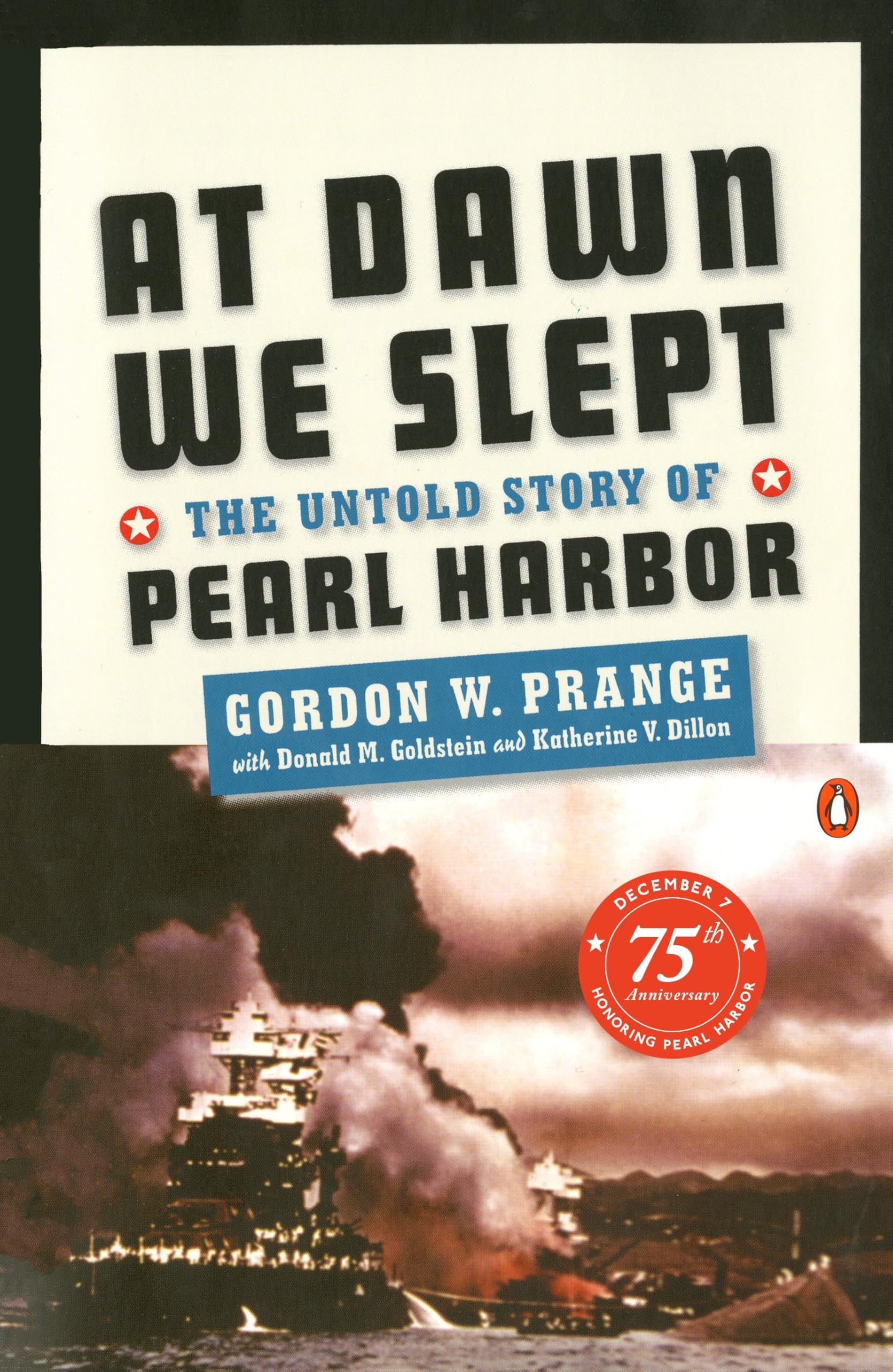
desertcart.com: At Dawn We Slept: The Untold Story of Pearl Harbor: 9780140157345: Prange, Gordon W., Goldstein, Donald M., Dillon, Katherine V.: Books Review: Fantastic and Informative! - I'm really glad that I read this book. I never knew just how far back Yamamoto and the rest were planning this attack. I also didn't know the sheer scale of the blunders and miscommunications in Washington that allowed the attack to go forward almost without a hitch. I found the book well structured with the lead up to the attack extremely well and thoroughly explained; The attack itself very well illustrated right at the 50% mark of the page count; and, the rest of the text devoted towards the aftermath and investigations. I highly recommend this book to any person interested in the Pearl harbor attack. Review: Amazing detail delivered in great storytelling. - I'm at the 70% mark after a marathon session with my tablet. I cannot put this down! I wanted to write this review before I forgot. This remarkable book is an achievement because it contains both all of the detail you would expect from such a well-researched project and great writing: the author really brings out the personalities in a great piece of storytelling. What really stands out is the way he simultaneously tracks developments in Japan and the US throughout 1941, moving back and forth from the Japanese officers and politicians to their American counterparts. As Yamamoto and a small circle of colleagues start to get serious about the seemingly impossible dream of a surprise attack on Pearl Harbor, the Americans keep pondering what the Japanese would do if negotiations broke down. Again and again the idea of some sort of attack on Pearl Harbor is brought up and then forgotten. The frustration a typical American reader is likely to feel cannot be overstated. Epic frustration. The detailed examination of the Japanese planning is good not only for those who want to learn about this operation but also, to be coolly objective, it's simply a good case study of people turning over a problem (or opportunity) and looking at it from almost every angle. The contrast between the Japanese and the Americans could not be more stark. To demonstrate how thorough this book is: I bought it on the off chance that I would find an answer to my own question, which was, did the Japanese not realize that it was possible that sunken ships would simply be hauled out, repaired, and sent out to fight the Japanese again? This is the cost of trying to sink ships in the shallow waters of a harbor (with all those repair facilities right there) instead of out in the (for all intents and purposes) bottomless ocean. Anyway, I was sure Yamamoto had considered this (especially since the shallow harbor presented a problem for the Japanese torpedoes). The author did not disappoint. He shows in a couple of places in his narrative how this issue vexed one of the Japanese officers in particular, who was hoping that some of the ships would be parked in a much deeper harbor not too far away. The other harbor was included in the planning, but he was to be disappointed that morning when reconnaissance discovered nothing there. But they did plan for this disappointment: because of the shallow water at Pearl, their mission was not merely to sink the battleships, but to destroy them beyond all hope of repair. An important distinction affecting the detailed instructions given to the pilots. Even so, when one reads the Japanese side, there is a frustration that mirrors the one you might feel while reading the American side of the story: even Yamamoto acknowledged, explicitly, that an operation against Pearl could only be a delaying tactic in a war that America would certainly win. This is something that the Japanese worried about but seemed to have no answer for. The answer might have been in Washington, where Japanese diplomats seemed to be honestly trying to keep the peace, and voiced their frustration with their own government and military for an insistence on imperialist adventures.
| Best Sellers Rank | #151,237 in Books ( See Top 100 in Books ) #102 in WWII Biographies #415 in World War II History (Books) #1,428 in U.S. State & Local History |
| Customer Reviews | 4.6 4.6 out of 5 stars (534) |
| Dimensions | 9.1 x 6 x 1.7 inches |
| Edition | Anniversary Edition |
| Grade level | 12 and up |
| ISBN-10 | 0140157344 |
| ISBN-13 | 978-0140157345 |
| Item Weight | 1.95 pounds |
| Language | English |
| Print length | 912 pages |
| Publication date | December 1, 1982 |
| Publisher | Penguin Books |
| Reading age | 18 years and up |
J**N
Fantastic and Informative!
I'm really glad that I read this book. I never knew just how far back Yamamoto and the rest were planning this attack. I also didn't know the sheer scale of the blunders and miscommunications in Washington that allowed the attack to go forward almost without a hitch. I found the book well structured with the lead up to the attack extremely well and thoroughly explained; The attack itself very well illustrated right at the 50% mark of the page count; and, the rest of the text devoted towards the aftermath and investigations. I highly recommend this book to any person interested in the Pearl harbor attack.
T**S
Amazing detail delivered in great storytelling.
I'm at the 70% mark after a marathon session with my tablet. I cannot put this down! I wanted to write this review before I forgot. This remarkable book is an achievement because it contains both all of the detail you would expect from such a well-researched project and great writing: the author really brings out the personalities in a great piece of storytelling. What really stands out is the way he simultaneously tracks developments in Japan and the US throughout 1941, moving back and forth from the Japanese officers and politicians to their American counterparts. As Yamamoto and a small circle of colleagues start to get serious about the seemingly impossible dream of a surprise attack on Pearl Harbor, the Americans keep pondering what the Japanese would do if negotiations broke down. Again and again the idea of some sort of attack on Pearl Harbor is brought up and then forgotten. The frustration a typical American reader is likely to feel cannot be overstated. Epic frustration. The detailed examination of the Japanese planning is good not only for those who want to learn about this operation but also, to be coolly objective, it's simply a good case study of people turning over a problem (or opportunity) and looking at it from almost every angle. The contrast between the Japanese and the Americans could not be more stark. To demonstrate how thorough this book is: I bought it on the off chance that I would find an answer to my own question, which was, did the Japanese not realize that it was possible that sunken ships would simply be hauled out, repaired, and sent out to fight the Japanese again? This is the cost of trying to sink ships in the shallow waters of a harbor (with all those repair facilities right there) instead of out in the (for all intents and purposes) bottomless ocean. Anyway, I was sure Yamamoto had considered this (especially since the shallow harbor presented a problem for the Japanese torpedoes). The author did not disappoint. He shows in a couple of places in his narrative how this issue vexed one of the Japanese officers in particular, who was hoping that some of the ships would be parked in a much deeper harbor not too far away. The other harbor was included in the planning, but he was to be disappointed that morning when reconnaissance discovered nothing there. But they did plan for this disappointment: because of the shallow water at Pearl, their mission was not merely to sink the battleships, but to destroy them beyond all hope of repair. An important distinction affecting the detailed instructions given to the pilots. Even so, when one reads the Japanese side, there is a frustration that mirrors the one you might feel while reading the American side of the story: even Yamamoto acknowledged, explicitly, that an operation against Pearl could only be a delaying tactic in a war that America would certainly win. This is something that the Japanese worried about but seemed to have no answer for. The answer might have been in Washington, where Japanese diplomats seemed to be honestly trying to keep the peace, and voiced their frustration with their own government and military for an insistence on imperialist adventures.
C**E
A very detailed and fascinating read
A very detailed and fascinating read. The first part, which shows how the Japanese prepared for thew attack for over a year, really shook me. It truly was a "sneak attack", and the descriptions of the highly capable men who panned and executed it is chilling. Their idea was to knock America on it's ass until they had establish their empire! All of this happened as they "negotiated" for peace! It also shows that while lack of vigilance was part of the problem, America's biggest challenge was preparing for two massive wars with fascist expansionists who felt they had a right to conquer and pillage vast swaths of land. There simply weren't enough ships and planes in 1941 to do the job. The second part, which covers the attack itself and its aftermath, covers familiar ground. The third part, covering American investigations of the attack, is rather tedious. But it is well written and a real education!
M**S
"At Dawn We Slept:" the definitive account of the Japanese attack on Pearl Harbor on December 7, 1941.
“At Dawn We Slept: The Untold Story of Pearl Harbor” is Gordon W. Prange’s magnificent history of the Japanese attack on Pearl Harbor, which occurred on December 7, 1941 and brought the United States into World War II. I first read it when it was published in 1981. I decided to re-read it last month to commemorate the 75th anniversary of what President Franklin D. Roosevelt described as “a date that will live in infamy.” Of all the many books I have read about the Pearl Harbor attack, I think “At Dawn We Slept” ranks as the definitive account of this subject. Gordon Prange (1910-1980) was a Professor of History at the University of Maryland. During World War II and in the years immediately following, he served as an intelligence officer in the U.S. Navy. He met and interviewed many of the people – both Japanese and American – directly involved in the Pearl Harbor attack. He began writing the manuscript for “At Dawn We Slept” based on those interview, as well as countless hours of independent historical research. Prange’s meticulous investigation of his subject, and his prodigious writing talents are evident on every one of the 889 pages of his book. He describes the planning, execution, and follow-up investigations into the Pearl Harbor attack with a level of detail that borders on amazing. He includes conversations between the most senior leaders in the Japanese Navy as they begin planning for what they called “Operation Hawaii.” Prange also discusses the political opposition among many senior Japanese naval officers to the proposed attack, and the unique way that Admiral Isoroku Yamamoto overcame that opposition. Prange’s narrative of the attack on Pearl Harbor itself is crisp and searing. The final section of “At Dawn We Slept” is perhaps the most important. In it, Prange describes the many investigations into the Pearl Harbor attack carried out by various Federal commissions, military courts and boards of inquiry, and Congressional committees, all seeking to fix blame for the Pearl Harbor attack. Navy Admiral Husband E. Kimmel and Army General Walter C. Short took the brunt of the blame – deservedly so, in Prange's view – for their errors of judgment in failing to be on alert for the possibility of an attack. Prange is very clear in his historical judgment that neither President Roosevelt nor any senior cabinet-level official knew beforehand about the attack. Nor did they conspire to use the attack to bring the United States into the war. I thoroughly enjoyed “At Dawn We Slept.” Despite its great length, I read it in about ten days. It ranks as one of the finest works of history I’ve read in many years. Most highly recommended.
愛**者
『トラトラトラ!』で有名なプランゲの真珠湾攻撃に関する研究を、彼の死後に 弟子たちがまとめた本。 土門周平ら訳『真珠湾は眠っていたか』(講談社)として日本でも出版されたが、 現在は入手が困難。日本語で読みたい人は、古本でどうぞ(全三冊)。 運命の序曲 (真珠湾は眠っていたか) 世紀の奇襲 (真珠湾は眠っていたか) 歴史の審判 (真珠湾は眠っていたか)
C**N
Although I'm not through reading this book, it is a must in understanding how the attack on Pearl Harbor went down. Extremely well researched and well explained.
A**R
Présenté comme le livre "définitif" sur Pearl Harbor c'est un gros pavé qui détaille l'élaboration de l'attaque et la situation politique et diplomatique entre le Japon et les USA. On peut trouver que les détails techniques sont un peu rapidement traités tout comme l'attaque elle-même qui n'occupe qu'une part modeste de l'ouvrage. En revanche, le livre dégonfle bon nombre de baudruches des complotistes de tous poils ce qui est à mettre à son crédit. La dernière partie, consacrée aux suites et conséquences de l'opération avec le mise en cause et procès des responsables américains intéressera sans doute moins le lecteur européen peu impliqué dans ces querelles plus ou moins obscures. Au final un ouvrage sérieux, souvent intéressant mais quand même un peu indigeste.
P**N
El mejor libro que he leído sobre el tema, analizando todas las cuestiones que pueden surgirle a cualquier aficionado de la historia. Altamente recomendado para satisfacer el gusanillo y matar clichés y tópicos sin fundamento.
M**I
My husband is delighted with this gift which arrived in good time and was sensibly packaged. Thank you.
Trustpilot
2 weeks ago
2 months ago