

Desert Online General Trading LLC
Warehouse # 7, 4th Street, Umm Ramool, Dubai, 30183, Dubai
Desert Online General Trading LLC
Warehouse # 7, 4th Street, Umm Ramool, Dubai, 30183, Dubai
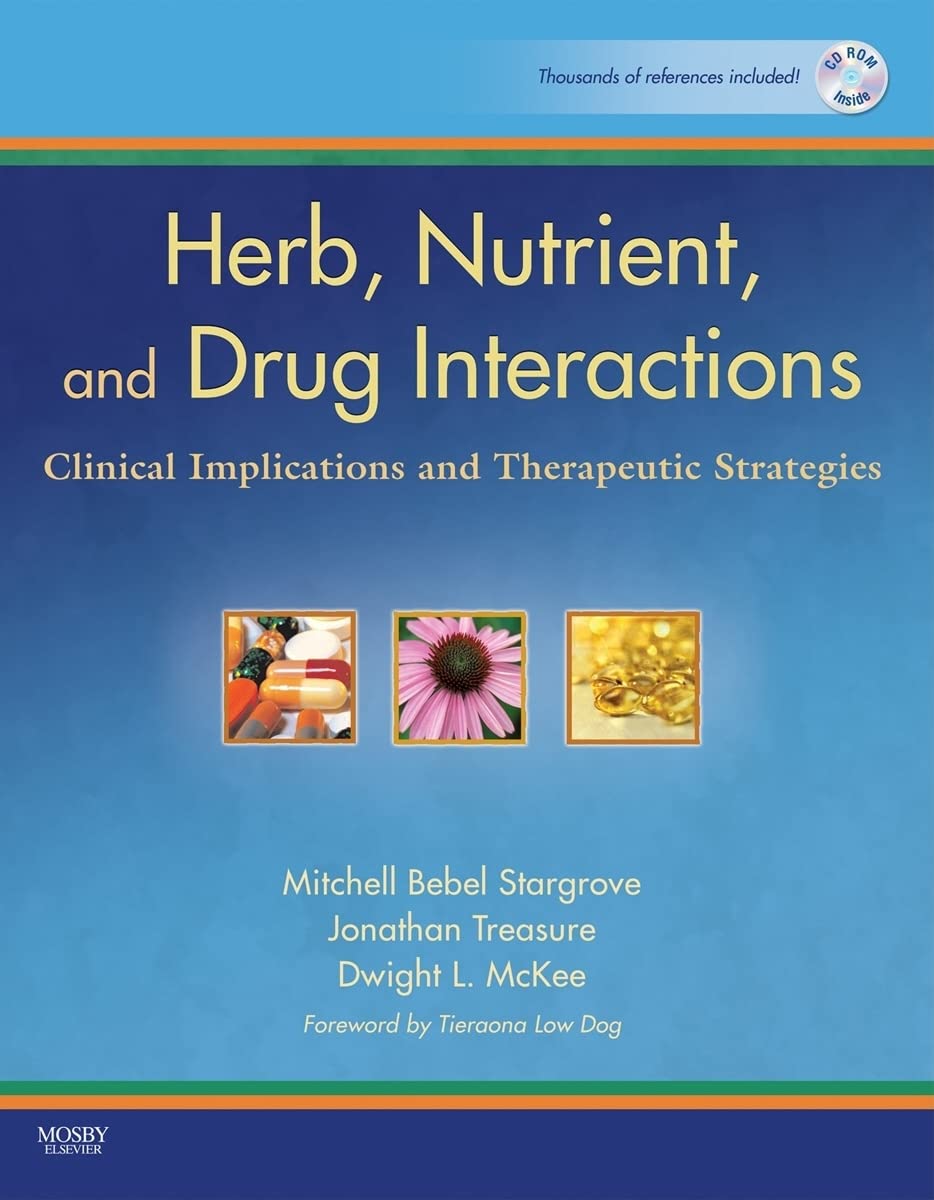
Herb, Nutrient, and Drug Interactions: Clinical Implications and Therapeutic Strategies
C**U
Almost perfect, one stop reference text
I found this book after borrowing the entire subject collection from the med school and going over it carefully. This is the most comprehensive, the most authoritatively and exhaustively written text not only on substance interaction but also on the actual substances themselves. I.e. it provides an extremely detailed summary about everything on each entry from Vitamin D to Magnesium to Hawthorne including research, dosage, lab analysis, indications etc etc etc etc.It's a huge book, 1000 pages, 2 column small print, no fillers, just hardcore information from the start to the finish. I have not found any of the usual "party-line" biases which most of clinical literature is peppered with - just summary presentation of tens of thousands of scientific papers this volume is based on.My only reservation about this is that it's not complete in terms of substances covered. There is no chapter on Iodine for example at all! A huge omission! And my wishlist of crucial, for example, minerals is very long, so i'm slightly disappointed on this point: manganese, molybdenum, sodium, chloride, sodium, vanadium, sulphur and so on. Readers will have to search information on those elsewhere. And I can tell you it is not an easy task to find something of comparable quality. If they appear in the next volume, it's a 10/5 edition.
M**N
unique reference for all physicians
this book should be in every doc's office. this information is important in a time when many patients have taken to doctoring themselves with herbs and supplements. it can be used to show the pros and cons to patients of their courses of action. it will inform the docs themselves with regard to the efficacy of these substances and help them in their use. for example, i had no idea that vitamin C helped in the use of sinemet and i don't recall any doc or publication ever mentioning that. a terrific reference well organized.
P**R
Editor, Medical Herbalism Journal
Since the late 1990s, when conventional medicine discovered the magnitude of the public use of herbs and supplements, a series of books on herbal safety, including drug-herb interactions, has appeared. This body of literature has been seriously flawed. Most of the authors were not themselves clinicians experienced with the traditional or contemporary literature on the agents being discussed and were equally unfamiliar with their actual clinical or commercial use of the items. Several texts written by alternative practitioners or herbalists either completely avoided the topic of drug-herb interactions, or tended to understate safety concerns. And ultimately, all these books failed to comprehensively evaluate the evidence for interactions or accurately distinguish between purely theoretical concerns and those based on clinical evidence.Herb, Nutrient, and Drug Interactions corrects each of these problems, and is the first complete text on the subject, its predecessors being false starts or partial contributions in the field. The authors are all experienced practitioners. Stargrove is a licensed naturopathic physician and acupuncturist; Treasure is a professional herbalist, and McKee is a medical doctor board certified in integrative medicine and also certified in clinical nutrition. A board of 18 interdisciplinary reviewers, the great majority of them clinicians, adds further depth of practical and scholarly expertise.The authors offer 1-3 page monographs on 70 therapeutic agents, including 30 herbs, 12 vitamins, 9 minerals, 6 amino acids, and 13 neutraceuticals. The monographs are extensive, and most are accompanies by summaries, so the book may be used for in-depth study or for quick reference.The monographs first review the clinical and historical use of the item and its potential benefit and safety profile. They then review the potential interactions, and here is where the authors present their unique contribution in the field. The potential interactions are evaluated for probability on a six point scale ranging from certain to improbable, to unknown. More than 20 possible types of interactions are also evaluated, and finally, the strength of evidence is rated.This is currently the best standard reference on drug-herb interactions, useful for clinicians whether they practice in herbalism, complementary medicine, or conventional medicine.
D**Y
Good but will become updated.
I like it a lot. I find that it can be great for a couple more years but as the pharmaceutical industry keeps introducing new formulas and discontinuing products, the book will need updates. Great resource for CAM and Herbalism students.
L**N
Waste of Money and Paper
This book says it is about "herbs, nutrients and drug interactions" but it has about 30 herbs and the rest supplements. Most herbalists don't use supplements. If this weren't required for a class, I would send it back.
J**T
Fantastic Reference
The title is a bit misleading, with the first word being "Herb" you might expect this book to emphasize herbs, however this book really covers nutrients of all forms. Vitamins, minerals, amino acids and a few other nutraceuticals are also covered.The information is well presented. I am especially pleased to see good coverage of multiple forms of vitamins and information about their conversion and metabolism.Unfortunately a lot of "common" herbs are not covered. There are 172 pages on herbs (30 herbs are covered). Popular but *missing* herbs include: Ashwagandha, Bacopa, Nettle and Rhodiola.Vitamins and minerals are covered on another 480 pages. Amino acids (only six of them) cover another 53 pages. Other nutraceuticals are covered in another 126 pages.The included CD is nearly worthless and malfunctions on my system.This book is intended for professionals, the average layperson would probably have difficulty understanding some descriptions. I don't mean to discourage a layperson, in fact if you are serious about your health and want to be well informed about the supplements you are taking then you should buy this book (or consult with an expert who has this book).If this book was released in hardback I would gladly buy a second copy. Yes, it's that good.
Trustpilot
2 months ago
3 weeks ago