Some deliveries may take a little longer than usual due to regional shipping conditions.

DOWNLOAD THE APP


Customer Services
Copyright © 2025 Desertcart Holdings Limited
DOWNLOAD THE APP
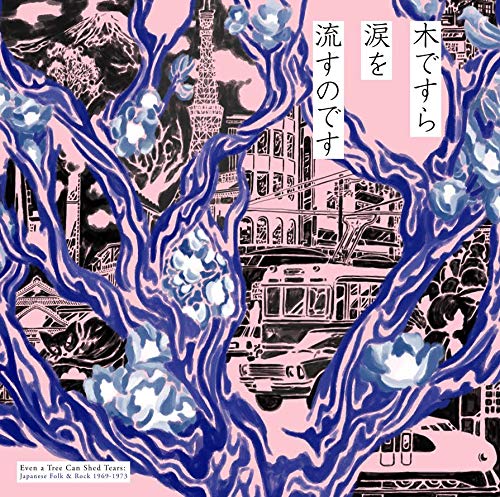
There was something in the air in the urban corners of late '60s Japan. Student protests and a rising youth culture gave way to the angura (short for "underground) movement that thrived on subverting traditions of the post-war years. Rejection of the Beatlemania-inspired Group Sounds and the squeaky clean College Folk movements led the rise of what came to be known in Japan as "New Music," where authenticity mattered more than replicating the sounds of their idols.Some of the most influential figures in Japanese pop music emerged from this vital period, yet very little of their work has ever been released or heard outside of Japan, until now. Light In The Attic is thrilled to present _Even a Tree Can Shed Tears_, the inaugural release in the label's Japan Archival Series. This is the first-ever, fully licensed collection of essential Japanese folk and rock songs from the peak years of the angura movement to reach Western audiences. In mid-to-late 1960s Tokyo, young musicians and college students were drawn to Shibuya's Dogenzaka district for the jazz and rock kissas, or cafes, that dotted it's winding hilly streets. Some of these spaces doubled as performance venues, providing a stage for local regulars like Hachimitsu Pie with their The Band-like ragged Americana, Tetsuo Saito with his spacey philosophical folk, and the influential Happy End, who successfully married the unique cadences of the Japanese language to the rhythms of the American West Coast. For many years Dogenzaka remained a center of the city's "New Music" scene.Meanwhile a different kind of music subculture was beginning to emerge in the Kansai region around Osaka, Kyoto, and Kobe. Far more political than their eastern counterparts, many of the Kansai-based "underground" artists began in the realm of protest folk music. They include Takashi Nishioka and his progressive folk collective Itsutsu No Akai Fuusen, the "Japanese Joni Mitchell" Sachiko Kanenobu, and The Dylan II, whose members ran The Dylan cafe in Osaka, which became a hub for the scene._Even a Tree Can Shed Tears_ also includes the bluesy avant-garde stylings of Maki Asakawa, future Sadistic Mika Band founder Kazuhiko Kato with his fuzzy, progressive psychedelia, the beatnik acid folk of Masato Minami, and the intimate living room folk of Kenji Endo. Nearly 50 years on, this "New Music" is born anew.
C**A
They did their research. And more....
Picked this up based on the NY Times article on it. While not every song is a winner, the double LP gatefold jacket, liner notes, booklet with lyrics in English AND Japanese is beautifully done. A true labor of love from the people at LIGHT IN THE ATTIC. Fascinating.
M**N
great songs, great vibe
This is such a great album! Not only do I love the songs but I can practice my Japanese because the slow nature of the songs allows me to pick out individual words easier than most other Japanese music.
B**2
Beautiful!!
A fabulous collection of Japanese 60's folk and pop songs. In particular Konna Fu Ni Sugite Iku No Nara by Maki Akisawa. Beautiful!!!
J**H
Five Stars
good
W**N
Three Stars
Interesting. Well done take on contemporary American (for the 60s) folk styles.
K**A
The effort put into compiling this album.....
Not only the songs are rare gems, the song information is tediously researched and their lyrics translated, this album is compiled by people who are extremely passionate of this genre. I give 5 stars for the music and the effort.
J**E
Great Album
Very Recommended japanesse album
S**K
Absolutely fantastic
An absolute revelation. Must be heard.
J**S
Five Stars
Brilliant record that arrived promptly....thank you!
T**A
Une surprenante compilation.
Excellente compilation de musiciens japonais des années soixante très inspirés par Dylan.Surprenant et vraiment très séduisant: donnant envie d'aller à leur renconrtre
Trustpilot
2 months ago
2 months ago