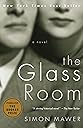
The Glass Room: A Novel
Product ID: 8289805
🏆NYT Best-Seller status
📅Set in vibrant 1920s-30s Europe
📚2,600+ reader reviews
Desertcart purchases this item on your behalf and handles shipping, customs, and support to Hungary.
📖 Unlock the past, live the story — The Glass Room is your next unforgettable read!
The Glass Room is a New York Times Best-Selling novel set in 1920s-30s Europe, weaving a rich narrative around the Landauer family and their iconic modernist home. Praised for its vivid historical detail and emotional complexity, this used copy is in good condition and has garnered over 2,600 reviews with a 4.2-star average, making it a must-have for lovers of literary fiction and Jewish historical narratives.
| Best Sellers Rank | #668,045 in Books ( See Top 100 in Books ) #311 in Jewish Historical Fiction #580 in Jewish Literature & Fiction #14,807 in Literary Fiction (Books) |
| Customer Reviews | 4.2 out of 5 stars 2,649 Reviews |
B**Y
Left Me Overwhelmed
It took me a while to warm up to The Glass Room but when I finished it I had goose bumps all over. I was overwhelmed. The Glass Room by Siman Mawer is about a glass room in a house and the people who inhabit it over the years. It is about the Landauer family and the architect they hire to build the house, Ranier von Apt, who is loosely based on Mies van der Rohe. This house is to be different from any other - one built from the inside out and with "a living space that changes functions as the inhabitants wish". Viktor and Liesel Landauer are wealthy and privileged. He is a Jew who owns a car company and money is no object to them. When the book opens in Czechoslovakia in 1929, life is carefree and easy for them. However, Viktor shortly begins an affair with a woman named Kata and this continues for several years. The times remind me of the 1960's. Sex is loose and free and people are curious about art, their bodies, and the world at large. Hana, Liesel's best friend, is a very open and curious woman who appears to have no bounds to her sexuality and curiosity. The main character in this exalting book is the glass room. It appears to have different meanings to those who inhabit it: " "a place that is at once of nature and quite aside from nature"; "an idea developing into a work of art"; "the house was both the work of art and the atelier in which it was being created"; "Beauty made manifest"; life lived in it be a work of art as well"; "transparent and full of light"; "a place of dreams, a cool box where you can project your fantasies and sit and watch them". We watch as the war comes to Czechoslovakia and we see the horrors of World War II. The Landauers flee to Switzerland and the house is taken over by the Germans. Later the house is resided in by the Soviets. With each resident the house takes on different themes and meanings. The characters are richly described and the drama of their lives gives meaning to the novel. Mawer is a fine historian and appears well versed on the invasion of Europe during the second World War. The impact on the Landauers and Kata is horrifically described and shivers ran up and down my spine as I was reading. This is a book to savor, one that will never leave me. It is powerful, haunting, and brilliant. It grows on you slowly but once in its realm, you are powerless to leave. I will read other books by Mawer but wonder how any book can come up to this masterpiece.
R**E
An Ironic Icon
I often read runners-up for the Man Booker Prize for the fun of second-guessing the judges. Simon Mawer's THE GLASS ROOM, which (like AS Byatt's THE CHILDREN'S BOOK ) lost out to Hilary Mantel's WOLF HALL in 2009, is a case in point. As an engrossing tale by an accomplished storyteller (author of THE FALL ), covering a significant swath of modern European history, and set against one of the icons of modernist architecture, it is easy to see why it might attract the attention of the judges. But it is also easy to see why it didn't win; the actual story is over-romanticized, at times even verging on the pornographic. Some may see the contrast between the pristine purity of the building and the unruly lives of those that inhabit as deliberate irony. Perhaps approaching it with the wrong mindset, I saw it only in trivializing its setting. Ludwig Mies van der Rohe's Tugendhat House in the Czech Republic was to be the architect's last major work in Europe. Built for a wealthy Jewish couple in 1930 on a hillside overlooking the city of Brno, its principal feature is a huge living room, suspended below the rest of the house, surrounded by wall-to-ceiling windows of plate glass, broken only by slim columns of gleaming chrome and a screen of translucent onyx. Something of its power, luxury, and simplicity can be seen in the customer images uploaded to this page. It represents not only a building but also a way of life, surrounded by light, unfettered by history or national trappings, a perfect setting for an enlightened couple of mixed parentage (German, Czech, Jewish) starting a life together in the newly-founded Czech Republic. Simon Mawer does full justice to the qualities of the house itself, and his idea of using the glass building as a symbol for the fragility of hope in the 1930s is brilliant. The story, which begins around 1928, reaches its climax with the outbreak of the Second World War, then passes through the Soviet takeover, through the brief Prague Spring of 1968, to end shortly after the fall of the Berlin Wall. The house changes function, but remains standing in its various guises, and the view of history from its hillside makes fascinating reading. While Simon Mawer admits that his novel was inspired by a real house in a real city, the actual names are fictionalized. As well they might be, for his treatment of his new patrons, Viktor and Liesl Landauer, verges on the scandalous. Hardly have they moved into the new house than their lives are changed by his adultery and her relationship with another woman. By the time they are forced to flee the approaching Nazis, the conflicting passions in that pristine house are not at all what one would want to be glimpsed behind glass walls. But the Landauers are interesting, and the story inevitably loses steam once they leave center stage. Mawer does introduce several vital new characters in the later eras, but relies increasingly on the physical and olfactory details of sex to sustain the interest. The book opens, actually, with Liesl's return to the house in 1968, but Mawer makes nothing of the illusory pathos of that false dawn. When the book finally ends in 1990, it becomes little more than a case of "Whatever happened to old so-and-so?". By this time, I must admit, I was reading along easily and almost automatically. But I also felt that I was slumming, and that triviality -- the one thing that Mies most detested -- had won the day.
S**3
Loved this book and the author!
First of all, I rarely give a book five stars but this book was superb! Simon Mawer is an awesome writer - intelligent and ever so gifted. Like Ann Patchett, his words flow freely from his pen in a style that makes you feel you are gliding gracefully down each page unaware of time. It's a book you want to cuddle up with in a big comfy chair savoring every chapter of his delightful imagination. I read over many of the reviews already written and am stymied by many of the remarks. I'm not surprised that some folks (most likely female readers) were put off by the sexual encounters if they themselves have no experience of sexual lust and passion. They were beautifully written, honest and true to life. So often female authors forget the sexual nature of their characters and write the encounters in some kind of romantic fantasy that feels so false. I could recommend this book on its erotica alone because it is so tastefully written. The characters are richly drawn. In fact, these characters felt absolutely real to me as if I were reading non-fiction. It was hard to believe they were only a figment of someone's imagination. Kudos to Mr. Mawer for creating wonderful characters and such an intelligent and beautiful essay on a famous European home. Having just read about architect Eileen Gray's famous villa and her specially designed furniture as well as her friendship with Le Corbusier, this book appealed to me enormously. I was indeed disappointed to come to the last page because I wanted to read more. I will agree with some of the previous reviewers who commented on the ending being a little too contrived. I didn't expect that from such a respected writer and wished his editors had given him better advice. However, I still give this book five stars and recommend it to anyone with an appreciation for architecture, an interest in European history, specifically during the 30s and 40s and to any readers who enjoy suspense. Some scenes were just riveting and so powerfully written. Phrases like "papers please" on a train in 1942 always conjures us frightening responses. I loved this book!
G**E
Sex drives the novel (somewhat flaccidly)
It is a rather gutsy undertaking for a novelist to make the living room of a house (albeit an arguably extraordinary house) as the centerpiece of his novel, but that is the task Simon Mawer put before himself in writing The Glass Room. Considering that this is a house most of his readers will never have heard of or seen (unless they are architects with an interest in Functionalism), this seems a rather implausible concept. If he could make it work, the novelist would have achieved something noteworthy. Somehow, the story and the writing would need to be pretty good, and at least in some aspect extraordinary, to carry the narrative and hold the reader. Does it work for Mawer's book? Well, yes and no. Or, perhaps I should say, in a certain manner, yes. First, in the interest of full disclosure, I should note that I come to Mawer's book with a certain perspective. I live just a few doors down the street from the Tugendhat Villa in Brno, Czech Republic where The Glass Room is fictitiously set. Having lived in Europe (and specifically in Brno and Vienna where most of the action in the novel occurs), I have been almost everywhere that is described or mentioned in the novel (including inside the Villa itself). For me, then, the story is particularly interesting, because places and phenomena continually appear that I know. Obviously, most readers will not have this advantage. So, if one is not an architect and doesn't live in Brno, what motivates that reader? Well, the story, which centers on the people living in or otherwise in contact with the house, is interesting, although not extraordinary. The research of history and places is good, but again not extraordinary. The prose is well executed from a mechanical and stylistic viewpoint. The chapters are many and short and move from one subject to the next. This makes the book a fairly breezy read, which is a plus from my perspective. The book's philosophizing and symbolism of light and openness and truth is all rather strained, and I would say stretched beyond the point of tearing in places. What really carries this novel is sex. Lots of it, evenly dispersed, and variously presented. It would be interesting to see inside the mind of the author, and perhaps the reader does. If Mawer's novel can itself be regarded as a glass room, as exhibiting his mind in a transparent place, open for all to see, then we must observe that this is a mind having a very strong fascination with sex. One might politely say that this is an intellectual curiosity about sexuality. But, by reasonable appearance, that would not be accurate. "Fascination with sex" would seem to state the case more accurately. The vast majority of the several dozen short chapters have some sexual snippet, occasionally quite contrived but generally woven into the story. If The Glass Room is ever made into a film - and I suspect it will be - the filmmakers will be challenged to keep it within the confines of an R rating and still fairly represent the original novel. I would expect, in fact, that the script writers would bring a lot more historical context into the picture while softening the sex, and thus the movie might be better than the book. As I read the book, it struck me that Mawer appears to have made a list of themes relating to sex and then sprinkled these into his novel, checking them off as the writing progressed. After the first few chapters, I began to wonder what would come next. The straightforward themes come first - sexual initiation, infidelity, prostitution... But what about rape and incest, for example? Well, these come later. Various sexual practices get checked off, homosexuality, exhibitionism... (I won't carry on and ruin the story for you.) So, does all of this work? Well, if you like that sort of thing, yes. The reader who prefers a heftier historical fiction and deeper psychological narrative, however, may find The Glass Room a bit too much on the light and airy side.
R**R
Beauty, fragility, transparency, and war
This was the first Simon Mawer novel I've read, and I'm very glad to have bee introduced to his work. This book impresses me with its wonderfully three dimensional characters, its compelling plot, and the way it is informed by history--and makes it clear that life is shaped by history, and no one is immune to its forces--without being a simple historical novel. _The Glass Room_ is a work of fiction, but the house at its center is not: it is Tugendhat House by Mies van der Rohe, here called The Landauer House or Der Glasraum by Rainer von Abt. The house is a modernist experiment, with the main living area a glass enclosed open space room. Von Abt aims not to construct a house but to "create a work of art. A work that is the very reverse of sculpture: I wish to enclose a space'" (21). The family who lives in this house is the wealthy Landauer family: Viktor, Liesel, and their children, Ottilie and Martin. Part of what makes this book so compelling is the complexity of the characters. Viktor is a successful businessman, the head of a company that designs and manufacturers Landauer cars. He cares deeply about the latest developments in architecture and the arts, and is pleased to hire von Abt to design a living space for his growing family. At the beginning of the novel, they seem to represent all that is hopeful and modern in The Republic of Czechoslovakia. He is a Jew married to a gentile, and they surround themselves with a group of advanced friends accomplished and interested in the arts and sciences. Yet like their glass enclosed house, and like the political future of their infant nation, their relationship is fragile. Viktor almost thoughtless stumbles in what could have just been a one night stand, but becomes a passionate affair with a Viennese woman, Kata. The novel does not, however, paint him as a villian or a particularly selfish individual, but an imperfect and complex one. Though on the day of his housewarming, Viktor says that their home "says who Liesel and I are....In our wonderful glass house you can see everything" (76), the truth is that Viktor, like all the characters in the novel, has things he would prefer to keep secret. And Viktor's affair is only one of the clouds potentially disturbing their halcyon existence. Storm clouds are also gathering over Europe, as Hitler's reach extends and it becomes increasingly clear to Viktor that they have to leave their modern masterpiece of a home in The Republic of Czechoslovakia (a conclusion his wife and some of their friends resist) for Switzerland, and, eventually, leave Switzerland as well. The novel follows not only the fate of the Landauer family and that of Kata and her daughter Marika, but also that of the house, whose fate during the Nazi occupation takes some perverse twists and turns, becoming a place of ominous scientific experimentation and violence in one incarnation, and of beneficent therapy in another. The book opens with an elderly Liesel Landauer returning to Der Glasraum before flashing back to the early days of her marriage. Watching Mawer unfold the history of this place and this family highlights the beauty, fragility, and complexity of human life, and the impossibility of living a truly transparent existence.
L**A
Complex book, complex response
I'd had The Glass Room, recommended by a friend who had escaped from Hungary as a child in 1956, for months because I knew it wasn't going to be an "easy" read due to the primary timeframe (the 1930s and WWII) and the subject matter with its being set mainly in Czechoslavakia. However, I resolved to start it right after the new year, and I did. I read up to where Kata showed up as a refugee with her daughter at Viktor's home, and then I had to put it down. I was rather put off because of this completely unbelievable coincidence, but I was also feeling great trepidation thanks to the closeness of the war. I started to read again last weekend and finished it rather quickly, thanks to the author's masterful command of language. Obviously the "glausraum" is the main character, and I thought what the author did depicting it through all its stages of "life" was genius. I kept envisioning a kind of Falling Water with a light and airy Glass Room but set in the location of the house against the hill in "Loving Frank" instead of in the woods straddling a stream. The onyx wall is obviously symbolic, of something, but at first I didn't see it. The fire that blazed from it when the evening sun was just right evokes a kind of seductive and destructive hellfire erupting from its sleek, lovely blackness. Evil is often quite beautiful, isn't it? At least at first ... Of the characters Hana was the most interesting to me. Liesel wasn't nearly so compelling, but without her, of course, the book couldn't have existed. I did like the symbolism of her weak eyesight and wearing spectacles, and her eventual idiopathic blindness ("no medical reason; reason unknown"). Viktor was most interesting early in the novel when we see not only his actions but also inside his thoughts regarding his feelings for his mistress, Kata. And although the literary trick of bringing all three of them together to live on the same property, more or less, was offputting from a structural perspective, I see now that it was necessary for the author to move the plot forward and illustrate more aspects of the war. Overall, with Lanik and Oskar and Kraus playing their stereotypical roles as the furtive, scheming chameleon who does what is necessary to survive, the innocent Jew who is destroyed, and the sophisticated evil Nazi scientist, the author touched every base - almost to a fault. Too often I felt he added details just to cross every T, frankly, but I tried to suspend that impression and just let the book flow. The story of the doctor and the dancer therapist wasn't very convincing, I thought, and making the dancer Hana's lover in the end so she would have some happiness seemed far too contrived, as did the reappearance of Marika at the very end. But it wasn't their story, really, was it? I thought the theme of the suffering of exiles, even though they were safe and even living in luxury, was quite an interesting point of view. It's the first book of its era that I've read that doesn't focus on the horror of being a Jew in those countries, though of course it was touched on with Hana, briefly, being in the camp and losing her child, and with the descriptions of more and more restrictions on the Jews, a tighter and tighter noose choking the life out of everyday living and the final hell of the camps and massive death. And of course Kata and Marika being pulled from the train as the family left the safety of Switzerland (why???) to go to America was also terrifying, even though they themselves weren't Jews. I found the writing amazing; it kept me going after I picked it up the second time, despite the somewhat overly symbolic characters and the strains of coincidence on plot (Kata showing up when she did, and at the end Marika.) Definitely worth reading
C**R
Everything a Novel Should Be
If you're like me the stack of books being read, or to read, is ample, if not daunting, but if you can manage it, I suggest you may want to make room for this one. On the recommendation of friends who know books, and opera, and much else, I dropped everything to fly through it - and it's rewards are many - everything a novel should be. (My friends had visited the house in the book a few years ago.) Anyway, here is a sweep-away literary tale, using modern architecture in general, and an iconic and still existing Mies van der Rohe house in particular, in what is now the Czech Republic, as organizing metaphor and sometime philosophical symbol. But it's the several characters - both real and imagined - and the highly personalized Nazi atmosphere, and more general contemporary history, too, that all get inside and won't let go. Also lotsa free-floating, and actualized, sexual force to plausibly motivate and charge the action. Contains probably the best "no commitments creeping affair" I've ever read - no one wants to lose control, but---. Very skillful writing. Have fun - I whipped through it in less than a week - highly unusual for me - a charter member of the "Tortoise Readers' Book Club".
S**N
evocative tale about World War II
Brief summary and review, no spoilers. This story spans many years, starting in the years after World War I. Our main protagonists are Czech citizens Viktor and Liesel Landauer, who have recently married. Viktor is Jewish and Liesel is not, but neither are religious and in fact consider themselves atheists. Viktor is well-do-do and owns the Landauer car company which is very successful. They have two children - a little girl named Ottilie and a boy named Martin. Viktor and Liesel decide to build their ideal and original house on a piece of property near her parents. They use noted German architect Rainer von Abt who comes up with the idea of a house open and modern with extensive use of glass. It's wildly original and different, and Liesel especially comes to love it with all her heart. We follow this couple as the horrors of the Nazis and World War II arrive at their part of the world. We are often anxious and worried, hoping that they will be able to avoid the horrendous fate that awaiting so many Jews during those terrible terrible years. Other important characters in this novel are Kata and her daughter Marika. Kata is a poor and beautiful Jewish woman who becomes Viktor's mistress, of sorts. She forms a close relationship with both Viktor and Liesel and their children. Also very important is Hana, Liesel's best friend who is also married to a Jewish man named Oskar. Although not a person, the house itself almost becomes a character in this novel - we learn a lot about architecture and history, and though this house we are present to see how the different political regimes and alliances affected the lives of the inhabitants and those nearby. Both house and people are changed. There are many things to recommend about this book. It is truly evocative of the worst of times - the madness and cruelty of the Nazis - and it is through these characters that we understand and feel what those times were like for those unfortunate enough to be there. The book is also an interesting combination of truth and fiction - the architect's name has changed, but he was a real person. And the house exists, and we see drawings of it in this book. Also other real life characters are thrown in - such as screen actress Hedy Lamarr, who makes a brief appearance under her real name, Eva Kiesler. In critique, there were quite a few coincidences in this book that did make for dramatic effect, and the author seems aware of them. At the same time they didn't really bother me so much and I was swept away in the story and curious to see how it would resolve. Recommended.
B**R
IF WALLS COULD TALK: A JOURNEY THROUGH AN ARCHITECTUAL GEM
'THE GLASS ROOM' epitomizes how a house captures a capricious era as if frozen in aspic within it's minimalist glass and onyx walls: a reflection echoed by house of a family that have lived and loved and who's lives they touched from Rainer von Abt's architectual masterpiece, which he created in the late twenties on a perfect hillside plot over a Czech town: A 'Grand Design' of it's day... The journey takes the reader on a roller-coaster trip through the turbulent years of the rise of Nazism in neighboring Austria and Germany - monitoring the ever-increasing threat to the Landauer family: a haunting echo of what was to come - and the devastating impact it would have on the Jews of central Europe. Simon Mawer captures beautifully the contrast of this serene sanctuary set against the backdrop of a terrifying chaotic world about to encroach on the order of this perfect minimalist space. Being a interior designer and an author... I relished Simon Mawer's evocative, and almost sensual narrative describing this cool modernist dream refracting the sensuality of the Landauers within their creation. Eventually with time running-out the family are forced to flee from their beloved house to the safe haven of neutral Switzerland. The modernist space morphs into a nightmarish laboratory for Nazi scientists, experimenting with what they decree are the human characteristics of the (perfect) Aryan - and the horror of their 'Final Solution', craftily revealed (again Mawer instills the reader with the dread of an unfolding reality)... In the meantime the couple are torn by love affairs, and disturbing human emotions no doubt brought to the fore by the dramatic upheaval in their world. Lesbian love, and extra marital affairs eat-away at their relationship... and in the meantime the house is also experiences various different incarnations up until the collapse of Communism (Mawer maintains the integrity of the house throughout though...). Eventually long after the war, and now a widower with her daughter Ottilie, Liesel Landauer returns to 'The Glass Room' with a view on the Czech hill. But now through a strange illness, she is blind: another emotive twist as she can only sense the space she once inhabited in her mind's eye. And she is reunited with the love-of-her-life - her old friend, Hana... Here Mawer evokes a sad finale to a long distant love as Hana now has a new lifetime partner... And you feel the intense vulnerability of poor Liesel, who at least has her beloved daughter by her side as a saving grace... Eventually the house becomes a museum, and is gradually restored rising from the decay of the Soviet era. In the 1990's a final twist is laid bare on a day visit on Ottilie's (return) from America - bringing the story to a complete and full circle of an ending... Brilliant Mr Mawer! This is one of the best books I have read in a long time... it kind of reminded me in a strange way of 'The Time Machine' by H.G.Wells (I wonder if Simon Mawer found inspiration here from this classic). And oh, I think it could make a terrific film too! Highly recommend this book...
K**A
wonderful book
I’ve enjoyed reading this book so much! It’s a fascinating story of a villa, family, lovers and also, my homeland; captured masterfully and with deep understanding by a British author. Awesome!
C**Y
Un roman passionnant
J'ai adoré cette histoire. Récit très bien mené, personnages intéressants, contexte bien rendu. À lire, de préférence en anglais, mais il vient d'être traduit en français.
D**Z
Sehr guter Roman !
Der Roman schildert anhand einer Familiengeschichte sehr packend die Zeit 1938 bis 1990.Kein langweiliges Geschichtsbuch,.Ich habe das Buch an 3 Abenden ausgelesen.
G**E
Profound and illuminating but not didactic
I bought this book as one of many novels I've been reading over the last 18 months about the experience of people in Eastern Europe from WWII through the end of the Soviet era. This was by far the most beautiful and moving piece of literature I've read about that era. So much of what politicians did during that period was alleged to be about creating a better life and greater beauty for the peoples involved. The novel--and this one in particular--gracefully lifts the veil on the lives that people lead underneath the political projects that lurched across that era. An intoxicating and ultimately uplifting read.
Trustpilot
1 week ago
1 month ago