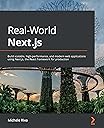
Real-World Next.js: Build scalable, high-performance, and modern web applications using Next.js, the React framework for production
Product ID: 825453874
Desertcart purchases this item on your behalf and handles shipping, customs, and support to Hungary.
Learn how to use Next.js for building web apps without compromising performance, user experience, and developer happiness Key Features Develop scalable web applications using Next.js Use Next.js as a frontend for existing backends and e-commerce websites and understand how to implement it with any headless CMS Deploy Next.js on different platforms, such as Vercel, DigitalOcean, and AWS, or on your own server Book Description Next.js is a scalable and high-performance React.js framework for modern web development and provides a large set of features, such as hybrid rendering, route prefetching, automatic image optimization, and internationalization, out of the box. If you are looking to create a blog, an e-commerce website, or a simple website, this book will show you how you can use the multipurpose Next.js framework to create an impressive user experience. Starting with the basics of Next.js, the book demonstrates how the framework can help you reach your development goals. You'll realize how versatile Next.js is as you build real-world applications with step-by-step explanations. This Next.js book will guide you in choosing the right rendering methodology for your website, securing it, and deploying it to different providers, all while focusing on performance and developer happiness. By the end of the book, you'll be able to design, build, and deploy modern architectures using Next.js with any headless CMS or data source. What you will learn Get up to speed with Next.js essentials and learn how to build apps quickly Understand how to create scalable Next.js architectures Choose between different rendering strategies, such as client-side rendering (CSR), static site generation (SSG), server-side rendering (SSR), and incremental static regeneration (ISR) Write unit tests and integration tests in your Next.js application Discover the powerful routing system and Next.js' built-in components Design and build modern architectures with Next.js using GraphCMS or any headless CMS Who this book is for This book is for web developers who want to improve their React skills by building scalable and maintainable full-stack applications using the modern Next.js web framework. Intermediate-level knowledge of ES6+, React, Node.js, and REST is assumed. Table of Contents A Brief Introduction to Next.js Exploring Different Rendering Strategies Next.js Basics and Built-In Components Organizing the Code Base and Fetching Data in Next.js Managing Local and Global States in Next.js CSS and Built-In Styling Methods Using UI Frameworks Using a Custom Server Testing Next.js Working with SEO and Managing Performance Different Deployment Platforms Managing Authentication and User Session Building an E-Commerce Website with Next.js and GraphCMS Example Projects and Next Steps for Learning More Review: Well balanced, easy to get through - It's hit-or-miss with technical books, so I was pleasantly surprised that this book backfilled the gaps in my knowledge of Next.js without going overboard and trying to cram every possible Next.js topic into one book. Probably like most developers approaching this book, I'm already seasoned with using React, most other topics related to frontend development, and am comfortable with both consuming and writing APIs. I got (more) into using Next.js in the past year, and had looked up enough info in their docs to get things done, but knowing full well that even though I was getting things to work, I probably wasn't doing it in the "best practices" way with respect to Next.js. I was basically taking my React knowledge and just creating components in a Next.js framework without really leveraging Next.js as a server-side rendering tool. So if that's you too, I'm not going to judge! The book talks about the must-knows of server-side rendering, static site rendering, folder structures, and moves into testing, hosting environments, and example sites that could be built with Next.js. Judging the book on just that content, I give it 5 stars. I know other reviewers mentioned that the API that is mentioned in the book isn't working or wasn't working. I didn't find myself needing to do anything with the book's code and/or API as I was just using the book to backfill knowledge and look at the printed code examples to reinforce a topic. My review is based on the structure and content of the book, but yeah, I can see that a book that alludes to an API, but the API isn't working, could be a deal breaker. I'm still giving the book the full 5 stars as it served my needs and I improved from having invested time and money in it. Review: API server broken - While following along with the examples in this book it uses a self maintained example server that’s currently returning 404 not found for endpoints. Makes working through the lessons challenging and overall a bit disappointing.
| Best Sellers Rank | #1,661,478 in Kindle Store ( See Top 100 in Kindle Store ) #191 in User Experience & Usability #260 in User Experience & Website Usability #286 in Web Programming |
M**.
Well balanced, easy to get through
It's hit-or-miss with technical books, so I was pleasantly surprised that this book backfilled the gaps in my knowledge of Next.js without going overboard and trying to cram every possible Next.js topic into one book. Probably like most developers approaching this book, I'm already seasoned with using React, most other topics related to frontend development, and am comfortable with both consuming and writing APIs. I got (more) into using Next.js in the past year, and had looked up enough info in their docs to get things done, but knowing full well that even though I was getting things to work, I probably wasn't doing it in the "best practices" way with respect to Next.js. I was basically taking my React knowledge and just creating components in a Next.js framework without really leveraging Next.js as a server-side rendering tool. So if that's you too, I'm not going to judge! The book talks about the must-knows of server-side rendering, static site rendering, folder structures, and moves into testing, hosting environments, and example sites that could be built with Next.js. Judging the book on just that content, I give it 5 stars. I know other reviewers mentioned that the API that is mentioned in the book isn't working or wasn't working. I didn't find myself needing to do anything with the book's code and/or API as I was just using the book to backfill knowledge and look at the printed code examples to reinforce a topic. My review is based on the structure and content of the book, but yeah, I can see that a book that alludes to an API, but the API isn't working, could be a deal breaker. I'm still giving the book the full 5 stars as it served my needs and I improved from having invested time and money in it.
M**O
API server broken
While following along with the examples in this book it uses a self maintained example server that’s currently returning 404 not found for endpoints. Makes working through the lessons challenging and overall a bit disappointing.
D**A
Excellent reference for Next.js development
The book gives a great overview essential Next.js development requirements. Big value can be found in parts two and three of the book. There you will find an array of deeper dives of in-demand development practices that are essential in today's dev environments (e.g. testing, SEO, deployment platforms, and authentication.) The examples are fun and realistic. I recommend this book to someone getting started with React development or someone wanting to have a development patterns with Next.js reference on hand.
G**E
GraphQL and REST APIs are broken...
Could be a great book, but I will not suggest buying it unless these links are fixed, as you simply would not be able to follow the guides.
P**O
Libro consigliato
È un buon libro per imparare ad utilizzare Next.js per chi si avvicina allo sviluppo web.
G**I
A waste of time and money.
The book offers only a few interesting points. The urls to follow the example are broken which makes it less pleasant to move forward. There are many more valuable resources on youtube. The purchase was a waste of money for me.
C**O
It’s ok, but, not for me.
It’s ok book. At the time I bought it because it was the newest book on next.js at the time. I should have bought a newbie book instead. It depends on your journey, and where you are at.
C**Y
Great book in you want to learn to build web products
Great guide easy to follow the online resources are easy to download/clone. One thing I really like about this book is it's not just random stuff you won't really build outside for the sake of it. You learn to work with CMS systems and build things you would build like a store and how to do authentication.
W**R
a perfect starting point
In a nutshell this book is a perfect starting point into the world of production-grade full stack web development especially using Nextjs. The focus of this book is the application performance and the developer experience. The author writes about it in great detail with a lot of enthusiasm, full of conviction, solid understanding and great hands-on experience in Nextjs. Just like Nextjs framework targets the entire life cycle of building the production grade web applications, the author walks the readers through the entire life cycle of building web applications. Along the way, he shares a lot of valuable advice and great directions, again it is all based on his own experience as a proven Nextjs developer. Please do not expect this book alone will give everything to study full stack development, rather it must be seen as a perfect guide which walks the reader through the whole developmental life cycle in great breadth and length. One must also follow the pointers and additional references given in it. Notes: There are some inactive urls given in the book, this must be tackled by the readers by their own individual commitment which is the only additional effort to be traded to make use of this great compilation. This book is based on the page router, and the latest is the app router. However, to me the whole point is in the rendering strategies in Nextjs which is independent of the two routers. Thanks and Regards WeDoTheBest4You
Trustpilot
1 month ago
3 weeks ago