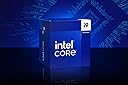
Desertcart purchases this item on your behalf and handles shipping, customs, and support to Hungary.
🚀 Power your passion with the ultimate 14th Gen Intel Core i9!
The Intel® Core™ i9-14900K is a top-tier desktop processor featuring 24 cores (8 performance + 16 efficiency), 32 threads, and a blazing 6.0 GHz max clock speed. Compatible with Intel 600 and 700 series motherboards, it supports both DDR4 and DDR5 memory and PCIe 5.0, making it ideal for gamers and creators demanding uncompromised speed and responsiveness.


| ASIN | B0CGJDKLB8 |
| Best Sellers Rank | #21 in Computer CPU Processors |
| Brand | Intel |
| Built-In Media | Item |
| CPU Manufacturer | Intel |
| CPU Model | Intel Core i9 |
| CPU Socket | LGA 1700 |
| CPU Speed | 3.2 GHz |
| Cache Memory Installed Size | 36 GB |
| Customer Reviews | 4.2 out of 5 stars 1,621 Reviews |
| Global Trade Identification Number | 05032037278522 |
| Item Dimensions L x W | 3.94"L x 5.91"W |
| Item Weight | 0.09 kg |
| Manufacturer | Intel |
| Mfr Part Number | BX8071514900K |
| Model Number | BX8071514900K |
| Number of Items | 1 |
| Platform | Windows 11 |
| Processor Brand | Intel |
| Processor Core Count | 1 |
| Processor Count | 24 |
| Processor Number of Concurrent Threads | 48 |
| Processor Series | Intel Core i9 |
| Processor Socket | LGA 1700 |
| Processor Speed | 3.2 GHz |
| Secondary Cache | 36 MB |
| Software Update Supported to Date | unknown |
| UPC | 735858546966 |
| Unit Count | 1 Count |
| Warranty Description | 3 year |
| Wattage | 125 watts |
D**N
5.8 Daily up to 6.2GHZ 8200mts cl38 Daily Driver.
This professional CPU isn't designed for the average user. However, if you're a tinkerer at heart, eager to dive deeper than the surface-level information often presented in YouTube "videos" (or should we say, commercials), this is unquestionably for you. I've acquired multiple units for various builds and configurations from a wide array of retailers—Best Buy, Newegg, and others included. For those considering a purchase, I highly recommend using an Apex/Apex Encore motherboard or another reputable 2-DIMM board for this CPU, else you will never get high bandwith low latency ddr5 tunes to be stable. In general AM5(AMD) or LGA1700(Intel), especially ifoverclocking is your goal, a high-quality cooling strategy is crucial; (not just for Intel either lol...my x3d crap runs hot by design...) annnywaysss....for those opting for an AIO, ensure it includes at least an 8th-gen Asetek pump and a 360 Thickboy copper radiator with performance fans. Avoid the aesthetically pleasing but functionally inferior Lian Li reversed SL Infinity fans. Genuine static pressure fans, capable of efficiently doing the job, are what you need. Despite what your favorite YouTuber might suggest, prioritize efficiency over aesthetics. Temperature control with this platform is paramount! When selecting DDR5, opt for well-binned options. If a high-binned QVL-compatible set isn't your choice, at a minimum, go for Hynix A for single-rank and Hynix M for dual-rank. The 14900K, when expertly tuned, becomes a gaming and multitasking powerhouse—achieving 43k to 44k in Cinebench R23, with 6.2GHz boosting, 5.9GHz across its 8 physical cores and 8 threads, and 16 physical e-cores at 4.7GHz, for a total of 32 threads, of which only 8 are virtual. With hyper-threading and e-cores enabled, it supports 8200-8400 MT/s CL38 DDR5 RAM, boasts sub-55ns bus latency, and sub-9.3ns FWL. It's a marvel in AIDA64 full (minus SSD), burn-in stress-test stability. Adjusting all cores down to 5.8GHz and boosting to 6.0GHz can further reduce bus latency to easily below 50ns (easily being relative to your experience). If you're going with Hynix A, you will need additional RAM cooling at 8000MT/s or higher with sub-50ns latency, as the sticks will start to error quickly at higher temps. OCCT and Kahru stability testing are a must. Understanding Important Voltages Voltage management is crucial when overclocking any high-end processor like the 14900K. Incorrect voltage settings can lead to instability or thermal throttling, ultimately degrading the CPU. Here are the key voltages to understand and manage: * Vcore: This is the most important voltage for CPU stability. Overclocking typically requires slightly higher Vcore. I recommend running at a 1.24V-1.26V range for stable performance under load, depending on the CPU's individual characteristics. Some chips may need more or less voltage for the same clock speeds. * VccSA (System Agent Voltage): This voltage controls the power to the memory controller and other components that affect memory and interconnect performance. Increasing VccSA slightly (1.0V–1.2V) can help with higher memory overclocking, particularly when pushing DDR5 to its limits. However, it's a fine balance, and too high can result in unnecessary heat. * Vccio: This voltage affects the CPU core's stability, especially during heavy workloads. A small increase (1.05V to 1.15V) can help ensure stability at higher frequencies. * Cache Voltage: For overclocking, ensuring that the CPU cache voltage is properly tuned helps maintain stability with higher core frequencies. If you're running multi-core loads, this is vital. * Ring/Uncore Voltage: Often overlooked, this voltage influences the performance of the uncore and cache. Keeping this at a lower level can help manage thermals better and improve the overall stability of your setup. Locking Cores for Stability and Performance Boost Locking all cores at a set frequency is one of the most effective ways to manage your CPU's power consumption and thermal output. While some might undervalue this approach, in practice, it's a well-desired strategy for ensuring stability and longevity of the 14900K. By locking cores at 5.8GHz under manual overclocking, you effectively maintain stable performance without relying on fluctuating boost clocks. The CPU will perform at a consistent clock, ensuring a predictable workload, which often leads to more stable thermals and lower peak voltages compared to using adaptive turbo modes. This approach also reduces the chances of sudden voltage spikes and temperature fluctuations that can cause instability, especially during gaming or other intensive tasks. It's an excellent way to optimize both gaming and multitasking without pushing the system to its thermal or voltage limits. Essentially, locking cores can lead to: * More consistent performance (especially in sustained workloads). * Lower overall temperatures. * Reduced power draw, keeping your CPU running at its peak without over exertion. Real-World Performance Considerations Despite the capability of 3 EATX connections to easily deliver over 400W of power, I'd advise against exceeding 325W bursts daily. The performance gains beyond this point are minimal without extreme overclocking and cooling methods. Increased voltage/power requirements could significantly shorten the lifespan of your CPU. For tinkerers, this CPU is a dream come true. The X3D Elephant in the Room: Don't worry, I own one, and this is about science, not purchase bias. We'll sidestep intricate discussions about CLDO, FCLK, and MCLK concerns, and why the substantial L3 cache has become an essential workaround for the instability caused by chiplet-based IMC in handling DDR5 for gamers. If the augmentation of the L3 cache wasn't primarily to address DDR5 issues stemming from the chiplet design, why not significantly enhance and accelerate the L1 cache? The design doesn't allow for it since it's not monolithic, which wouldn't be practical. Those well-versed in the subject matter understand this. While chiplets represent the future, we must acknowledge that this future hasn't fully materialized for every aspect of computing, allowing us to look beyond the "normie YouTuber AMD cults." Indeed, I own a 7800X3D build and absolutely adore it! It excels in gaming... primarily in GAMING! Thus, there's no cause for concern. Let's briefly touch on the "benefits" like reduced thermals and supposed platform longevity (as if motherboard chipset upgrades and advancements in power delivery methods don't occur... humor me, over the planned 6 years). I, too, long for Z390 features on my Z790 board (/end sarcasm), not to mention the potential for longer boot times when tinkering with DDR5 or PBO, or even under normal conditions, and texture stutter/tearing... oops, and all those other delightful topics Lisa tends to highlight without addressing the influence of influencers with communications degrees rather than computer science degrees. Just having fun—do what you love! I don't blame Amazon, Intel, AMD, or Nvidia more than the other. Manufacturing and shipping issues happen. The chip I received from Amazon didn't meet my expectations, but my other purchases have been exceptional. By chance alone, the other four 14900Ks I've received from various distributors have been stellar! Note: Settings in pictures have been daily-driven—no stability concerns—all AIDA64 stress-tested for multiple hours and hundreds of gaming/workload hours. I can get bus latency down to under 50ns but need to decrease core clock to a locked 5.8GHz and some other tunes. It depends on what needs to be done—either/or is screaming fast, even 55ns at that bandwidth. I wouldn’t recommend going for 6.2 daily UNLESS YOU REALLY KNOW WHAT YOU ARE DOING, are willing to DELID, and have amazing cooling. KNOWING WHAT YOU ARE DOING IS NOT WATCHING TECH TUBE. Update—As of Dec 28, 2024, I have not experienced ANY stability issues so far, nor have any of the other well-versed system builders and tuners/XOC nerds in our Discord (about 600 people). Most are running on OG microcode lol... it is all about keeping vCORE down and the steps needed to do so... Eg. if you configured your system properly in the first place there would have never been a stability concern less you got an early 13th gen.. YES, YOUTUBERS ARE WRONG, IMAGINE THAT LOL. If you want stability and do not have years of experience tuning, you will need to properly handle PL1 and PL2 values, as well as lock core clocks to a reasonable frequency that corresponds with safe voltage according to your VID and what you can under-volt while maintaining STABILITY during active use. Be sure to stay within thermal, voltage, and power guidelines. THERE IS NO COOKIE-CUTTER SOLUTION—each piece of silicon from any manufacturer is different. Do NOT leave this stock. If you do not at least understand what VID and Vcore are, this is not the processor for you and you need to buy something more plug-and-play. These are built for experienced enthusiasts. My daily tune, still stable all this time later: zero gaming issues, zero shader crashes, it just works. 5.8GHz locked, 8200MT/s CL38. YOU MUST UNDERSTAND YOUR VOLTAGES. Each CPU will be different and require its own specific tune to hit what I have here IF IT CAN AT ALL. My processor has an Asus rating of 120 on the P cores—it's GREAT. It runs -0.135V at all listed frequencies and never really goes above 1.26 Vcore at idle or load, on average hovering around 1.19V-1.24V vcore YOUR results WILL vary. I could run 6.0GHz without any worry for degradation likely still under 1.325 max and average around 1.27-1.29, or even with boosts to 6.2GHz, but why? If you can show me real-world performance issues caused by an average 200MHz less, I'll concede I'm wrong! But yeah, 6.0GHz stable with very low chance of degradation is achievable on this chip. YOUR chip may vary. All of the above should be a given but if you are here reading this, this is not advice, you need to fundamentally understand hardware and anything said here will not get you where you need to be. Intel could have done better by letting the public know this processor is NOT beginner friendly, I lock at 5.8, still score 40-44k r23. We can still do moonshot runs to 6.2 but the processor becomes so inefficient past 5.9 with reasonable cooling, there is no real point as does any other modern CPU. Stop the boosting on all platforms, AM5, Core Ultra, I9 and etc. If you are going to leave it enabled, MONITOR THE RIGHT VOLTAGES! Most of all, enjoy this beast, but as with all beast, it requires the respect it deserves, if you are a person who needs to watch LTT to build a PC, this cpu is not for you. Love you Linus. <3
J**R
IF YOU WANT THE AIR COOLED OPTION
I'm not going to go over the same performance reviews others have done, yes its very fast for only $550 its the king of the poor mans build PC. my last PC its replacing was a $1000 10980xe and looking at the numbers the 14900k in average is 70-77% faster than the 10980xe. the only disadvantage between the 2 was the 10980xe had 48 PCIe lanes and ran 32c to 56c hot. i can't say the same about the 14900k heat, its spreader is almost half of the 10980xe. you can't just simply add a stock cooler or a "MC'watercooler" and expect the problem will solve itself. this is the first CPU in my 26 yrs of building PC's you have to plan out your cooler set up. ever since a 2012 water leak from these Mc'watercoolers (all in one 2 fan radiator kits sold by name brands) Ive never trusted them cost me $1500 in damages. The only water coolers that don't leak for me were the ones i built but water cooling is expensive and you have to inspect them at least every 3 months for debris in the tank or leaks. with air i only have to clean the pc 2x a year. yes you can control temps with an air cooler, and get the same temps as a 3 fan radiator water cooler. I'll post the results without adding a watt limit in the mobo post screen. here is the parts i bought to air cool running the new cinabench 2024 for 30 mins i can get max performance on a defualt non OC not hitting above 99C on the P cores 1. Noctua NH-D15 chromax.Black | Dual-Tower CPU Cooler | 140mm | Black 2. Noctua NF-A15 HS-PWM chromax.Black.swap (this adds a 3rd fan for the air cooler you'll need it) 3. FDXGYH 4 Pcs CPU Heatsink Fan Buckle PC Mainboard CPU Radiator Fan 12CM Wire Buckle Upper Hook Type Fixing Clip (these buckles are compatible with noctus 140mm fans) 4. Easycargo 40mm Heatsink Kit 40mmx40mmx20mm (this you place on the flat base of the noctua cooler will help dissipate heat) 5. Easycargo 100pcs Heatsink Assortment Kit Small Cooler Aluminum Heat (these you throw on the back of your mobo on and around the mount brackets you'll me amazed how adding heat sinks on the back of the mobo will reduce temps) 6. Thermal Grizzly Kryonaut (this is the best thermal grease cooler by 1-2c cooler than artic silver mx 6) 7. Thermalright Intel 12th/13th Generation LGA1700 Anti-Bending Buckle ( a must add a little thermal grease on the cpu side flaps this buckle is 100% aluminum will al help dissipate heat. then i went to my mother board software options (mobo is an MSI MEG Z790 ACE MAX) select "CPU cooler tuning" select "tower air cooling" which will limit the wattage draw to under 300w also note if you are not using a Water Cooling Reservoir you should also use this option, water cooling a 14900k and OC really does require a reservoir, and a 4x 120 fan size radiator if you're simply using a pre-built 2x fan radiator its not enough to handle the 14900k and the CPU is known for drawing 370w plus!! so using air cooled i got a 2371 score with no watt limiter option an temps were 78-100c on the p cores, and with the 300 watt limit the score was 2328 with temps 70-99c never hit 100c case the limiter would kick in. (note this is from CPU testing that punishes the CPU realistically i don't see this CPU going over 88c even on the most demanding game in 3 years. i personally do not recommend OC this CPU its already been pushed to its limits by INTEL at best for another 100 watts when all you're getting is 3-4 more FPS and that's not worth it. and all these people bragging a 6.2-6.5ghz OC, there just flexing for clout, then they take the CPU back to default. i already have my P cores spiking to 6.002 at 288-300 watts, and under 99c temps; adding 0.198mhz will meaning nothing for apps and gaming. personal note the MSI MEG Z790 ACE MAX Gaming Motherboard is absolutely amazing at squeezing out all the performance of the 14900k worth the $700 price never crashed during testing that 26 power phases is godly compared to my last gen EVGA x299 dark had 12 phase...RIP EGA :(
J**E
Great performance
Pretty good price. A huge performance upgrade over the 12700k it's replacing. With a little power management I have it running nice and cool with the veetroo v5, though a cooler upgrade is in the future.
S**E
Intel support is top tier awful
My Intel CPU failed in under a year. I never overclocked it. The system was running perfectly one day and completely dead the next. I tried to troubleshoot myself for 5-6 hours, checking connections, removing and testing components, flashing BIOS, everything. No luck. On day 3 I took it to Geek Squad at Best Buy. Cost: $100. The PC was there for 2 days. They called and confirmed the CPU was dead after testing with a known working CPU. At least now I knew the issue. Day 5 - Best Buy Geek Squad calls and confirms the CPU was dead after testing the system with a known working CPU. At least now I knew the issue. I called Intel Support. The number is a +44 UK line even though I live in the U.S. The call quality was awful, and the rep struggled to understand English. She seemed kind, oddly she ends up being the better part of this nightmare experience, but it took over 20 minutes just to get my name, email, and phone number entered correctly. Please, AI wizards, start replacing call centers with something functional. Begin with Intel’s. While on the phone with support, I emailed the Intel support agent i was speaking with photos of the CPU, confirmed serial numbers, proof of purchase, and the full Geek Squad report from Best Buy verifying the CPU was defective and undamaged. You’d think that would be enough for a quick replacement, right? Nope. Here’s how Intel handles support: First, I was told they would send me a special return box that I’m required to pay $25 for, non-refundable, I think she said there was an option to upgrade to a faster delivery service that I could pay more for. just so I can ship their faulty CPU back to them. This has to be done before they even start sending out a replacement. I’m well within the 1-year warranty period, and it’s not exactly a secret that 14th-gen i9 chips have issues. Second, before Intel ships me the new CPU, I have to pay the full price of a replacement CPU upfront “for Intel’s safety (support agent's actual words).” They said it would be refunded sometime after they verify things on their end. Apparently, a Geek Squad diagnosis, serial numbers, and proof of purchase aren’t enough verification for Intel. So realistically, it’s going to take 2–3 days to get the return box, another 1–3 weeks (if I’m lucky) before getting a working CPU back, and a few hundred dollars out of pocket during the process. My money and time, customers money and time for Intel's product failure. Wrapping it up Intel CPU fails within warranty → customer spends hours troubleshooting → pays for a repair shop to confirm defect → pays Intel $25 (or more for faster time frame) to ship the bad unit back → pays again upfront for Intel’s “safety” → waits weeks for a replacement and refund. Is there support from Intel hidden somewhere in this process I can't see? I'm actually involuntarily supporting Intel essentially. So when your latest-gen Intel CPU dies, expect it to cost you around $800 total and a couple weeks of downtime. If I were a company with a high failure rate on a product and wanted to avoid replacing tons of them.. I wonder if i'd try making the process a nightmare and way more costly to the consumer to discourage that to save myself money.
J**O
Still the best CPU you can get as of 2026.
The 14900K(F/S) is the fastest monolithic CPU, period. Though it has it's difficulties and is now last gen, if you care about pure latency and frametime stability (which affects game feel the most), this is the best choice. If tuned right, this will beat out it's main competitors (The 9850X3D and 285K) in actual game feel despite those two often having higher maximum FPS. This is due to the 9850X3D and 285K using chiplet and tile based architectures respectively, creating noticeable I/O bottlenecks and stutters in games and general usage. 14th gen Intel on the other hand, uses a unified monolithic core, meaning there's zero latency between the CPU cores, memory controller and CPU I/O, avoiding these issues entirely. It is REQUIRED you tune it right: -E-cores off. This is critical for gaming. Disabling these provides a massive power draw and stability improvement while not losing anything for gaming, especially important on windows 10 or most linux distros which don't have e-core scheduling. -HT off. This is optional and you should consider your usecase for it, turning it off improves latency and power draw at the cost of max throughput. Turn on for AAA gaming/streaming, turn off for FPS or other latency critical games. -1.35V static vcore. Tune LLC to bring idle and load voltage to around 1.33 to 1.29v respectively. Any higher is not recommended for 24/7 usage. If you get at least an average sample, you should be able to set 5.7 to 5.8 static at that voltage. Expect to take away 100MHz if using HT. -Current Excursion Protection (clock stretching) disabled. Unnecessary feature at low voltage, turning it off reduces microstutter and latency. -Memory speed: Use at least 7200 with good timings if you want the most performance, 1R 2x16 Hynix A-die recommended. If you use common DDR5 6000-6400, you may lose 5-10% gaming performance or more. TLDR: It's the best you can get, if you can handle the tuning.
Y**L
They will ALL die. (Edit, faulty Asus board).
Edit: It is my Asus board. I was getting latency spikes and freezes when acceleration needed to happen in windows. I was also getting severe latency when more than 3 USB devices were plugged into the board. I changed from my Asus z790 D4 Strix to my old trusty z690I Aorus Ultra Plus ddr4 and ALL the issues (other than degradation that already took place) are solved. This is not my first asus board that kills components with terrible vrm regulation. This will be my last Asus board. Shoutout to Intel support. They are amazing to deal with. Literally one phone call, & 20mins later my rma was approved and a crosship approval also issued. Amazing. Seriously. It doesn't make sense that both CPUs (new 13700k and 14900k) would die in literally like 2-3 months and have the same symothoms. It is not just ring that collapsed on the two new 13700k and 14900k. Its the memory controller from my observed behavior. The first 13700k was oxidized which is why the entire chip died. I'll need to get my hands on a ddr5 board to test my theory. I'll make another edit when I do. Original Review: All of them will eventually die, Ring collapse is something ive seen on three 13th-14th chips. First a 13700k, then another, and now a 14900k. The first 13700k ran auto voltages and was delidded. It Ring collapsed due to voltage spikes on the old microcodes (I presume). My second 13700k (also delidded) collapsed for seemingly zero reason. It was ran at below 1.35v on adaptive voltages at all times on a static clock speed. My 14900k (which i left 100% stock with paste on my aio) collapsed on 1.25v set static (vid and vrm), with a voltage protection cap of 1320 in the uefi. 1.25v is core voltage. 1.35vddqtx 1.25v-1.35V (MAX) Vccsa ^ These voltages were ran on all of them. They all died. No matter what you do, they will die. There is something SERIOUSLY wrong with this architecture. My 12900KS had ZERO issues with ring clock stability. I will likely ask for a refund and buy it once more. Ironic how things worked out. Edit: When these CPUs work and are in a board that works properly. It is by FAR, the best experience I've ever had on a desktop. Monolithic architecture is something that you cannot beat. The instant feeling of everything you do. It just works, and it works amazingly. Thats why ive had 3 of them and keep gong back. Nothing else comes close. Specially when you go to windows 10 LTSC Iot with e cores off. Its a different world. Trust me.
J**H
Get a quality AIO and proper cooling for this CPU.
Definitely recommend using a quality 3 fan AIO for this pupper. Cause she runs HOT. I actually only have a 2fan AIO from Corsair and it cools it enough but my PC runs very very loud. This CPU is great for gaming performance and the best Intel basically has to offer currently there. But it is one hot pupper. Definitely get adequate cooling especially if you hate a noisey PC.
D**R
Prompt shipping. Arrived as advertised.
This processor is as described and arrived when Amazon said it would. I was able to complete my build on schedule without having to wait for new parts. That said, be sure to do your research before installing a 14th-gen Intel CPU! Even with a top-of-the-line cooler, you'll have to undervolt this processor to avoid thermal throttling. Check Intel's recommended settings and work from there. Depending on your motherboard, there's also a good chance you'll have to install a BIOS update to support the new chipset. With my current setup and undervolting, I'm basically getting 13th-gen performance at a premium price. I'm hopeful that future firmware updates will improve performance and allow for higher clock speeds for sustained periods. But for now, you're paying a lot extra to get minimal, if any performance improvement over a 13th-generation processor.
A**R
Powerful CPU, needs good cooling
Arrived on time. Powerful CPU, requires a motherboard to handle the power requirements.
A**D
في البداية كرهت المعالج
في البداية كرهت المعالج وبعد تركيب مبرد جيد تغير كل شي
R**N
Runs well
Runs well
M**B
Much Better than the 12700
I had a second PC running Linux with an i7 12700K, as it provides integrated graphics I didnt need a discrete GPU, and as its unlocked I expected to be able to get a lot out of it. I run heavy multi processs workloads, and so I installed the 12700 and it worked as expected for the first few hours. But, after a few hours the PC would reboot or shutdown due to the CPU hitting 100 degrees and thermal protection kicking in. After a week or so of messing around in the BIOS I did manage to finally get the CPU to be stable. Then I realised on Amazon that Intel CPUs were dropping in price so I bit the bullet and purchased the i9, and I am very glad I did. The i9 CPU stays 20-30 degrees cooler than the 12700k, and sits at 70o hen running very heavy workloads (using all cores at 80-100%), it will chomp away for 24 hours in this state. I haven't had to change any BIOS settings to get it stable, although obviously buying a K processor means I will start tinkering with it soon enough. All this is to say that the processing is 30% more performant with my use cases, and the CPU runs 30 degrees cooler. I am extremely happy I bought this, and now the Intel stability issues are resolved (BIOS firmware causing excess voltage) I would recommend this chip to everyone who wants a hevy workload CPU. I do also have a AMD 7950x in another machine and I dont see much performance differrence between them. If anything, the Intel chip boots to OS 10 times faster than the AMD, and it also supports more PCIe Gen 5 lanes, so if I was to choose I would get the Intel.
H**.
Recomendable. De lo mejor que he tenido
Buenísimo, pensé que se calentaría mucho al darle programación en paralelo y para nada con buen AIO se mantiene fresco.
Trustpilot
2 weeks ago
1 month ago