Desertcart purchases this item on your behalf and handles shipping, customs, and support to Hungary.
🎧 Elevate your sound game—don’t just listen, experience every note!
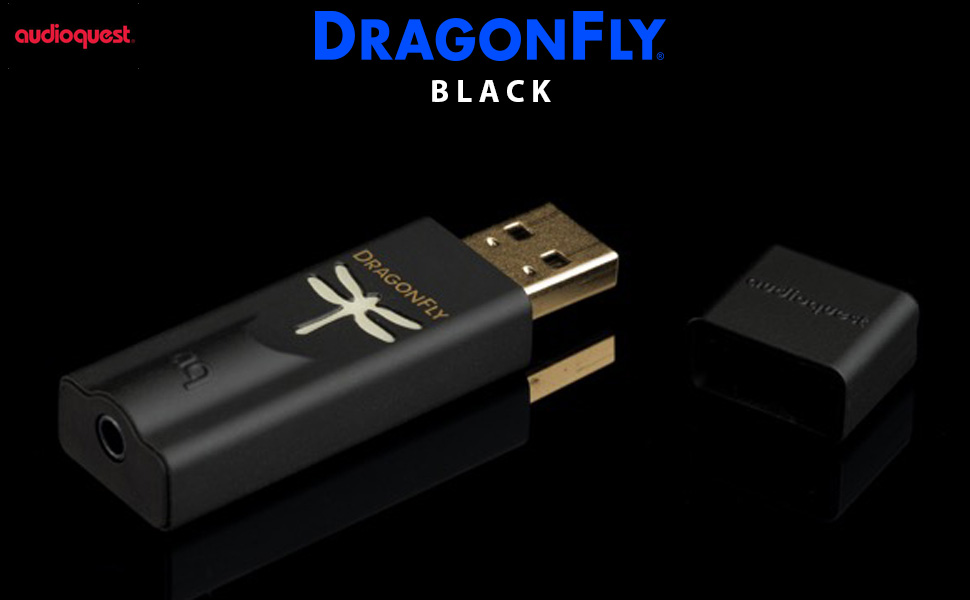
The AudioQuest DragonFly Black v1.5 is a compact USB DAC, pre-amplifier, and headphone amplifier that bypasses low-quality device sound cards to deliver rich, detailed, and dynamic audio. Featuring a 32-bit ESS Sabre 9010 DAC, ultra-low power consumption for mobile compatibility, and a multi-color LED that indicates sampling rates, it transforms smartphones, tablets, and computers into true high-fidelity music sources. Its plug-and-play design and premium build make it the ultimate portable upgrade for audiophiles on the go.


| ASIN | B01DP5JHHI |
| Brand | AudioQuest |
| Brand Name | AudioQuest |
| Compatible Devices | PC, MAC, iPhone, iPad, iPod, Android Smartphone |
| Country of Origin | China |
| Customer Reviews | 4.4 out of 5 stars 1,434 Reviews |
| Global Trade Identification Number | 00092592048188, 00092592076365 |
| Included Components | DragonFly Black |
| Interface | USB |
| Interface Type | USB |
| Item Weight | 3.5 Ounces |
| Manufacturer | AUDIOQUEST |
| Material Type | Plastic |
| Maximum Supply Voltage | 2.1 Volts |
| Minimum Supply Voltage | 5 Volts |
| Model Number | Dragonfly Black |
| Mounting Type | Plug-in |
| Number Of Pins | 4 |
| Number of Channels | 1 |
| Number of Pins | 4 |
| Part Number | DRAGONFLY |
| UPC | 009259204818 092592076365 092592076396 092592048188 |
| Unit Count | 1.0 Count |
K**S
Speechless. One of the best DAC + Headphone Amps out there
I am using it with a PC to power a set of Sennheiser HD 598 SR headphones. Dragonfly Black v1.5 has opened up the sound-stage very nicely and has ample clean crisp power to drive my headphones. The sound, for the lack of a better term sounds so much un-constipated. If you were accustomed to on-board PC soundcards, or mobile devices, then you are in for a big surprise when you switch over to this little gem. Dragonfly Black v1.5 puts you right in the middle of the performance with some jaw dropping sound. Dragonfly Black v1.5 is the size of a thumb drive but much more heavier metal construction. the outside is coated with a rubberised matt black finish. the Dragonfly logo will glow in different colors based on the sampling rate of your music. Comes with a leather pouch / sleeve. The volume is controlled by your device' main volume setting. No fiddly knobs to turn here. There are a few driver level sound enhancements which I have not tried, so cannot comment. Power is drawn directly from the device. If you are planning to use it on a mobile device, suggest you get the Red version as it draws a lot less power. More details on the Audioquest website. For anyone with a good set of headphones that are approaching audiophile quality, I will definitely recommend a DAC/Headphone Amp. And for the sake of simplicity, price, size, ease of use and practical design I will recommend the Dragonfly Black v1.5 with top marks. It's been an hour since I started using the Dragonfly, and the smile on my face refuses to go away.
R**R
Enter the Dragon!!!
What an awesome piece of audio equipment :-) lives up to all its online reviews.....i thought i had the crappiest pair of headphones, Philips ones (500 rupees), but this baby makes them sound like pioneers :) who knows what it'll do with technics and such like....the overall experience has been really good, right from ordering to delivery, the look and feel of the device, the easy setup-ability on Win 8.1.....select the DragonFly as the default device and youre ready to roll.....shows up in the drop down of Traktor as well, plays iTunes and Win media files equally well....everything sounds crisper and cleaner.....i tried some 128 kbps and 320 kbps mp3 files....great playback for the 128 kbps rips.....great output from Traktor as well......i play deep house so the bass is booming, the highs and mids are clean as well.....rock/metal is really good, played some ac/dc just to check and excellent output on that as well.....the best part is the plug and play-ability in its truest sense...great piece of engineering, i read all their onine manual and faqs and thoroughly impressed....nice one audioquest :)
A**N
AudioQuest DragonFly V1.2 USB DAC Review
AudioQuest, a part of the Quest Group, is an American manufacturer of high-end audio cables and accessories. In 2012, they released a small pen-drive sized USB DAC called DragonFly. Many reviewers and audiophiles called it a game changing USB DAC, back then, and it went on to become great commercial success in the world of computer audio. Since then, many have attempted to create similarly sized USB DACs and the market is currently flooded with many small USB DACs for use with computer audio and certain portable devices. This year, AudioQuest released an updated/tweaked version of the DragonFly and aptly named it as the DragonFly V1.2. AudioQuest has not only tweaked the original DragonFly USB DAC for better performance, they even reduced the price to USD 150 making it within the reach of a wider audience of computer audiophiles. Features & Functionality One of the key visible difference by which one can identify the DragonFly V1.2 from the original V1.0 is the 3.5mm headphone jack--it now sports a grey colour instead of the original black colour. The DAC is actually designed with only the most practically essential functions that includes: • The 3.5mm jack that can power headphones directly or can be used to connect to a Pre-amp/Amp too. • 64 position (computer controlled) analogue volume control. There are no channel imbalance issues here that some manual volume controls are by design plagued with. • Asynchronous USB data transfer feeding a 24bit ESS Sabre DAC. So there is no need for an external Asynchronous USB to S/PDIF or TOSLINK converter that some Synchronous DACs require to sound good with computer audio. • The LED indicator, in the shape of a dragonfly, changes colour depending on the resolution of the music being played. Green for 44.1kHz, Blue for 48kHz, Amber for 88.2kHz and Magenta for 96kHz. It looks really cool in use. I wish it also had an option to turn the LED off when the audiophile in me wants to get into serious listening without any distraction from the playful LED. • The DragonFly is restricted to 24bit/96kHz playback. In practice, it does not really matter to me because most of my collection is actually within that limit. And even if I occasionally ended up with a 24bit/192kHz download, I simply make a 24bit/96kHz copy of it for use with most of my other practical non-reference setups. • Made in the USA. What a pleasant surprise to see a `made in USA' tag at this price point! Setup & Performance The AudioQuest DragonFly V1.2 USB DAC comes with a removable dust cap and a small protection pouch as part of the included accessories. The entire body of the DragonFly V1.2 is encased in a rubberised material that gives it a nice grip/feel and a smart looking matt finish. I plugged the DragonFly V1.2 into my CPU's USB port and gave it a continuous 50 hours burn-in. I then sat down to listen to the DragonFly using two of my favourite headphones--the Fostex T50RP and the Sennheiser HD650. Both these headphones give me different perspectives and I use them according to the content I choose to listen to. I have my collection of FLACs saved in my Dell Vostro computer's hard-drive that includes 16bit/48kHz that I have carefully ripped/tagged from my collection of CDs and 24Bit/96kHz FLACs that I have bought/downloaded directly from the service provider. One of my recently discovered favourite music album is Random Access Memories by Daft Punk in 24Bit/88kHz. At about 50% volume the HD650 gets comfortably loud for me and it completely allows me to immerse into the performance. When I first listened to the DragonFly V1.2, out of the box, I felt that the bass was a little over powering for my taste. With burn-in, the bass is now cohesively stouter and does not draw any attention to itself. Burn-in has also opened up the soundstage and placement of instruments for the better. The T50RP is an old school semi-open orthodynamic headphones, used by sound engineers on shoestring budget, that is notorious for rolling off frequencies on both extremes. The HD650 on the other hand is a dynamic open-back headphones that has a wide frequency extension and is a benchmark for many audiophiles. The T50RP has this unique ability to pick-up micro details from poorly mastered old Indian recordings that the HD650 simply smoothens out for a cleaner and pleasing presentation. For this reason, I use the T50RP to listen to old Indian recordings that do not have too much of frequency extension and it plays those old recordings faithfully well and they are also more 03 dimensional on the T50RP than on the HD650. When listening to more pristine and well mastered western recordings, the HD650 is simply no match for the T50RP. Listening to some Indian songs from early 1980s, I was able to hear microphone feedback and other artefacts with the T50RP that I just could not hear with the HD650. The DragonFly V1.2 has this unique ability to retrieve all the details in the recording without ever getting clinical at all. I could listed to this little USB DAC all day long without any listening fatigue. There are some live recordings of Mohammed Rafi, possibly concerts from the 1970s, that was remastered and released by Universal in India. I have them ripped and stored as 16bit FLACs. The lead singers' voice is captured very well but the passages where the crowd is cheering, in the venue, is not very clear enough, either because of poor recording equipment used at that time or the data may have faded from the master magnetic tapes, over the years due neglect. I use these recordings as an acid test for testing DACs. Very few DACs, that I have tried, has been able to resolve and give some credibility to the sound of the cheering crowd in these recordings. With the DragonFly V1.2 what I heard was merely a very unclear and almost distorted sound--quite honestly, I was not expecting a DAC powered by the computer's 5v USB power supply to actually pass this really challenging test. There are very few recordings in my collection which are actually this complicated and challenging. With most of my other well recorded and mastered music, the DragonFly V1.2 displayed a good balance of texture, timbre, timing, separation, placement and soundstage. Even the spectral balance is faultless, to my ears, unlike some of the other detailed DACs that I already have that usually comes bundled with a compromise or two. Comparison & Alternatives I compared the DragonFly V1.2 with the Musical Fidelity (MF) V Series II system that I use as my desktop computer audio setup. This system consists of a V-DAC II (Asynchronous DAC) and V-CAN II (Headphone Amp) that is powered by a V-PSU II (Linear PSU). This MF V-Series II system cost me over USD 1000 (equivalent of INR 60K) with all the accompanying essential accessories and tweaks in 2012. Listening to Kenny G's music from the album Greatest Hits, using Foobar2000 with Wasapi Event option, the saxophone has more air, presence, body and texture with the DragonFly V1.2 than the MF gear. The differences are subtle but discernible. The MF gear also failed to pickup the micro details in the South Indian recordings and neither does it resolve the crowd cheering passages from Mohammed Rafi's recordings, mentioned above, any better than the DragonFly V1.2. YouTube videos were a pleasure to listen to with the MF gear and they allowed me to discover new artists and their work, some of which are not available for sale. Asynchronous DACs almost always have a blacker background compared to their Synchronous counterparts. For this reason, I sometimes use a Musical Fidelity V-LINK Asynchronous USB to S/PDIF convertor with Synchronous DACs to wring out better performance when watching YouTube videos. Listening to Arijit Singh's live performance of Tum Hi Ho at MTV Unplugged (Season 3), the MF gear had always sounded spot-on to me. Listening to this familiar performance with the DragonFly V1.2, I could hear better venue ambience, the background vocals are more audible and better placed, instruments had better attack and decay, and there is more `life like' feel to the crowd cheering during the performance. These small differences actually helped me appreciate a familiar performance much better than ever before. Sometimes, it's hard to judge the performance differences between 02 devices when the quality of the recording/media is good. I have to give an analogy here to better explain this. I'll take the inspiration from an alternate hobby--photography. If there are 02 compact cameras from 02 competing brands--say Canon and Nikon, equally priced, similarly specified/featured and targeting the same market, then choosing the better camera becomes a little tricky. The more you test them in broad daylight the harder it gets to pick the right/better camera. The best way to test them will be in low light conditions--the camera with low noise is the one to go for. Likewise, when I'm listening to DACs, I use old recordings to gauge performance differences. The lesser the quality of the recording, the greater the differences, of course, there is a point after which a poor quality recording cannot be revived by any DAC regardless of cost. I played YouTube videos of some old Indian movie soundtracks from 1980s, the MF gear focused more on what is missing in those recordings and the DragonFly V1.2 focused more on what is left of those same recordings--ear opening revelations there! Both DACs gave different perspectives and I enjoyed the focused, insightful, musical, agile and less noisy presentation of the DragonFly V1.2 better. The DragonFly v1.2 leads the performance with more micro details, better cohesion and less laidback than the famous/infamous Musical Fidelity house sound. I'm amazed at how much the soundscape for USB DACs have changed over the last two years. So much computer audio performance from the DragonFly V1.2 for so little money! I also took the opportunity to compare the DragonFly V1.2 with other USD 100 Synchronous DACs like the Acoustic Fun PocketDAC and the Audiotrak Prodigy Cube. There simply is no competition here until I throw in a Musical Fidelity V-LINK Asynchronous USB to S/PDIF convertor with some decent USB and digital interconnects into the equation. With this clunky, complex and expensive setup, I'm able to wring out better performance from the Acoustic Fun PocketDAC, but it still lacks the rhythmic precision, detail retrieval and finesse that the DragonFly V1.2 exhibits. The PocketDAC, on the other hand, allows me to watch TV in better fidelity than my TV's headphone output due to the S/PDIF input that it comes with and it can be connected directly to the Tata Sky's digital S/PDIF out. So a lot also depends on what one wants to do with a DAC. Accessories & Tweaks The USP of the DragonFly is that there is actually nothing to tweak at all. It is as simple as just plug and play. There are no USB cable, digital cable, Asynchronous USB converter, linear PSU and other after market audiophile investments here. I think it is after a very long time that I'm actually listening to music instead of thinking about trying to tweak the sound for the better. The accessory that I use with the DragonFly V1.2 is the DragonTail--an extension USB cable from the AudioQuest Carbon family of USB cables. It is priced at USD 17 (equivalent of INR 1000). It compliments and protects the DragonFly V1.2 from USB plug damage, in case you happen to accidentally bump on it, and wear/tear caused from constant plugging and unplugging of the male USB Type A plug from the computer or a portable device. My only gripe with the AudioQuest DragonTail USB extender is that, in use, there is a 0.5cm gap that allows for dust/grime to settle and maybe even allow corrosion to set in on the exposed DragonFly's male USB plug, over a period of time. I wish the female USB port of the DragonTail had a collar long enough to cover the male USB plug of the DragonFly, to make them look like they are one long single piece of accessory, cut and put together from the same AudioQuest fabric. Since AudioQuest manufactures both the DAC and its essential accessory, I'm sure this is a fixable issue and maybe they could consider reducing/removing the gap when they choose to release the DragonTail V1.2 in the future. In order to facilitate the use of AudioQuest DragonFly V1.2 USB DAC with headphones, integrated amps and other devices, AudioQuest offers a wide variety of cables that suits the taste and budget of every type of audiophile. I'm yet to give them a spin though. Conclusion & Rating The AudioQuest DragonFly V1.2 continues to be ahead in the game of USB DACs, just like its predecessor, despite its price and size. It is actually more of an accessory than a USB DAC, in the sense that it travels with my headphones everywhere I go and all I have to do is just plug the accessory at the tip of headphones' cable. I'm now able to enjoy good fidelity without carrying any cumbersome equipment around with my Laptop. The AudioQuest DragonFly V1.2 USB DAC is highly recommended to anyone who appreciates the convenience of computer audio and also demands good fidelity on the go. Whether you are looking for a USB DAC for connecting a HTPC to a 02 channel audio system, setup a desktop computer audio system or for portable headphone applications with a Laptop, this little USB DAC does it all. The Sennheiser HD650 headphones with the AudioQuest DragonFly V1.2 USB DAC makes for a very good match and I cannot think of a better performance for under USD 650 (equivalent of INR 40K) that this pairing has to offer. The soundscape for USB DACs is evolving so fast that I'm amazed at how much performance has been packed within the 02 inches of DragonFly real estate. Truly a remarkable and commendable feat by AudioQuest! Pros • Commendable performance--for the price and size. • Comes bundled with a dust cap and a small protection pouch as included accessories. • Made in USA. Cons • No option to turn off the mostly attractive and yet sometimes distractive dragonfly shaped LED. • When the DragonTail is used with the DragonFly there is a 0.5cm gap between the two that awkwardly exposes the DragonFly's male USB plug.
P**V
Sound is more together and solid
I just received my DragonFly Black and thought I'd share my impressions. I was previously using Fiio Q1. While it was delivering good sound, what I notice on the Dragon Fly Black is that the sound is more full and more together. It seems to be coming from a single source and the silence which is backing it is more solid and full. This may be due to the noise reduction. The sound is great and instruments can be heard I guess the way they are meant to be heard in a studio or something. I could not have hoped for something better short of a live performance. What I notice is that the sound is not rough around the edges and it is dileneated pretty well. The frequencies from one instrument do not fall into the band of another.It is damn solid. I have yet to hear tons of music on it. I guess it will be done in due time.
A**A
Tiny powerhouse
Excellent DAC+amp in a deceptively small form factor. I am using it with a Sennheiser HD 598 SE. It sounds amazing compared to my laptop's default headphone out. The instruments are well separated, the low end is taut and deep unlike the muddy bass produced by headphone out. There is no shrillness in the high frequencies, voice is crisp. The only downside is the price, it's pretty overpriced in India. Overall I'm satisfied with my purchase
V**A
THE BEST DAC AT THE PRICE!If you are a music lover this will change your life!
Compared to the RED, the tonal balance is little dark(meaning bassier), with lack of separation and airiness. But compared to the RED, at the price point, its definitely worth it! When paired with a BA earphone this will give the perfect tonal output across the audible range! I would have loved to see the construction and casing of the DAC to be much sturdier.The construction seems to be a little loose. But, its not a deal breaker, just a minor crib.
C**H
It is the biggest rip off of this century
The dragonfly black DAC is nothing but an electronic gizmo to bypass your mother board's built-in DAC and then seemingly provide you with better quality sound while listening to audio files on your PC/Laptop using over the ear headphones. You can achieve the same thing by using a high-quality headphones such as audio technica etc and a simple headphone amplifier costing no more than Rs.500/- The DAC chip on your motherboard, if you own a decent PC/ Laptop is good enough to provide the same listening experience. The DragonFly Red costing Rs.20k is a total scam.
J**H
Excellent Sound
My Rig : Galaxy s7 as source with sennheiser hd 598 se headphones. Flac files ranging from 16 bit 44.1 khz till 24 bit 96khz. Itunes m4a files. Excellent, full sound. Lots of details audible. Easy plug n play function, tested on android, ios macos and windows. Great sound everywhere. Much better than any Fiio product available in India. The brand itself is a purely American brand and the dac is made in USA. A huge relief from chinese companies made dacs which have flooded the market. Highly recommended.
M**A
Mejora signicativa de la calidad de sonido
No descubriré nada a los audiofilos con mi comentario. Seguro que habrá Dac USB mejores o que gusten más. Que tengan mejor relación calidad precio seguramente ya no. Para los usuarios normales que como yo dudan de hasta que punto merece la pena la compra de uno de estos: Produce una mejora significativa en la calidad de sonido con respecto a tarjetas de sonido integradas y/o sencillas. Esa diferencia puede ser abismal si lo comparamos con portátiles básicos o tarjetas de sonido usb económicas... y se reduce si comparamos con dispositivos que incorporan chips de sonido de calidad, como pueden ser tarjetas de sonido dedicadas decentes, placas base de gama alta o algunos mac. Por la diferencia de sonido... puede no merecer la pena la compra. Dependerá de las exigencias de cada uno, de con que lo comparemos, a que lo vamos a conectar, tipo de archivos que vamos a escuchar y de nuestro presupuesto. Obviamente, es tontería comprarlo si no es para combinarlo con unos altavoces o auriculares decentes. La mejora en sonido ya se nota si escuchamos archivos mp3, pero se vuelve más interesante para escuchar archivos sin perdida y sonido de alta definición. Yo reconozco que podría vivir sin él pero me lo he quedado. De hecho, compré también un Fiio K1, que cuesta la mitad, pero que sí he devuelto para quedarme con el Dragonfly.
R**Y
What else 😊🌴
Ancienne installation: ampli Rotel/CD Teac/enceinte Castle Trent II.... On remet un coup de jeune aux géniales Trent/Quobuz/Ampster BT II/ Nuc Intel sous Linux Mint et.... cette petite chose de Dragonfly. 600 euros, ramener en franc = 1/4 de mon ancienne installation. 1 Premier test sans le dac Wouha ... les enceintes respirent les aigus sont un peu trop présent mais humm de bonne basse précise et langoureuse. 2 Le Drangofly Plus de voie 😋... magique ... magnifique Tout est la, équilibre, finesse, espace , puissance. Mais le Drangofly reste en 16bit/44000. Pulse audio bloc ma sortie 😖 Avantage de Linux!!! on modifie les paramètres d’échantillonnage....Et le dac s’éclaire direct en violet. COOL 3 Le test ultime Purple Rain en 24bit/192. J’en pleure encore. Prince est ressuscité. 6 minutes de pure hypnose. 🙏 Alors les vieux, jeter votre vieux matos, et kiffer 😉le numérique. Et merci à Audioquest pour cette petite pépite.
J**N
Fantastic device and good value.
Using good headphones (NAD Viso HP50) the sound quality blew me away - better than I expected. Reduced noise I didn't even realise was there and really improved sound clarity and detail. Sound stage and imaging also much better now. Treble clarity improved but not sibilant, mids more are detailed and better separated, bass extends deeper and is more controlled. However, this all depends on your headphones - cheap ear buds won't improve much, while higher end phones will probably sound much better. Build quality is really good as well - it feels nice and solid, and the rubberised coating prevents fingerprint smudges. It connects snuggly to your USB port and holds the 3.5 mm plug tightly. Be aware that with easy to drive headphones (like the HP50) you will need to keep the volume really low - on laptop with Windows 10 I keep the volume between 3/4 out of 100 - any higher is probably dangerous to your hearing for long term use. These phones really don't really need volume amplification but the dragonfly black cleaned the source sound incredibly well. Absolutely worth every penny. The dragonfly red (which I haven't heard) is supposed to further improve clarity, but I doubt it will be very noticeable. The red version has better amplification, and is probably only worthwhile if you have more difficult to drive head phones like the beyerdynamic DT 770s at 250 ohm. Also be aware that the dragonfly (black or red) may or may not work with either your android or iOS devices for a variety of reasons. For iOS, it requires the right lightning to USB cable for your version of iOS - there are a combination of unsupported cables based on differences in the version of iOS, leading to problems ranging from crackling, popping, and no audio. I don't use apple devices so I can't comment further on this other than it's an apple problem, not an audioquest problem. For your android device, you will need an OTG USB cable, and it might not even work natively with your android device. There are two reasons for this: 1) some providers seem to have native android USB audio disabled despite that android natively supports USB audio since 5.1.1 (why, I have no idea), and 2) Android defaults the built-in hardware volume of the dragonfly to such a low level that you might not hear the music, and there is no external volume control to adjust this. The first problem cannot be fixed without rooting your phone and applying a custom kernel. However, you CAN use a 3rd party app to play music that uses it's own USB driver like USB Audio Player Pro (UAPP) or Hibymusic. Unfortunately, these don't support streaming services other than Tidal, so it only lets you play music you've already downloaded to your phone (e.g. mp3s or FLAC). I much prefer the interface for the free Hibymusic app, while UAPP is a paid app with a terrible user interface IMO. Now if your issue is quiet volume, you can adjust the internal hardware volume using the 3rd party app, exit the app, and keep the higher hardware volume. This doesn't seem to work for everyone though, so you may be stuck with using the app only and not have access to streaming services. Otherwise, this is a fantastic portable device that can't be beat for the price. If you're stuck between black and red, I'd select strictly based on amplification need - for easy to drive headphones (most 16-64 ohm headphones), the black will be absolutely enough. For more challenging phones (e.g. Senheisser HD600, Beyerdynamic DT 770), the red will be necessary.
R**V
Excelente producto por el precio! -no afecta igual a todos los audifonos-
Anteriormente he tenido la version 1.2 y era un producto muy bueno. Sonido neutral cuya principal característica era la claridad y separación de instrumentos lo que terminaba en aumento general del campo sonoro (soundstage). La version DFB (Dragonfly Black) tambien conocida como 1.5 es una mejora sobre la 1.2. Hay mayor definición y presencia de frecuencias altas pero lo mejor es que el sonido es aun más dinámico y con mejor claridad. Los agudos son lo primero que se nota que son resaltados para dar mas claridad, pero a diferencia de la v1.2 ahora son más suaves y rara vez molestos. En general la mejora se nota en el aumento muy notable del campo sonoro (soundstage) así como en la claridad (macrodetalles) y transparencia (microdetalles). La separación de instrumentos es otro plus. Cabe mencionar que el valor de este producto por el dinero es realmente muy alto. Se puede conectar a cualquier computadora, a los iPhone, iPads, tabletas y telefonos con android (salvo algunos modelos que no tienen soporte USB-OTG). Mejorando notablemente tanto la calidad de audio como el volumen que el dispositivo ahora puede proporcionar a audifonos que lo requieren. La ventaja de esto es que hace innecesario el uso de reproductores (DAPs) de audio dedicados de gama media. Con eso me refiero a que despues de comparar durante meses la version 1.2 contra FiiO X1, X3 y X5, el DAC/AMP Audioquest Dragonfly suena mucho mas claro y sofisticado que todos esos ladrillos. Y eso era con la version 1.2. Con la v1.5 la diferencia es aun mayor. Comparando calidad/precio de los FiiO vs Celular+Dragofly Black - los FiiO salen perdiendo y por mucho. A lo que voy es - para que traer un celular y aparte un reproductor dedicado si puedes traer celular y el diminuto DFB? Por si fuera poco, en modo USB DAC, los FiiO no suenan mejor que Dragonfly Black, sino suenan congestionados, no naturales y nada pero nada claros. Esto puede ser algo desconcertante para algunos pero después de comparar extensivamente los FiiO con DFB ya no aguanto la inferior calidad de sonido de FiiO X5 (que es el que más usaba). Tambien suena mejor que DAC/AMP Hifiman EF2A (que está mas caro), que FiiO E10K, FiiO E17K y hasta mejor que Apogee Groove. Pero no todo es excelente. Hay que aclarar que es un hecho que diferentes personas pueden tener experiencias opuestas con este producto y luego se preguntan "¿Por que dicen que es tan bueno si no noto la diferencia comparado con mi compu/cel/iPhone?" Lo que pasa es que no todos los audifonos responden igual y eso es algo que he comprobado en numerosas ocasiones. En mi experiencia, varios audifonos en el rango de 30 a 70 ohms se ven afectados de manera mínima (un campo sonoro unpoco más grange, unpoco más de claridad). Por ejemplo casi no hay diferencia con audifonos Denon H-D600, Denon MM400, Sennheiser HD598 y con varios Beyerdynamic, de hecho en general la diferencia es menos marcada con audifonos de impedancia media (30+ ohms) que con audifonos de impedancia muy baja, como los IEMs (los intra-aurales). Audifonos con los que la calidad de audio mejora mucho: Sony XBA-30, Sony XBA-40 (muchisimo), Shure SE535, Shure SE846 (la claridad de sonido es impresionante con DFB) y Sennheiser IE800 (suenn aun más claros y más abiertos). Audifonos con los que mejora moderadamente: Philips Fidelio X1 y X2, Hifiman HE-400, Hfiman HE-400i, Pioneer HDJ-2000, Sennheiser Momentum 2, Sennheiser HD558 y Sennheiser HD700 Audifonos con los que tiene muy poco efecto: Denon AH-D600, Denon MM400, Sennheiser HD598 Otra cosa negativa es la durabilidad. Tengo que mencionarlo. Mi Dragonfly 1.2 se cayo de la mesa y con una sola caida tuvo para dejar de fincionar. Espero que este nuevo modelo sea más resistente. En resumen: Pros: -expande el campo sonoro (soundstage), mejora separación de instrumentos, mejora mucho la claridad de audio -suena mejor que los reproductores FiiO X1, X3 y X5, que los iPods, iPads e iPhones -suficiente poder para audifonos como HifiMAN HE-400i, Sennheiser HD700 y HD650 -excelente para los IEMs (intra-aurales) -funciona casi con cualquier celular -excelente para conectar al soinido del carro Cons: -puede ser fragil si se cae (la v1.2 se me descompuso con una caida) -con algunos audifonos no se escucha que mejora el sonido -con audifonos de sensibilidad alta (108+db) el volumen puede ser demasiado alto Recomiendo para: -personas que usan principalmente IEMs o audifonos de tamaño completo de alta impedancia -personas que no quieren gastar miles en un reproductor de audio dedicado -personas que quieren comprar su primer DAC/AMP pero no quieren gastar mucho. -personas que quieren un DAC/AMP portatil -personas que valoran sonido claro, detallado y neutral
K**T
Bästa med mobilen
Märker ingen större skillnad med datorn,i mobilen får musk mera bas och tryck en starkare upplevelse.
Trustpilot
1 week ago
3 weeks ago