

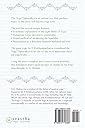
Yoga Yajnavalkya
Product ID: 62767393
Desertcart purchases this item on your behalf and handles shipping, customs, and support to Hungary.
Buy Yoga Yajnavalkya 2nd by Mohan, A. G., Mohan, Ganesh (ISBN: 9789810716486) from desertcart's Book Store. Everyday low prices and free delivery on eligible orders. Review: It can broaden one's horizon - There are many sides to yoga, and many yogas too. The book shows there are more sides to the eight limbs of yoga than what is tersely mentioned in Patanjali Yoga Sutras, and could serve as a corollary to it, perhaps. It is not for the beginner in yoga. Review: the best - the best book to read and meditate on.
| Best Sellers Rank | 409,747 in Books ( See Top 100 in Books ) 758 in Fitness through Yoga |
| Customer reviews | 4.6 4.6 out of 5 stars (84) |
| Dimensions | 15.24 x 1.09 x 22.86 cm |
| Edition | 2nd |
| ISBN-10 | 9810716486 |
| ISBN-13 | 978-9810716486 |
| Item weight | 263 g |
| Language | English |
| Print length | 190 pages |
| Publication date | 5 July 2013 |
| Publisher | Svastha Yoga |
T**S
It can broaden one's horizon
There are many sides to yoga, and many yogas too. The book shows there are more sides to the eight limbs of yoga than what is tersely mentioned in Patanjali Yoga Sutras, and could serve as a corollary to it, perhaps. It is not for the beginner in yoga.
I**O
the best
the best book to read and meditate on.
A**S
Essential read for the Sadhaka.
S**A
This book extended my expectations
S**A
An excellent read for any yogi.
J**R
Anyone interested in gaining a deeper understanding of yoga should read, study and incorporate the teachings of this essential yoga text. The translator states that this text is especially revered in yoga circles. Once you read the chapters it will be become evident why this is so. Emphasis is laid on different types of pranayama, dharana and pratyahara. In addition to describing the different types of pranayama, the text described five types of pratyahara and four types of dharana. Special emphasis is made on methods of utilizing these limbs of yoga to cause the ascent of kundalini up the susumna, the central subtle channel, towards the crown of the head. These methods are carefully described and can be practiced by anyone in conjunction with the use of yoga postures and the other limbs of yoga. The explanations are made explicit and read like a how-to-do manual. The translation is in clear, readable English. There is a Roman transliteration of the original Sanskrit. The greatest benefit are the footnotes, drafted by the translators of the book. They are intelligent, meaningful, and greatly aid the understanding of the text and general Vedic and yoga philosophy. The translator states that this is an”ancient” text but gives no idea as to the dating. There is no doubt that the antiquity of this text is a legitimate claim, because it is cited as authority for such later texts as the Hathayogapradipika. It also formed the basis for Krishnamacarya’s Makaranda Yoga, an excellent text on hatha yoga and which is unfortunately out of print. This book is recommended without qualification and will provide a great aid to the understanding of a daily yoga practice.
M**L
Vajnavalkya ist ein erleuchteter Yogi, der seiner Frau den yogischen Weg der Befreiung erläutert, nachdem sie ihn darum gebeten hat. Das ist im Wesentlichen der Inhalt des Buches, welches von A.G. Mohan zusammen mit seinem Sohn übersetzt wurde. Die Schrift soll älter als Pantanjalis Yoga Sutren sein und lt. Krishnamarchaya einer der wichtigsten Quellen im Hatha Yoga überhaupt. Das Buch ist in zwölf Kapitel untergliedert und enthält neben der englischen Übersetzung den Originaltext in Sanskrit sowie die romanische Transliteration. Zusätzlich gibt es zu jedem Kapitel umfassende Kommentare (in Englisch) als Fußnote sowie eine ausführliche Einleitung. Nur die Englische Übersetzung würde die 171 Seiten auf vielleicht 100 Seiten oder weniger schrumpfen lassen. Doch diese Seiten haben es in sich! Manches ist nicht einfach zu verstehen und ehrlich gesagt habe ich den Inhalt noch nicht vollständig durchdrungen. Dennoch halte ich den Inhalt als sehr umfassende Hatha Yoga Lektüre! Es werden die Marma Punkte (Energiezentren) erklärt, Pranayama, lediglich 8 (!) Asanas (Körperstellungen), Meditation bzw. verschiedene meditative Zustände, die Nadis (Energiekanäle), Vayus (die Winde bzw. Energietröme), Reinigungspraktiken sowie Bija Mantras. Wenn Du tiefer in das urpsrüngliche Hatha Yoga eintauchen möchtest, ist diese Lektüre eine lohnenswerte Anschaffung! Die Transliteration eignet sich sehr gut für Rezitation und Mohans Kommentare, der selbst jahrelang Krishnamacharyas Schüler war, brechen die Komplexität des Inhaltes etwas herunter. Wobei ich den Inhalt nicht im intellektuellem Sinn komplex sehe, sondern im wirklichen Verstehen bzw. durchdringen.
Trustpilot
3 weeks ago
1 week ago