
Desertcart purchases this item on your behalf and handles shipping, customs, and support to Hungary.
🐉 Unleash legendary monsters and epic tales — your adventure starts here!
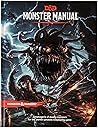
The D&D Monster Manual (2014) is a cornerstone resource for Dungeon Masters, featuring over 150 vividly illustrated monsters, 400+ detailed stat tables, and rich lore to inspire immersive gameplay. As one of the three essential core rulebooks, it equips you with everything needed to craft memorable encounters and bring your Dungeons & Dragons campaigns to life.


| Best Sellers Rank | 10,896 in Books ( See Top 100 in Books ) 9 in Role-Playing & War Games |
| Customer Reviews | 4.8 out of 5 stars 29,549 Reviews |
S**L
Monstrously and Maunally Brilliant to Behold.
I missed many of the gaming manuals throughout the 80s (and therefore saved some money) but with the arrival of this amazing edition, containing as it does almost all the "classic" creatures/beings familiar to most keen gamers, plus a fair number of newer entries that most may never have come across, for its price, is probably the most conscientiously filled and booted monster guide out there. Though many people looking at this cool tome are likely well versed in the many rules and stats of the beings in the D&D and Pathfinder world-and the gamebook world for that reason, this also acts pretty well as a cool introduction for the novice. It is very easy to read the book from beginning to end and it barely takes ten pages on the general rules before launching into a beautifully illustrated and well detailed history of a stunning range of monsters in a decidely helpful alphabetically succint system. Just before the bestiary begins, the first eight pages soak you easily in with a brief and welcoming introduction to the world of D&D, how this book works, the definition of 'monster' and the different types-i.e aberrations, beasts, undead, constructs and so on, with examples of each group. There's also brief breakdowns of all the other numerous stats-speed/skills/senses/languages/special traits/alignments. Sometimes this is just too much, and I often prefer the simpler Fighting Fantasy/Hero Quest game approach that all these stats multitudes that seem to interrupt play more than anything else as you mull over the meanings instead of just straight into an encounter, and in truth, seem to make something that's supposed to be hugely enjoyable far more complicated than it needs to be. And in truth, seems more designed for bleeding computer games than the grand old unbeatable idea of long gone yonder-tabletop gaming with miniatures, boards and scenery. But it's the monster chapters themselves that sell this book-and boy are they great. Almost all of them hit the extreme heights, with only seemingly truly redundant to the beautiful world of gaming, which sadly means that some other great beings are absent, and glaring omissions from this grand publication are the Phoenix, Kelpie, Fairies and the dreadfully ignored but quite brilliant Fimirs. I also realise that some others clearly can't be included if they were created by Games Workshop co-founders and creators of the Fighting Fantasy explosion of the 80s-Steve Jackson and Ian Livingstone. A pity as a fair number of their own beings-Rhino Men, Garks, Ice Ghosts, Scurrellors, Sentinels and Chamelonites are worthy of it-and also of having models based on them. A pity this, but on the strong side, the rich yet speedy round-up of each being's history (detailing how many were created) is far better than the basic and often smoothed over (ah, so you don't know either!) kobbled together bits and bobs summaries of the charming if hardly extensive 'Out Of The Pit'-the Fighting Fantasy monster accompaniment, of which this is a far more invigorating and prevailing version, not least because of the meticulous and outstanding full-colour illustrations of EVERY being named-from Kenkus to Hezrous and Nothics to Satyrs. At only a few times do certain drawings flag-mainly ones that contradict annoyingly with the beings I'm used to through the Gamebooks, so the Goblins and Hobgoblins in here (with red skin no less-they're not devils!) lose for me, as do the Kobolds and Troglodytes for being way too akin to the Lizard Men in likeness, just lacking. The Jackalweres are just wimpy attempts at werecreatures, yet kept seperate! The inclusion of something like a Werebadger or Wereape would be far better! And Orcs with grey skin?! What? And why Orcs are not referred to as Goblinoids I'll never know, when the hairy ape/bear humanoids the Bugbears are is a mystery that should really be cleared up. The Harpy's description is all well and good, but is a little too much like the Siren's in places, though the picture is lovely. And the illustation of the "Pixie" is blatantly a Fairy or a Nymph (if they have wings. A Pixie-the ones I know-cannot fly. Oh well. But in wins in spades with its thorough genius-such as intriguingly dangerous looking beings like Xorn's being neutral, and how a Genie isn't a Genie at all but an umbrealla term for four different types, what Elementals actually are and how they work, and best of all-the different types of undead and how they came into being. There's also a wry little piece at the start in the early introductory pages further reminding the reader that this is still THEIR world after all-and they can switch alignments and environments how they see fit! As my favourite (though I love most) FF Gamebook was always 'Demons Of The Deep'-an adventure set beneath the waves where you can breathe underwater, I was always miffed there would be no more like this, so to find several marine beings-Merfolk, Merrows, Kuo-Toa and the horrific but pretty Sahuagins, and to know there's models of other marine beasts is brilliant. My biggest gripe is that for all the scintillating and showy reels of the many death-dealing ways a large number of D&D monsters can attack and kill you and how many are invulnerable to usual weapons and an awful lot of spells, there is barely ANY reference to how they CAN be fought off/harmed/killed or escaped from when usual attacks fail. This is most unfair-even Out Of The Pit tried to include this, though they had nothing like the awesome number of almost impossible-to-face-and-live beings in the pages of this book. This makes me think we've got to do the work ourselves, and fair enough I guess, as it's our world after all. But this would still be much appreciated, not least cos the creature's different histories mostly offer not even a hint to what might may be done against them. There's a seperate A-Z for animals-mostly bigger versions of ones you find in this world-deer, bears, wolves, gorillas and so on, with a couple of weird inclusions that should really be in the Monster A-Z-i.e the lawful Blink Dog and Chaotic Death Dog. After this is another Appendix for the many types of human being/Elf/Dwarf people you can meet in the game-cultists, scouts, beserkers, pirates, guards, mages and so on. Most helpful is the Monster Index at the end which can take you straight to the monster you want rather than flipping impatiently, yet lovingly through the luscious monster prints. Also cute are the small sketches of certain beings spread about such pages-many witty such as the hulking Minotaur standing behind a human perusing a map or scroll and having no idea its behind him ready to pancake him, while a Rug of Smothering envelops a warrior, and a Giant Squid looks like it's just had a Tardis dropped on its head! At between £17.50 and £20, this painstakingly generally great manual is utterly indispensible and £10 less that the price Orc's Nest, War Boar and other gameshops place on it, though it's still lovely to see they carry it. The cover art is also brilliant but don't believe that beauty is only in the big Eye of that Beholder.
A**E
Nice, but Tome of Beasts is nicer
More important than the DMG for a DM, contains all the monsters you need to do a basic campaign. It's the same old monsters you know. You're not going to be surprised by anything here. Wish there were more psionic things in here though, because int saves are really underused in 5E. Lair action stuff is cool, as is the legendary stuff. Compared to ToB the "alternate versions" are used a lot more, stat blocks are better laid out, not over pages etc, the art is nicer and it feels like a superior product. But content wise, it's not. If you can get a copy of Tome of Beasts, it has over 400 monsters and is like twice as thick as this with more unusual and original monsters that your players won't have seen before, deffs recommend picking that up. But this is, like, the core sanctioned on that you're probs supposed to have. Depends on what you like really. Honestly, I think dragons, undead, goblins, orcs and anthropomorphic animals are all super yawn inducing, very played out, tired concepts that we've seen for decades already, so I find the Tome of Beasts stuff more appealing. Low CR monsters all are generally very boring too so it's not that fun for low level players. So many super high CR monsters that it's kinda frustrating to leaf through knowing that you're years away from being able to actually unleash them on your players unless you're feeling very George R. R. Martin-ish and want to TPK your party. I'm hoping Volo has some more interesting stuff, but let's be realistic, it's probably going to have more of the same. It's just not that interesting when all your best monsters are from Ancient Greek tales and Lovecraft, and your original monsters were invented because you had some cheap Chinese models and wanted to use them as minis (literally where purple worm, owlbear, bulette, rust monsters, umber hulk and a bunch of otehrs come from). Like, given that these people can write half the DM's guide worth of platitudes on inventing monsters, worlds, dungeons, religions etc, you'd think they could come up with some original monsters that are more interesting than a stat block. I don't need one of each anthropomorphic animal, each of which has no special ability. But, I digress, I've seen this all before a tonne, to a newbie this'd probably all be amazing and interesting so 5* it is.
R**T
Monstrously Good,
Great roleplaying supplement and also a great read. Immense piece of work, authors and artists to be congratulated. I have never felt the need to replace my 1979 Gary Gygax authored Advanced D&D Monster Manual, with the infamous David Sutherland "Flying Red Cow" cover illustration and so it is this venerable tome that I compared this new book to. How does it compare ? Well, the first thing to say is that this is very close to an updated version of Gygax's original....about 75%of the creatures here (pure guess) were in the 1979 book,and the vast majority of the rest appeared in the Fiend Folio or Monster Manual 2, the AD&D follow ups to the MM. The illustrations in the Gygax version are all (well, apart from the cover|) excellent, here the production values are higher and the pictures are in colour, at the very least the 5th edition version matches the original in this important area. The updated stats for the monsters, the main point of the book, of course, are, as user friendly as the original, most entries are a page or less and a range of levels from very low to very high. One area, where, I am afraid to admit,. this new Monster Manual does improve on Gary Gygax's is the texts on many of the creatures include short histories and ecologies which are absolutely perfect for inspiration for adventures, As one example the entries for " Centaur" both show great illustrations, have broadly similar game stats and, of course, are recognisably the same legendary figure from Greek myth. The new description though also has two adventure seeds within it, the centaur migration lasting generations coming into conflict with human cities built in their way and the old or lame centaur been left behind and having to be helped . Any DM worth their salt should be able to knock off an adventure...or even a campaign of adventures based on these hints. Lots of the descriptions include nuggets like these and as the point of game books like this is to spark players' imaginations this is a massively useful aspect of this work. Every D&D player will have their own ideas of how these monsters should be portrayed, not all will agree with every interpretation here but the introduction sensibly points out players can amend or ignore any of the information given here .Having said that, some of the decisions...Pixies not being Chaotic ? Tarrasques not been evil ? seem a bit odd. Monsters omitted also seem unfortunate..although some (eg Phase Spider) appear in the appendix , giving slightly shorter descriptions of creatures. No Titan though (replaced by the Empyrean) and no room for the Vargoyle, one of my faves. Some monsters included could also have perhaps have been consigned to history...do we REALLY need the Modrons?Or the Flumph?! My favourite enrty is the Kenku, brilliantly designed , again so that even an encounter with one will be an adventure in itself. Lead writer Chris Perkins has penned numerous adventures and it really shows. Not absolutely all monsters are a triumph, the Genies seem uninspired, for example, but the majority...Demons, Devils, Golems, etc etc are inspired. A shame a list of the original creators of the monsters couldn't be included somewhere in this lengthy tome...I recall many of these (Hook Horror, Giths. Kenku etc|) were designed by the fan community and it would have been nice for this to be acknowledged. The front cover illo , is, perhaps, not as striking as some of the interior pictures (how awesome would the Barlgura or the Hobgobiln or Werewolf illustration look on the front of the book?) but the Beholder is THE definitive D&D critter and surely beats a flying cow !
J**H
really good quality book
I've been wanting this for a while, and when I found it, I was happy with the price and the quality of the book. I have barely put it down and am enthralled by it. would definitely recommend to any D&D or general monster lovers.
T**T
Old edition, but better!
Awesome. Has every stat block of every mythical beast you can think of and WAY WAY more! It also has regular animal stat blocks. This is for DMs though (in case you weren't aware) and you need the players handbook and DM guide too. This is an OLD EDITION now but is still played by a lot of people because it is widely accepted to be way better. It's a great book, one thing to note, however, is that rules for your own monster creation are found in the DM guide, not here. Hope this helps, and remember that the other rulebooks need to be the same edition (2014, which is 5e, or 2024 which is 5.5e).
C**S
Love the book, but badly handled.
I absolutely love the content in this manual and it's a brilliant tool for DM's and worldbuilders. However, I cannot give a five-star review as my copy of the manual arrived with a torn page, which looks like it has been pressed flat for quite some time. It always disappoints me when I receive a used book with a torn page, but I bought this brand new, so at some point between the book being printed and me receiving it, it has been mishandled, by either Wizards' or Amazon staff, which is disheartening. This didn't happen with my PHB or DMG, so I was shocked that it happened to this book. This, of course, doesn't make the book unusable and I will gently correct the tear, but again, I must say that this is disappointing.
S**N
Great gift for Dungeon Masters!
Amazing, has lots of monsters for campaigns and super sturdy. Great gift for DMs too!
K**R
Value for money
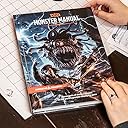
Beautiful quality book,
K**N
Alles in allem sehr gut gemacht.
Als Anhänger von AD&D (2nd Edition) war ich zunächst skeptisch, ob die 5th Edition tatsächlich mehr zu bieten hat wie die 3rd und die unsäglich schlechte 4th. Das Monster Manual hat mich dahingehend in nur wenigen Fällen enttäuscht und mich stattdessen sehr positiv überrascht. Pro: - Es ist sehr umfangreich und beinhaltet sehr viele Kreaturen. Unter anderem auch einige (aber (leider) bei weitem nicht alle) aus den AD&D Settings Planescape und Athas. - Die Qualität (zumindest meines Exemplares) ist sehr gut. Es wurde etwas schwereres Papier verwendet, das von einem robusten Einband zusammengehalten wird. Jeder erfahrene Rollenspieler weiß, wie wichtig das ist :) Neutral: - Die Illustrationen sind sehr schön gemacht - insbesondere jedoch die Dämonen (Baator) und Teufel (Abyss) sind leider nicht so schön wie im Planescape Setting aus AD&D. Allerdings muss ich hier auch einräumen, dass ich von eben diesem Setting ein großer Fan bin und entsprechend hohe Erwartungen habe. - Die Fähigkeiten und Beschreibungen sind auf das Wesentliche reduziert. Das erspart stundenlanges Nachlesen. Prinzipiell gefällt mir dieser Umstand sehr gut. Was dabei leider auf der Strecke bleibt sind die detailierten Beschreibungen des Verhaltens und des Lebensraumes etc. wie sie in AD&D gemacht wurden. Aber hierzu kann man - wer über die AD&D bzw. D&D 1st Manuals verfügt - dann in alten Regelwerken nachlesen oder sich eben diese Details ausdenken. Contra: - einwenig enttäuschend ist, dass am Ende einige Wesen nur kurz abgehandelt werden. Das Werk wirkt dadurch unfertig und es ist Schade, dass einigen der dort erwähnten Monster nicht doch eine ganze Seite bzw. mehrere Seiten gewidmet worden sind. Betrachtet man das Gesamtwerk, so ist dies aber nur ein schwacher Mangel. Fazit: Das D&D 5th Edition Monster Manual ist ein solides, robustes und sehr schön ausgearbeitetes Werk, das nicht nur hübsch neu illustriert, sondern auch auf das wesentliche heruntergebrochen wurde - nämlich die Monster im Kampf. Dadurch läßt es viele Spielmöglichkeiten offen und erspart viel Sucharbeit. Die 5th Edition hat das geschafft, was die 3rd und 4th nicht geschafft haben: Sie hat mich davon überzeugt, dass AD&D doch weiterentwickelt und verbessert werden kann. Das Monster Manual ist dabei ebenso entscheidend wie das PH oder DMG finde ich. DIESES Monster Manual zumindest macht den Wechsel zur 5th Edition doch sehr einfach für mich - vor allem durch die Vielfalt der aufgeführten Monster.
T**K
A great-looking tome of dangerous (and fun!) monsters for all levels of play.
A neuronphaser.com review. CONTENT (4/5) With 153 entries, and many featuring multiple statblocks per entry (goblins have the Goblin and the Goblin Boss; Dragons have all of the chromatic and metallic dragons at four different ages) you get an awful lot of monsters in this book. I’m not great at the mathz (English major and all) but I count something like 432 individual stablocks. That’s like 1/10 of the number of times I’ve played D&D, probably, but that’s still significant. Outside of statblocks, most monsters take up multiple pages, which means you get a pretty in-depth look at how the creature exists in the D&D world (always pretty setting-agnostic, but occasionally with a slipped-in reference to the Forgotten Realms), as well as story hooks and lair information. That’s a lot of content. Monster Ecologies Taking a deeper-dive into the information, one finds that there’s a few traits that don’t show up in the statblocks: these are the more “story-oriented” details, and there’s nothing in the statblocks that sum up any organizational ecology notes like in the Monster Manuals and Monstrous Manuals and Monster Compendiums of yesteryear. While I could complain about nostalgia and all that, take a look at the HackMaster: Hacklopedia of Beasts (2011). Not only is it gorgeous, but you also get: *A picture of the creature’s tracks, *It’s typical homelands/ranging grounds, *A size comparison to humans (i.e. adventurers A.K.A. prey) and *Not one but TWO ecology-type blocks of info. The Yield is especially cool for a monster-hunting campaign. Just sayin’. All that info can be way too specific for some people, but when you have the legacy of D&D behind you, it’s not like this information hasn’t already been detailed somewhere before (raise your hands if you read one of the thirty-thousand Monster Ecology articles in DRAGON/DUNGEON mags or on the D&D website over the past 30-odd years), requires zero rules-mechanics updates or conversion work, and can be formatted to fit in a small area of the page if you do some layout wizardry. Compare to a typical Monster Manual entry: Don’t get the wrong impression here: the monster entries look great! The concept art tells you volumes about the creature through art. The statblock is tight and contained. The descriptive text, though short, is both concise and frankly GOOD; it makes you want to go find one of these suckers and see if you can murder it and take its stuff! I’m just saying that they could’ve done a little more with some of that white-space and added a little extra world-building at little cost. Building Monsters Okay, so there’s a teensy-eensy missing, but overall the thing looks great. End of review? Hardly. Let’s actually look at some monster stats, and compare them to the rules in the Dungeon Master’s Guide to see how things stack up if you want to build monsters that fit with the designer’s own rules and regulations. The Goblin is a Challenge 1/4 creature. Doing out the math from the DMG (p. 274-ish), I came up with Defensive Challenge of 1: 7 hit points, but bumped up due to a higher-than-average AC of 15, and then another two bumps from the Nimble Escape ability, or so the table on p. 280 would have me believe. Goblins have an Offensive Challenge of 1 as well, since they deal out the lowly amount of 5 damage on average, but receive two bumps from Nimble Escape, again. Well, that averages out to a Challenge of 1, not 1/4. Not 1/2, but 1. Hmmm. What’s the Earth Elemental got going on? Well, he gets a Defensive Challenge boost from multiple Damage Resistances (bludgeoning, piercing, and slashing from nonmagical attacks), so you multiply hit points by 1.5 (assuming a target Challenge of 5) and you get an effective Defensive Challenge of 8. His Offensive Challenge is strictly made up of his attacks, so that’s a rating of 5. Do the math and you get 6.5, but the Earth Elemental has a Challenge rating of 5. Hmmm, again. Fine, let’s go ultimate-whackadoodle, as I like to say, and check out the Tarrasque, one of the scariest French-looking words I know. He’s got a ridiculous amount of immunities, Legendary Resistance, Magic Resistance…by my calculations, the Tarrasque operates at an effective 935 hit points and AC 27. That’s WAAAY off the charts, by nearly 100 hit points and 8 points of Armor Class. Offensively, we’re looking at a Challenge of 28 (deals about 224 damage/round if you use Swallow in place of Bite, and the +19 to hit bumps it up from 25 to 28). So I guess Challenge 30 makes sense (you’d get 29 mathematically, but considering how far past the charts for Challenge 30 the Tarrasque is in terms of defense, I think 30’s fair). On the one hand, we aren’t quite meeting expectations with the Challenge rating calculations in the DMG. But on the other hand, we’re not exactly far off on any of these: goblins are worse by 2, earth elementals are worse by 1, and the Tarrasque is about as close to dead-on as we can expect. The DMG tells us that this is as much art as science, and when you look at just how low a goblin’s hit points are, that seems fine, and the earth elemental is — if nothing else — a little bland in terms of combat, and extremely stupid. Let’s just say the stats are like a B+: they admitted the faults inherent in this system, and while it can be easily broken to a horrible degree, you’d have to pretty much intend to abuse the advice and ignore all existing monsters in order to muck things up too badly. D&D’s New Sexiness The new sexy in this edition of the game comes in the form of three things that you absolutely need to keep your eyes on and revisit time and time again as a reminder of how to make 5th edition D&D more tactical, more set-piece battle-ready, more “fantastical” in terms of environments and situations, and generally, just the best of all previous editions. Here they are. The Introduction The intro to the book does a fantastic job of providing excellent story hooks and encounter locations for monsters. It’s such a short section, but literally every sentence in there is jam-packed with “Hey DM! D&D may have a legacy so long it seems like ‘generic fantasy’ but here’s a bazillion ideas on what makes D&D adventure-ready, mysterious, and most of all, fun!” You get locales, lairs, and some very evocative ideas. Lair Actions Several creatures known for being territorial and carving out nasty lairs get a set of actions called Lair Actions. These show up in the descriptive part of the monster’s entry, because they are made up of three parts: A description of the types of places that the creature lairs in, usually with enough ideas to develop your own maps. A set of Lair Actions that occur on initiative count 20 (losing ties) and don’t eat into the creature’s normal actions. The Lair Actions are crazy terrain-based effects, or additional magical abilities that the creature can access due to how their nature suffuses the location of the lair. A set of Regional Effects that usually cause far-ranging, thematically pertinent changes to the natural terrain and landscape surrounding the creature’s lair. Aboleths, beholders, dragons, kraken, liches, vampires and more all get lair write-ups, Lair Actions, and Regional Effects. That’s a lot of world-building material that immediately turns into adventuring possibilities, and whether you plan out your campaigns or settings long in advance, or if you go week-to-week, it’s not hard to use this information to really show off the mood and feel of certain powerful creatures. Moreover, you can use these sorts of ideas to beef up individualized NPCs or custom monsters, giving them that extra oomph. Legendary Actions Many of the most powerful creatures gain Legendary Actions, which is usually three extra actions the creature can take at the end of another character’s round, and they regenerate each round. It’s kind of like extra reactions, but they are usually more devastating than an opportunity attack, or involve additional means for the creature to gain a significant tactical benefit before taking their turn. For example, a vampire can make a move, or perform a couple different types of attacks (biting is one, and kinda makes a lot of sense for a dude with long canine teeth, I’d say). In every case, the creature’s Legendary Actions have to be mixed up; you can’t use the same Legendary Action twice in a row. This forces the DM to mix things up and use the variety of actions — not all of which are going to be damaging attacks — to create more tactical combat encounters and feature more movement across the battlefield. And then there's Buffagoat. What? A short sidebar on page 317 explains how to re-skin statistics to represent a variety of new monsters. It’s great advice, but one of the examples is getting buffalo by way of using the stats for a Giant Goat. Yeah, a Giant Goat. Awesome. FORM (5/5) 5th Edition hit the deck running with some lovely hardcover books that are filled to the brim with artwork, and has some seriously professional binding. The Monster Manual is the biggest of the three core rulebooks (at least, I’m fairly certain it is), and looks great. Layout and all that is clean, it’s easy to find stuff at a glance — which is hugely important with monster statblocks — and the individual pieces of artwork themselves are phenomenal. One of my biggest complaints about most RPGs is the lack of “pictures for everything,” and that complaint is absolutely NOT here: there’s a picture for everything. Every monster gets its main profile pic in full, glorious color, and there’s always neat concept-style artwork, plus there’s the occasional half-page or 3/4 page set-piece showing monsters in weird settings, or a kuo-toa summoning what looks like a a dapperly dressed Cthulhu, and so on. I could go on and on — there’s silly sketches, awesome little “here’s how this thing moves” sketches — but the point is that D&D came back with a crazy art budget, slapped it all together in a gorgeous format, and matched it with ideas and rules that scream ADVENTURE! and FUN! when it comes to building evocative, dangerous monster encounters.
S**.
Great book
This is a great book with beautiful artwork and lot of information on all the monsters. One issue though is that the product arrived slightly damaged.
N**A
Bons textos, boa arte gráfica, capa resistente - bem estruturado e de fácil consulta
Qualidade da impressão na capa, relevos, qualidade nos textos e arte ao longo do livro - é um compêndio, ao estilo de um dicionário, não é suposto ter aventuras ou narrativas - excelente base para criar aventuras. Atenção a escolher porque há versão em Castelhano. Qualidade do papel podia ser melhor (tenho outros livros do estilo, com melhor qualidade) mas pelo preço vale a pena - ainda mais se comprado com o Player's Handbook e o Dungeon Masters Guide.
A**S
Perfecto
Llego en perfectas condiciones, ademas, el color y la calidad de impresión es increíble.
Trustpilot
2 weeks ago
1 week ago