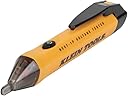
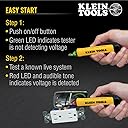
Cart Confessions: The Klein NCVT1P is a pen shaped tool with a much more specific career than signing delivery receipts. It provides non-contact indication of AC voltage within its stated range, with light and sound alerts. The appeal is a compact detector with a defined job and simple controls. A useful test tool should make its purpose clear before it earns a spot in the pocket. This one has a more serious assignment than the ordinary pen that has spent six months promising it probably still contains ink. The first specification to read is 50 to 1000 volts AC. Keep both the range and AC attached to that description. This model does not detect DC, so it is not a general answer for checking every battery powered project or low voltage accessory. The title's broad wording should not replace the actual specification. A tool can be useful within its intended range without becoming universal. The correct model for the task matters much more than the fact that several different testers all happen to fit in the same drawer. The most important limit is in Klein's own instructions: voltage may still be present when there is no indication. I would never treat silence from this detector as proof that a circuit is safe to touch. Follow the required electrical safety and verification procedure, using appropriate equipment and qualified help for the task. That is essential context for understanding a non-contact tool. Its role is specific. A small light can provide an indication without being promoted to the position of signing permission slips for electrical work. Klein also directs users to verify the tester's operation on a known working circuit within its rating before and after each use. Keep the instructions with the tool and understand that requirement before relying on it. The convenience of the pen format does not remove the operating procedure. I appreciate a product whose documentation explains the limits directly. The manual is part of the equipment, even if it is less visually interesting than a bright tip and a pocket clip. It deserves to remain findable after the packaging is gone. The alert design combines a visual indication with a beep. The listing describes green for the operational state and red with sound when voltage is detected. Those states have different meanings, so learn them from the supplied directions rather than guessing by a familiar color convention. A tool display should be understood in its actual context. A green light on a charger, a traffic signal, and an electrical detector do not all deliver the same message, which is a very good reason to let the manual speak for this particular device. Another useful detail is outlet compatibility. Klein does not recommend this model for tamper-resistant outlets. That is worth checking before buying it for a specific type of receptacle. Socket construction and other conditions can affect detection, as the instructions explain. Match the actual task and environment to the appropriate tester. A short model name can conceal meaningful differences across a product family. Choosing the correct version is more useful than assuming a similarly shaped tip will behave the same way everywhere it is pointed. The compact body and pocket clip are practical design features for keeping the tool available in an organized kit. The auto power-off function is also a sensible addition for a battery powered detector. It uses two AAA batteries, according to the listed contents and specifications. Follow the battery and care directions, and inspect the condition before use. A small piece of equipment can be easy to carry while still deserving a proper place and a proper check. The clip helps with location; it does not take over responsibility for the rest of the routine. For a buying decision, I would compare the intended voltage range, AC only operation, alert system, outlet suitability, and the manufacturer's instructions. Those details say far more than a general label such as voltage pen. This is a specific detector with defined operating conditions. Keep the model information handy if another tester is added to the kit later. A drawer full of similar looking tools can otherwise become a quiz about specifications at exactly the moment when a clear, deliberate choice would be much more useful. Would I Buy It Again? Yes, for its intended non-contact AC indication role within the stated limits. The small format, clip, and combined alerts are the practical features that appeal to me. My main advice is to learn the exact model, follow the verification instructions, and remember that no alert does not prove absence of voltage. Those details belong at the center of understanding the tool. It can keep the pen shaped convenience and the very specific job; an ordinary ballpoint remains better suited to signing anything that needs a signature.