
Buy anything from 5,000+ international stores. One checkout price. No surprise fees. Join 2M+ shoppers on Desertcart.
Desertcart purchases this item on your behalf and handles shipping, customs, and support to Hungary.
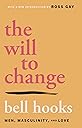
From New York Times bestselling author, feminist pioneer, and cultural icon bell hooks, an evergreen treatise on how patriarchy and toxic masculinity hurts us all. Feminist writing did not tell us about the deep inner misery of men. Everyone needs to love and be lovedโincluding men. But to know love, men must be able to look at the ways in which patriarchal culture keeps them from understanding themselves. In The Will to Change , bell hooks provides a compassionate guide for men of all ages and identities to understand how to be in touch with their feelings, and how to express versus repress the emotions that are a fundamental part of who we are. With trademark candor and fierce intelligence, hooks addresses the most common concerns of men, such as fear of intimacy and loss of their patriarchal place in society, in new and challenging ways. The Will to Change โcreates space for men to acknowledge their traumas and healโnot only for their sake, but for the sake of everyone in their livesโ ( BuzzFeed ). Review: The most relevant book on gender & patriarchy, while the focus is on men, it touches us all. - This is the most relevant and important book on men and masculinity I have read this decade, it includes the important recognition and explanation of menโs experiences as survivors (victims) of the patriarchy. As explained in this book men are not the benefactors of the patriarchy, but a specific target for exploitation at the hands of economic elites using social mores and violence to control them. This is also a critical read not just for men, but for women and anyone who is interested in understanding the origins and realities of the feminist movement and especially how it has failed men, and in doing so has failed women, families and society as a whole. This book doesnโt just talk about the problems of patriarchy in reference to our communities. It talks about specific perspectives, paradigm shifts, and actions we can all take to rectify these issues. Furthermore, this book is very accessible, very easy to read and quite engaging. Brilliant - Iโm so sad that we have lost Bell Hooks in recent years - she was one of the most important political and social leaders of our time. And this book clearly demonstrates that. In regards to how it made me feel? The his was the first time I read a book by a non masculine person that validated and empathized with the challenges that men face. It helped me understand many of the issues I have in my life. And it also challenges the misandry of this age. Honestly I believe that people from across the political spectrum, especially men, will find this book validating and and surprisingly support to the many men who are fighting for awareness of menโs issues, as well as men who are suffering alone in silence. This is a must read. Review: A Radical Path to Healing: Why Every Soul Needs This Book - Bell Hooks' The Will to Change is nothing short of life-changing. It is an eye-opening, deeply healing manual for anyone who has ever struggled with the complexities of interpersonal relationships. Hooks fearlessly calls out the systematic brainwashing embedded in Western cultureโand prevalent in parts of the Eastโthat dictates how we view masculinity, love, and vulnerability. Reading this was a pivotal moment in my own journey. It provided the clarity needed to understand my childhood traumas, not just as their personal failures, but as symptoms of a larger cultural sickness. More importantly, it offered a path toward finding compassion for those who inflicted that pain, breaking the cycle of resentment. What makes this book unique is its dual power: it is undeniably feminist, yet profoundly pro-men. hooks illuminates the root causes of dysfunction and hurt between the sexes, showing us that the enemy is not men or women, but the patriarchal conditioning that stifles our emotional capacity. She empowers us to take charge of our own minds, urging us to identify faulty thinking patterns and trace their origins. The first step to liberation is awareness, and hooks provides the map. I believe every person on Earth should read this book and actively implement her proposed solutions. If we collectively embraced this work, we could literally heal the world, ushering in a level of peace and unity that feels like a utopia. This is not just a book; it is a blueprint for a better humanity.
| Best Sellers Rank | #3,524 in Books ( See Top 100 in Books ) #1 in General Gender Studies #2 in Men's Gender Studies #4 in Feminist Theory (Books) |
| Customer Reviews | 4.7 out of 5 stars 3,276 Reviews |
Z**D
The most relevant book on gender & patriarchy, while the focus is on men, it touches us all.
This is the most relevant and important book on men and masculinity I have read this decade, it includes the important recognition and explanation of menโs experiences as survivors (victims) of the patriarchy. As explained in this book men are not the benefactors of the patriarchy, but a specific target for exploitation at the hands of economic elites using social mores and violence to control them. This is also a critical read not just for men, but for women and anyone who is interested in understanding the origins and realities of the feminist movement and especially how it has failed men, and in doing so has failed women, families and society as a whole. This book doesnโt just talk about the problems of patriarchy in reference to our communities. It talks about specific perspectives, paradigm shifts, and actions we can all take to rectify these issues. Furthermore, this book is very accessible, very easy to read and quite engaging. Brilliant - Iโm so sad that we have lost Bell Hooks in recent years - she was one of the most important political and social leaders of our time. And this book clearly demonstrates that. In regards to how it made me feel? The his was the first time I read a book by a non masculine person that validated and empathized with the challenges that men face. It helped me understand many of the issues I have in my life. And it also challenges the misandry of this age. Honestly I believe that people from across the political spectrum, especially men, will find this book validating and and surprisingly support to the many men who are fighting for awareness of menโs issues, as well as men who are suffering alone in silence. This is a must read.
N**E
A Radical Path to Healing: Why Every Soul Needs This Book
Bell Hooks' The Will to Change is nothing short of life-changing. It is an eye-opening, deeply healing manual for anyone who has ever struggled with the complexities of interpersonal relationships. Hooks fearlessly calls out the systematic brainwashing embedded in Western cultureโand prevalent in parts of the Eastโthat dictates how we view masculinity, love, and vulnerability. Reading this was a pivotal moment in my own journey. It provided the clarity needed to understand my childhood traumas, not just as their personal failures, but as symptoms of a larger cultural sickness. More importantly, it offered a path toward finding compassion for those who inflicted that pain, breaking the cycle of resentment. What makes this book unique is its dual power: it is undeniably feminist, yet profoundly pro-men. hooks illuminates the root causes of dysfunction and hurt between the sexes, showing us that the enemy is not men or women, but the patriarchal conditioning that stifles our emotional capacity. She empowers us to take charge of our own minds, urging us to identify faulty thinking patterns and trace their origins. The first step to liberation is awareness, and hooks provides the map. I believe every person on Earth should read this book and actively implement her proposed solutions. If we collectively embraced this work, we could literally heal the world, ushering in a level of peace and unity that feels like a utopia. This is not just a book; it is a blueprint for a better humanity.
D**3
FANTASTIC book. Challenging at times, but absolutely worth it.
This was the first book I've read by bell hooks- I was previously familiar with her work, but hadn't yet read a full piece. A bit of context about me as a reader, because I think that's a very important aspect of how this book will be received: I'm a man who considers himself a feminist ally. I do buy into the idea of feminism as important for the health and well-being of not only women, but men as well, so some of my reaction to this book may lie in the fact that it speaks directly to my interests. I have some prior familiarity with mythopoetic men's movement books like "King, Warrior, Magician, Lover" and "Iron John", which hooks addresses. For me, as someone who is working to develop my sense of identity as a thoughtful, respectful, compassionate man, this book was exactly what I wanted at this point in my development. If you're not familiar with bell hooks, she is a proponent of intersectionality - basically, the belief that privilege isn't necessarily a monolithic characteristic that lies only with specific groups, but rather a more fluid interaction between different characteristics of individuals as they relate to one another. A white woman and a black woman may both experience gender discrimination, but it may not be in the same way or to the same degree, based on the additional factor of race. (Don't take my explanation as airtight - I'm just trying to provide context.) Given this philosophy, hooks is able to provide a keen inspection of the ways in which patriarchy not only benefits men, but also harms them. If you hold the unfortunately common (and mistaken) belief that feminism sees straight, white men as "the bad guy", hooks will skewer that. She speaks to some of the societal structures that place unequal burdens on men, or teach us harmful ways of viewing ourselves, without losing sight of the fact that those same structures are harmful to women, people of color, and other minority classes. She does this with INCREDIBLE compassion and even-handedness - in fact, I would say that hooks' ability to discuss this incredibly charged subject matter with such an unwavering sense of caring, fairness, and courage is the single best thing about the entire book. Unlike some who claim to advocate for men, hooks speaks to these issues in a way that unifies and encourages understanding, rather than making one group or another into the boogeyman. There are a few areas which I found challenging and didn't necessarily agree with 100% - there's a section where she briefly discusses Dworkin, whose beliefs are challenging for most men, but she definitely doesn't shy away from talking about radical feminists and the reality of misandry (overblown as it may be in many circles). She doesn't deny that there are some feminists who have driven men away with anger, but she also doesn't pretend that they're a majority - nor does she pretend they don't exist because that might be more convenient. I was a little concerned when the subject came up at first, but she handles it so well that I came away with a sense of greater understanding and compassion. Similarly, she sometimes references Bly (Iron John) and disagrees with aspects of his philosophy (basically, how his work views women)- I see her point where she makes it, didn't necessarily agree completely, but again: she does it in such a way that I don't feel baited or dismissed, but as if I'm just hearing the opinions of someone who is clearly very educated, opinionated, and above all, dedicated to compassion and fairness. Overall, this book speaks to a very charged subject with unerring maturity, insight, and compassion. If you're able to read it with an open mind and heart, you'll likely find it as moving as I did. There are places where hooks speaks to painful realities of manhood with such clarity that it hurts, but in the end she reveals a path to greater connectedness, compassion, and emotional health.
S**N
Feminism must deal with men, too
bell hooks is a well-known black feminist author. She notes that dealing with the fundamental feminist problem of patriarchy requires helping men find better ways through life. She also notes that many men are themselves hurt by patriarchy. Men are often held back from their best lives because of shortsighted stereotypes of masculinity. In this book, she offers her reflections on how to help men heal from a culture of domineering and to enhance their relational skills. This book seems centrally geared towards a female audience. She uses terminology like โpatriarchyโ and โemotionally woundedโ common to feminist literature. These words are not words most men I know typically use. Were she to address a male audience, I suggest that she find substitutes like โdomineering cultureโ or simply โhurt.โ Courageously, she criticizes how women often internalize and support a patriarchal culture to the detriment of men and themselves. This book nonetheless represents a womanโs perspective on men, not a manโs perspective on men. Iโm not sure a lot of men will appreciate it, just as a lot of women might not appreciate a book written by a man about women. As a man who values women, I appreciated how she educated me about womenโs frustrations with men. I took issue with one chapter, though: the one about boyhood. She lays out a generic narrative about boyhood that simply doesnโt seem true to my personal experience. I have no doubt the abstraction applies to some boys, but just like feminism values the diversity of womenโs experiences, I contend that a variety of boyhood experiences exist that arenโt easily summarized in one overarching story. We all interact with patriarchal culture in different ways, and any account of boyhood should acknowledge this fact. Overall, this book offers an interesting investigation to gender relationships. We live in an era where many prominent men are emotionally stunted and devalue what used to be regarded as noble virtues. As hooks contends, many men simply need to โgrow up.โ Turning the tables, she observes that many women do, too. Feminists must take on the courage to confront domineering men in their lives and not tolerate them as partners. As a man, I fully support this ideal as a way of bettering family lives and seek to adopt it more in my own life.
M**K
A must read for all men and women struggling to find the good in us
I picked up this book at the recommendation of a YouTuber I liked and already considered myself a pretty open, emotionally in-touch man who didn't put too much stock in fitting into patriarchal standards of manhood. Yet still, this book opened my eyes to more ways that patriarchal society damaged me and other boys/men, this system that's supposed to be designed to benefit us doesn't even genuinely do that. This book reminded me of things I'd thought I'd forgotten about, times in my childhood or teenage years where I dared to step outside the prescribed notion of masculinity, before being shamed, mocked, and bullied back into that box. And now as an adult, I can reconnect with those parts of myself I buried to survive "comfortably." It makes me an all around better person. Better to others, better to myself, better to society in general. As for women, I think you'll find this book particularly useful as a tool to understand the patriarchy's effect on boys/men and how it leads us down these dark paths that you often end up suffering for. Make no mistake, it's absolutely not your responsibility to fix us, that's on us, but with this book, you might have vital context to better understand the situation to provide guidance or support to the important men and boys in your own life. While I wouldn't categorize this as a "self-help" book, it definitely helped me more than most of them that I've read. Bell hooks is a saint and a legend, and I wish I was more aware of her and her work before we lost her.
G**N
My #1 recommendation to those who are seekersโฆ
This book has not changed my mind but brought new thoughts to my being. The education within this book is overflowing, and it has given me a second life in my journey to healing. It is very true for me to see how I am wounded. I used to believe that was healing but Bell Hooks taught me that healing is now possible. Instead of getting to the finish line with this book, I am not able to get to the starting line of my own healing. Thank you.
C**N
A great primer for any man looking to change.
Short reviewโa great primer for any man looking to change. Just a touch of back story. As a kid I saw the Old Boys Club antagonize my mom in all kinds of nasty ways, so I decided my way of being a man would be to โdo no harmโ essentially embrace a sort of neutral passivityโฆ which kinda worked, but Iโve found passivity allows the patriarchy to still hold sway, and I am often still complicit. So, Iโve been exploring what a healthy assertive masculinity would look like. A friend of mine recommended bell hookโs book โThe Will To Change: Men, Masculinity, and Loveโ saying it is the only book out there addressing Alternative Masculinity. โThe Will To Changeโ is a broad description of what the Patriarchy does to menโDr. hooks describes a totalized system, I have to admit Iโve not experienced all the manifestations of patriarchy described, but Iโd imagine that just means Iโm either lucky or have some blinders. What follows are a few points made throughout the book: -Patriarchy does not allow for relationship Dr. hooks begins with the statement that women fear men, for we are a constant threat of violence to them. She uses an intense example by Barbara Deming, who describes the first time she felt true intimacy with her father, which was when she held his corpse. It was the first time there was no threat of violence in him. Put simply, Patriarchy involves domination, and love and domination canโt coexist. So, all intimacy within patriarchal culture is pretend intimacy. -The Patriarchy involves Domination Men living under the Patriarchy are constantly asking where they are on the social pecking order. There can be no sign of weakness. Instead of finding self-esteem in a manโs individual identity it is always found in relation to other men. Any sign of weakness is shamed. The question is always โwho is on top?โ โwho is dominating who?โ. One of the silly thing men often do is answer questions even if they donโt know the right answer, or were not asked the questionโthis is because not having the answer causes shame and shows weakness. So, mansplaining, for example, is an attempt to not be shamed. -โPsychic self-mutilationโ Boys become men when they learn to stop expressing their emotions. This is a horrendous loss, and within the Patriarchy manhood is reaffirmed by learning to only grieve this loss in private. Dr. hooks suggests the anti-social stage of development in boys may in fact be the point at which they learn to stop expressing their emotions. There are multiple masks men learn to use to hide this grief and other emotions. In general the mask is compartmentalization. This causes men to distrust everyone, after all if they are masking their pain, everyone is lying. Often times boys living in anti-patriachal homes lead a double life at home and at school. Additionally, Workaholism is a mask that is rewarded and encouraged by pretty much everyone. Work is a place to escape the self. It encourages a sense of separate spheres, men work and make money, women work at home and do the emotional work for men. Another major mask is sex. The Patriarchy has told men that sex is the only space for intimacy and release of emotions. This causes men to have a constant sense of sexual scarcity, after all they are told sex does the work of all passions, sensualities, and relationships. โAll human needs are promised to us by way of sex and sexuality.โ It isnโt put in its proper place as โone pleasure among many pleasures.โ Dr. hooks warns women ought not ignore the pain the Patriarchy inflicts upon men, as they too can be socialized into psychic self-mutilation. -Change is hard Popular culture props up the Patriarchy, even when it tries to be thoughtful about masculinity. For example, American Beauty, Life as a House, and Monsters Ball all depict men critically reflecting upon their emotional life, and they all end up dead. Who would choose to embrace a practice that he is told will lead to his destruction? Men are often bought off by the Patriarchy. Dr. hooks describes a gentle quiet feminist man who assumed a macho persona and was rewarded for it. Women were drawn to him, he was noticed publically and professionally, and โhis feminism ceased.โ At times mainstream feminism gives men who want to change mixed messages, โHold onto ideas about strength and providing for othersโฆ while dropping your investment in domination and add an investment in emotional growth.โ Itโs important to remember that women also enforce patriarchal norms. The following conversation is a norm: โHow do you feel?โ โLike there is something missing, Iโm in pain and I think society hates me.โ โShut-up.โ Similarly, men recovering from substance abuse often have the experience of being told by their partner, โNow that you are sober you no longer need to express your feelings.โ Finally, as long as the Patriarchy is the water in which we swim, men who want to change will be left resource-less. โMen will never receive support from patriarchal culture for their emotional development.โ -But it is worth it โAnytime a single male dares to transgress patriarchal boundaries in order to love, the lives of women, men, and children are fundamentally changed for the better.โ
M**Y
A brilliant and important work
This was my first introduction to Bell Hooks (I can't recall what other book i was reading that referenced it and I thought I should check it out). Well, a very important read I believe as it addresses some foundational issues that AREN'T being addressed with men. Patriarchy and its impact, both robbing women as well as men and its consequential misogyny. So deeply entwined within our upbringing and culture. Bell masterfully and tenderly pulls it apart - and why this is so important is it exposes that 'men will be men' is a LIE and that we are much more multifaceted and CAPABLE of change and BEING whole, loving and MORE than what our culture would want to straighjacket us into. - I since have started to read her book on LOVE and it is profound and awesome and truly is providing language and an outlook that is life changing. I highly recommend. (And I wish I could have met her. Sadly I just read in the news of her passing right as I was getting to know her work. quite a remarkable woman and gift to this world.) - BTW - I'm a man writing this and its just my perspective.
P**A
Excelente!
Em 2004, bell hooks publicou o livro "The will to change: men, masculinity and love". como uma espรฉcie de resposta ร sua decepรงรฃo ao ler o livro "About men", de Phyllis Chesler. Segundo hooks, o livro de Chesler รฉ decepcionante, "(...)cheio de citaรงรตes de numerosas fontes, artigos de jornais sobre violรชncia masculina (...)". (p.xi) A autora aponta que tinha a expectativa que o livro de Chesler pudesse ajudรก-la a compreender os homens para que assim pudesse nรฃo temรช-los. Como a expectativa nรฃo foi atendida, decidiu escrever esta obra, em que admite que tudo o que o feminismo sabe sobre os homens estรก relacionado apenas ร violรชncia masculina imposta ร s mulheres e crianรงas. E, por sua vez, รฉ comumente vociferado atravรฉs de raiva e รณdio aos homens: "(...)O feminismo militante deu ร s mulheres permissรฃo para liberarem sua raiva e seu รณdio pelos homens, mas nรฃo nos permitiu falar sobre o que significa amar um homem numa cultura patriarcal".(p.xii) Para hooks, as feministas manifestam รณdio e raiva pois entendem que os homens dominadores ou violentos nรฃo sรฃo capazes de mudar: "(...) o feminismo me ensinou que eu poderia esquecรช-lo [o pai] , dar ร s costas para ele. Dar ร s costas para o meu pai รฉ dar ร s costas para parte de mim. ร uma ficรงรฃo do falso feminismo que nรณs, mulheres, podemos encontrar nosso poder num mundo sem homens, num mundo onde negamos nossa conexรฃo com os homens"(xvi) bell hooks reconciliou-se com a masculinidade atravรฉs, justamente, da reflexรฃo sobre sua relaรงรฃo com seu pai: "(...) minha reconciliaรงรฃo com meu pai comeรงou com meu reconhecimento que eu queria e precisava de seu amor(...)" (p.xvi) A autora entende que รฉ necessรกrio falar de homens e masculinidade. ร necessรกrio, tambรฉm, reconhecer que as mulheres precisam do amor masculino:"(...)nรณs precisamos dos homens em nossas vidas(...)" (p.xvi) "Toda mulher quer ser amada por um homem. Toda mulher quer amar e ser amada pelos homens em sua vida. Seja lรฉsbica ou heterossexual, bissexual ou celibatรกria, ela quer sentir o amor do pai, do avรด, do tio, do irmรฃo ou de um amigo homem. Se ela for heterossexual, ela quer o amor de um companheiro." (p.1) Recomendadรญssimo!๐
B**S
good
interesting book, good quality
A**N
Insightful, perspective-changing book
I really liked this book and it opened up my mind to how I see society's construction and how it manifests in everyday behavior. Really relevant, although I wish there was more citations for sources and all, but still really well written in both an academic and entertaining manner!
J**N
This book made me better person
This should be required reading in schools. It made me see the bad ways that society was holding me back from being the best husband, friend, and son that I can be. Society tells men to be 70% of a whole person. I am happier and a kinder person after reading this book. And I have forgiven the people who were cruel to me because I see how they became the people they ended up too. Seriously, read this book.
H**.
Worth the read
While not new to the concept of feminism, itโs hard to truly understand it when there are so many jarring perspectives on both men and women these days. Bell Hooks really gets into the nitty gritty of why women love and hate men, and why there is much more nuance needed from our stance as women towards men. It made me feel more hopeful about the future, and I highly recommend this to anyone who wants to find out how to love men again.
Trustpilot
3 days ago
2 weeks ago