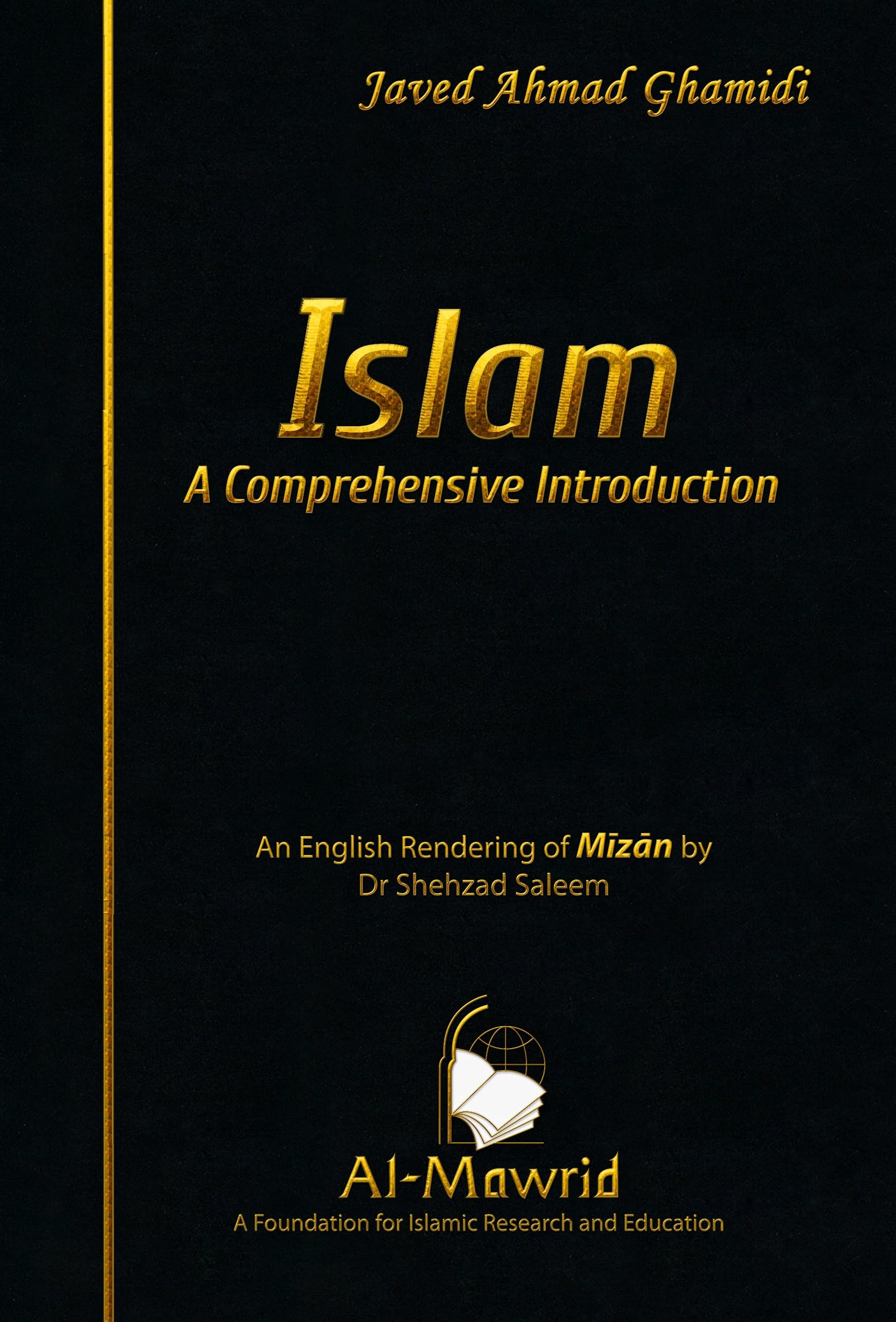
Islam: A Comprehensive Introduction
Product ID: 147115602
Javed Ahmad Ghamidi (b. 1951) is a well-known Islamic scholar of Pakistan. He is the founder and the current president of al-Mawrid, A Foundation for Islamic Research and Education (www.al-mawrid.org). He is also the chief editor of the Urdu Monthly “Ishraq” (www.ghamidi.net) and the English Monthly “Renaissance” (www.monthly-renaissance.com). He has written and lectured widely on Islam. Besides making some original contributions to the Islamic thought, he has drawn heavily on the Qur’anic thought of his two illustrious predecessors, Hamid al-Din Farahi (1862-1930) and Amin Ahsan Islahi (1904-1997). Islam: A Comprehensive Introduction (Urdu title: Mizan) is an extensive study of the contents of Islam by the author. It is an effort which spans almost two decades of both creative and critical thinking. The entire endeavour is a fresh interpretation of Islam from its original sources. In his own opinion, the reason that he has undertaken it is that interpretation of sacred texts is a human endeavour and since this can never remain fault free, the process should never discontinue. It is as a result of this principle that the author has continued to evaluate and re-evaluate even his own findings. Review: Comprehensive and scholarly treatise on Islam - This is an English translation of Ghamidi's Urdu work - Meezan. A much needed book considering the dearth of books which can satisfy the commoners and the scholars alike. Ghamidi has done great job in covering all the topics directly addressed in the original sources of Islam (the Quran and the Sunnah) while keeping it free from Islamic jurisprudence (fiqh) and other matters of ijtehad. Thus it deals with all the primary topics of Islam and the things of secondary and tertiary importance are left out. The book can be basically divided into three part - Usool-o-mabadi (fundamental principles), Al-Hikmah (the Wisdom) and Al-Kitab (the Shariah/Law). From a very long time, I had been intrigued by the common question that - "If the Muslims believe in the same God and the Messenger, why are there so many differences among them?" The answer to this question was discovered while reading Meezan. Although the sources are same, from what angle we view each of them makes the difference. It is the source's authority, priority and the way of interpreting them which makes the difference. That is why people who give the Quran priority over ahadith can come at different conclusions over many matters than those who treat them equal. Similarly, people who ignore the coherence (Nazm) of the Quranic text and interpret the verses in a discrete, standalone manner would miss out many important points and could even mis-interpret many verses. It is not very difficult to ascertain that for any text - whether human written or divine, it is the coherence of the text which forms the supreme principle in determining the intentionality of the text. By utilizing this principle 99% of the differences in the interpretation of Quran can easily be resolved. The Farahi school (Farahi-Islahi-Ghamidi) has done some remarkable work in this area of making the coherence of the Quran accessible to common people. The readers are encouraged to further explore the work of the Farahi school of scholars on Classical Arabic and the coherence in Quran. Allah tells in the Quran that He has made the Quran - Al-Meezan (the balance), Al-Furqan (the criterion), Muhaymin( guardian) and Qual-e-faisal (decisive) and Ghamidi has tried to establish the same. In the sources of Islam, the Quran must be given the highest priority and all the others must be interpreted in its light. Thus the first part of the book describes and discusses the various Principles of interpreting and understanding Islamic sources - Principles of Understanding the Qur'an, Principles of Determining the Sunnah, Principles of Understanding the Hadith. Almost all the principles are very intuitive and accepting them should not be difficult for a logical mind. Four classically raised objections against Quran, and which we also see cropping up at our current times, are convincingly answered in the section The Final Authority (in the chapter Principles of Understanding the Qur'an). At this point it would be necessary to mention that many people consider the hadith and the Sunnah as synonymous (this included me too prior to knowing Ghamidi's viewpoint). However, even a little bit of deliberation can make one understand that these two are not necessarily same. Sunnah which means "way" or "path trodden" is not same as the hadith which means "narrative" or "report". Ghamidi considers the Quran and the Sunnah as the original sources of Islam. The mode of transmission of the Quran and the Sunnah are equivalent. We know that the Quran has been transmitted verbatim through perpetual "recitation" of large group of people over the generations. The sahabas (the companions) learnt Quran in thousands from the Prophet and then they taught to their next generation and so on and so forth. This makes the text of the Quran completely authentic and undisputable. Similarly, the compulsory aspects of the Sunnah are transmitted through perpetual "practice" of the large group of people over the generations. Both of them were taught and established by the Prophet under the divine guidance during his time. As opposed to this hadith are mostly individual-to-individual narratives (Khabar-i-Wahid) whose no. of witnesses in each level do not reach the same great number as those of the Quran and the Sunnah. The ahadith are basically historical records transmitted by the followers of the Prophet but neither on his directive, nor under his guidance. However, this doesn't mean that the hadith sources are unimportant. They are the best sources of historical records of the Prophet's time, his reported saying and deeds and they do contain some invaluable insights about both the Quran and the Sunnah. However, the Hadith must at all cost be kept subservient to the primary sources- the Quran and the Sunnah and must be interpreted in their light. Also being a human endeavour, they must always be objectively examined and authenticated as was done by the initial generations of Muslims. Al-Hikmah deals with the philosophical aspects of Islam - the belief/faith and ethics/morality. This part offers some fresh insights on these aspects of Islam. Both these aspects have been comprehensively treated from the Quranic view-point. For example existence of God is not proved using the usual Kalaam Cosmological argument popular among the Christians and the Muslims preachers. Instead the Quranic argument is provided for the existence of God and the hereafter. Al-Kitab forms the largest part of the book. In classical Arabic, the word "kitab" is also used for "law" or "decree" in addition to the usual meaning of book or register. Thus the Al-Kitab part deals with the Shariah (law) of various practices in Islam. Many classical misinterpretations has been comprehensively dealt with and has been rectified in this part such as the issues of divorce, purdah/hijab (Ghamidi calls it Norms of Gender Interaction), Islamic state and system, Jihad, punishment for adultery/fornication etc. The Shariah of Worship Rituals gives in detail the history, the underlying philosophy and the compulsory and optional aspects of each form of worship in Islam. Meezan is a delightful read and can be used as text book of Islam in university courses. Urdu/Hindi knowing audience could further be benefited by listening to the complete lecture of Meezan course given by Ghamidi himself in which he has dealt each topic in further detail. Review: Great Book - Excellent book by an excellent scholar. Translated very well!
Z**N
Comprehensive and scholarly treatise on Islam
This is an English translation of Ghamidi's Urdu work - Meezan. A much needed book considering the dearth of books which can satisfy the commoners and the scholars alike. Ghamidi has done great job in covering all the topics directly addressed in the original sources of Islam (the Quran and the Sunnah) while keeping it free from Islamic jurisprudence (fiqh) and other matters of ijtehad. Thus it deals with all the primary topics of Islam and the things of secondary and tertiary importance are left out. The book can be basically divided into three part - Usool-o-mabadi (fundamental principles), Al-Hikmah (the Wisdom) and Al-Kitab (the Shariah/Law). From a very long time, I had been intrigued by the common question that - "If the Muslims believe in the same God and the Messenger, why are there so many differences among them?" The answer to this question was discovered while reading Meezan. Although the sources are same, from what angle we view each of them makes the difference. It is the source's authority, priority and the way of interpreting them which makes the difference. That is why people who give the Quran priority over ahadith can come at different conclusions over many matters than those who treat them equal. Similarly, people who ignore the coherence (Nazm) of the Quranic text and interpret the verses in a discrete, standalone manner would miss out many important points and could even mis-interpret many verses. It is not very difficult to ascertain that for any text - whether human written or divine, it is the coherence of the text which forms the supreme principle in determining the intentionality of the text. By utilizing this principle 99% of the differences in the interpretation of Quran can easily be resolved. The Farahi school (Farahi-Islahi-Ghamidi) has done some remarkable work in this area of making the coherence of the Quran accessible to common people. The readers are encouraged to further explore the work of the Farahi school of scholars on Classical Arabic and the coherence in Quran. Allah tells in the Quran that He has made the Quran - Al-Meezan (the balance), Al-Furqan (the criterion), Muhaymin( guardian) and Qual-e-faisal (decisive) and Ghamidi has tried to establish the same. In the sources of Islam, the Quran must be given the highest priority and all the others must be interpreted in its light. Thus the first part of the book describes and discusses the various Principles of interpreting and understanding Islamic sources - Principles of Understanding the Qur'an, Principles of Determining the Sunnah, Principles of Understanding the Hadith. Almost all the principles are very intuitive and accepting them should not be difficult for a logical mind. Four classically raised objections against Quran, and which we also see cropping up at our current times, are convincingly answered in the section The Final Authority (in the chapter Principles of Understanding the Qur'an). At this point it would be necessary to mention that many people consider the hadith and the Sunnah as synonymous (this included me too prior to knowing Ghamidi's viewpoint). However, even a little bit of deliberation can make one understand that these two are not necessarily same. Sunnah which means "way" or "path trodden" is not same as the hadith which means "narrative" or "report". Ghamidi considers the Quran and the Sunnah as the original sources of Islam. The mode of transmission of the Quran and the Sunnah are equivalent. We know that the Quran has been transmitted verbatim through perpetual "recitation" of large group of people over the generations. The sahabas (the companions) learnt Quran in thousands from the Prophet and then they taught to their next generation and so on and so forth. This makes the text of the Quran completely authentic and undisputable. Similarly, the compulsory aspects of the Sunnah are transmitted through perpetual "practice" of the large group of people over the generations. Both of them were taught and established by the Prophet under the divine guidance during his time. As opposed to this hadith are mostly individual-to-individual narratives (Khabar-i-Wahid) whose no. of witnesses in each level do not reach the same great number as those of the Quran and the Sunnah. The ahadith are basically historical records transmitted by the followers of the Prophet but neither on his directive, nor under his guidance. However, this doesn't mean that the hadith sources are unimportant. They are the best sources of historical records of the Prophet's time, his reported saying and deeds and they do contain some invaluable insights about both the Quran and the Sunnah. However, the Hadith must at all cost be kept subservient to the primary sources- the Quran and the Sunnah and must be interpreted in their light. Also being a human endeavour, they must always be objectively examined and authenticated as was done by the initial generations of Muslims. Al-Hikmah deals with the philosophical aspects of Islam - the belief/faith and ethics/morality. This part offers some fresh insights on these aspects of Islam. Both these aspects have been comprehensively treated from the Quranic view-point. For example existence of God is not proved using the usual Kalaam Cosmological argument popular among the Christians and the Muslims preachers. Instead the Quranic argument is provided for the existence of God and the hereafter. Al-Kitab forms the largest part of the book. In classical Arabic, the word "kitab" is also used for "law" or "decree" in addition to the usual meaning of book or register. Thus the Al-Kitab part deals with the Shariah (law) of various practices in Islam. Many classical misinterpretations has been comprehensively dealt with and has been rectified in this part such as the issues of divorce, purdah/hijab (Ghamidi calls it Norms of Gender Interaction), Islamic state and system, Jihad, punishment for adultery/fornication etc. The Shariah of Worship Rituals gives in detail the history, the underlying philosophy and the compulsory and optional aspects of each form of worship in Islam. Meezan is a delightful read and can be used as text book of Islam in university courses. Urdu/Hindi knowing audience could further be benefited by listening to the complete lecture of Meezan course given by Ghamidi himself in which he has dealt each topic in further detail.
A**R
Great Book
Excellent book by an excellent scholar. Translated very well!
C**6
A must read for All...
Great scholarly work. Done without undue influence of established schools of thought and madhabs etc. The Straight path in light of Quran and Sunnah. Jawed Ahmed Ghamidi insists on doing his work in Urdu only. This is a English version of his best seller book "Al-Meezan". That books Urdu was so high level even my mom had to slow down and look up words. So if you are learning Urdu, it will be a great read at higher level Urdu. If not, this English version of Al-Meezan is pretty good too. Arabic, Urdu and Farsi are untranslatable languages - a whole lot is lost if you do so.
A**R
Either you love it or hate it
This book will make you think.If you have already decided not to think,do not read this book. Ghamidi is not unique in this approach,but in these time when Deobandi,Bralvis and Ahl-e-Hadith are mainstream religious believes in Pakistan,India and Bengladesh,Ghamidi's message to come back to original source that is Quran and Sunnah looks bit strange.Muslims "listen" religion from others and rely on hadith.Ghamidi is saying in this book,open Quran ,read and think. For any Muslims the yardstick for measurement is Quran and then we weigh hadith accordingly and not other way round.If you agree with this approach read it otherwise do not waste your efforts and time.
K**K
Four Stars
Good read.
K**N
True understanding and practice of the religion, without any ...
True understanding and practice of the religion, without any political bias nor egocentric, megalomaniac influences, nor any distortion for ideological gains. Simple invitation to the Message of God.
D**N
recommended reading for people belonging to any religious denomination
Well researched and very well reasoned book. Provides a very holistic introduction of Islam. Available as a paper back as well as an e-book. recommended reading for people belonging to any religious denomination.
A**D
Five Stars
Great book and excellent service.
E**E
Brilliant Book
It ignites passion to learn & read more
M**R
great book
Javed Ahmad Ghamidi is one of the best and knowledgeable Islamic Scholar - If you want to know what really Islam is all about then you must read the books by Javed Ahmad Ghamidi.
S**A
One of the best Book ❤️😍
One of the best Book ❤️😍
J**L
Five Stars
Just started reading, I respect Mr Ghamidi research and views on Islam in general.
T**Y
It's this book or rea the Quran in ancient Arabic
Interesting analysis of Islam. It's not clear whether the author reached his conclusions objectively, or had an agenda that led him to marshal his facts in a particular, tendentious way. Still, for me a more feasible introduction to Islam than learning ancient Arabic so that I could read the Qu'ran itself..
Trustpilot
1 month ago
2 days ago