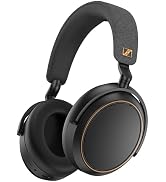
Desertcart purchases this item on your behalf and handles shipping, customs, and support to Hungary.
🎶 Elevate your audio game — hear what others miss!
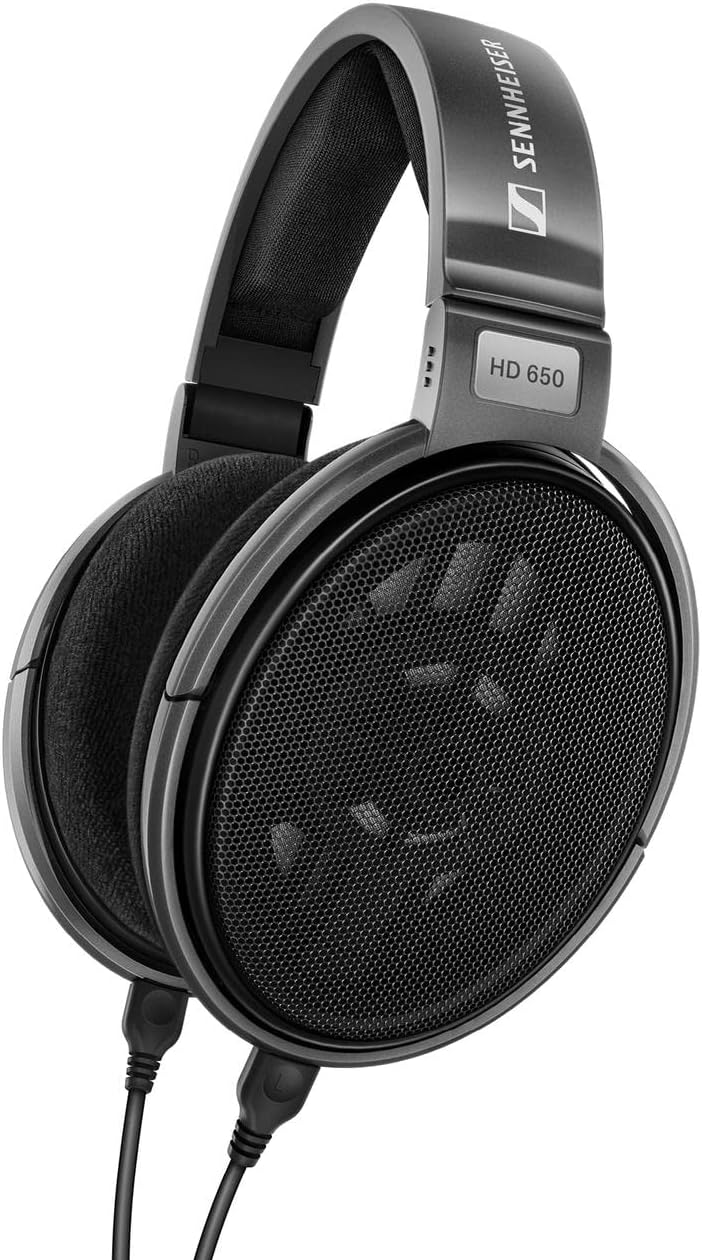
The Sennheiser HD 650 is a professional-grade open-back dynamic headphone featuring 42mm drivers, a 300 Ohm impedance for detailed studio-quality sound, and an ultra-wide 10 Hz to 41,000 Hz frequency response. Designed with acoustic silk damping and high-power neodymium magnets, it delivers exceptionally low distortion and a natural, immersive listening experience. Lightweight and comfortable, it supports long listening sessions and connects via a 3.5mm jack, making it ideal for audiophiles and professionals seeking unmatched clarity and soundstage.


| ASIN | B00018MSNI |
| Additional Features | Lightweight |
| Age Range Description | Adult |
| Antenna Location | Music |
| Audio Driver Size | 42 millimeters |
| Audio Driver Type | Dynamic Driver |
| Best Sellers Rank | #2,388 in Electronics ( See Top 100 in Electronics ) #123 in Over-Ear Headphones |
| Bluetooth Version | 2 |
| Brand | Sennheiser Pro Audio |
| Brand Name | Sennheiser Pro Audio |
| Built-In Media | 3.5 MM Jack and 1/4" connector |
| Cable Features | Jack plug, 3.5mm |
| Color | Gray |
| Compatible Devices | Laptops, Desktops, Tablets, Cellphones, Music Production Equipment, Car Audio Systems |
| Connectivity Technology | Wired |
| Control Method | Touch |
| Control Type | Noise Control |
| Controller Type | Wired |
| Customer Package Type | Standard Packaging |
| Customer Reviews | 4.6 out of 5 stars 3,133 Reviews |
| EU Spare Part Availability Duration | 2 years |
| Ear Placement | In Ear |
| Earpiece Shape | Rounded |
| Enclosure Material | Aluminum, Plastic |
| Form Factor | Over Ear |
| Frequency Range | 10 Hz - 41,000 Hz |
| Frequency Response | 41000 hertz |
| Global Trade Identification Number | 00615104099692, 00615104340497, 05054230087060 |
| Headphone Folding Features | Over Ear |
| Headphone Jack | 3.5 mm Jack |
| Headphones Ear Placement | In Ear |
| Item Type Name | headphones |
| Item Weight | 9.12 ounces |
| Manufacturer | Sennheiser |
| Model Name | HD 650 |
| Model Number | 508825 |
| Noise Control | Passive Noise Cancellation |
| Number of Items | 1 |
| Sensitivity | 103 db |
| Series Number | 508825 |
| Specific Uses For Product | Home |
| Style Name | HD 650 |
| UPC | 700615305605 658700901129 615104099692 615104340497 |
| Unit Count | 1 Count |
| Warranty Description | 2 years |
| Water Resistance Level | Not Water Resistant |
| Wireless Technology | Bluetooth |
D**.
Excellent Representation of Your Audio Media
I’ve been using Audio Technica AT50’s since 2004 and MSR7’s for about 3 years. The 50’s are great for bass heavy music and the MSR7’s are (I thought) great for detailed acoustic, vocal, percussion and other 1khz and higher audio. I don’t know what my expectations were with the Sennheiser HD650’s. All I knew for sure is that I have read countless reviews and articles where they are used as reference headphones. Whether as the focus of the written material, or in passing as the gear reviewers use when auditing or reviewing other equipment and music/media. The HD650’s are universally accepted as a reference headphone. So over the last several years they have sparked my curiosity. I ordered them and received them within 2 days. I am a classic rock aficionado, and have my own set of reference tracks that I use when trying out new equipment in my home studio. I’ve played guitar and drums for 35 years (not expertly, but passable?). I have a nice Roland Kit, a couple of nice Fender and Mesa Boogie Tube Amps, Fractal Axe FX III guitar processor and run it all through various digital I/O and microphones into an RME UFX+ Audio Interface. The RME interface has an excellent ADC/DAC configuration, with a very clean sound at the headphone jack that matches the outputs on the other analog outputs on the interface, but is also amplified. They didn’t cut corners. All of this is to say that I have great reference hardware, knowledge of good source media, and the headphone amplifier and DAC section from my audio interface surpasses most high end audio AVR’s. Now generally, like most folks these days, I listen to rather low end compressed MP3 audio. It’s readily available and doesn’t take up storage space. As storage space has become less expensive, I’ve started to record and save my audio in the highest quality format my interface will allow. Generally that is a minimum of 16bit 320kbps compressed, or as high as 24bit 96khz, with maximum playback capability of 24 bit/192kHz. All the detail. The things that you didn't even know were buried in the mix. The 3 second harmonies, the double tracks that are barely distinguishable, the finite exquisite breath of the vocalist as they prepare for the next line of the verse. All laid out in stunning depth and form. Strange things that you didn’t even know were in the mix, that add depth and character to the music, that are underneath the main harmony and melody of the music. Things that only an explorative and creative genius of a producer would include in the mix and final mastering. Dark Side of the Moon takes on a new landscape. Steely Dan Aja highlights perfection of studio recording at it's finest. You can get lost for hours in old recordings and hear the things that you didn't even know made the music that you enjoy so enjoyable. Edit: As an aside, I need to include something extra ordinary. Something that I would presume that maybe 1/10th of 1% of folks who actually purchased these headphones would pursue. An opportunity to audit the HD650’s via an RME ADI-2 PRO FS BE AD/DA. The RME unit is in the Top 3, or arguably is the best, mastering quality DAC and by far the best headphone amp that money can buy. Period. No exceptions. Numbers don’t lie and RME’s audio engineering team is among the finest on the planet and can back them up. The UFX+, as I mentioned, is no slouch at all. They perform tremendously in the studio, and the quality of the gear DOES shine through during headphone testing. Blissful. But…. When you listen to anything through the ADI-2, it’s clichéd to say, but it really is not just “next level”. It’s the very “top level”. That said. You have now reached a level of clarity that some people might actually find slightly uncomfortable believe it or not. The lack of distortion is unfamiliar and with poorly recorded or or media compressed with a bad encoder, the flaws shine. Too much so occasionally. On the other hand. With good to exceptional media, and phones like the HD650 that can convey expertly produced media, you will be sitting at the control desk, where the mastering engineer was sitting. Hearing everything (and maybe more) than they were hearing as they put the final touches on the song or album. I have yet to audition what are considered to be be “better” headphones. Maybe someday I’ll get a chance to A/B the HD650’s against another premium set. Until then I remain blown away by the Sennheisers. If you’re here trying to decide if you should pull the trigger on these. It is simply a resounding YES! Keep in mind that these are 300 Ohm headphones. They will require more power than your iPhone, or Android phone to fully appreciate their capabilities. You do not need a $1000 headphone amp to enjoy them. Their are several headphone amps/Pro level DAC’s from $200 to several thousand dollars that will all do the job. I highly recommend that you are able to drive them with an output of greater than 100mW minimum. Just my opinion. Do what you will. But you will not be able drive any kind of realistic bass below that threshold. Yes, people around you will hear them. But you are buying open back headphones for a reason. Your listening enjoyment. Find a place to disappear and enjoy them and turn it up. I highly recommend these headphones. They are simply incredible.
M**A
Heavenly sonic bliss. Achievable even on an iPod without amplifier.
HD 650 Heavenly sonic bliss. My favorite headphone. Full rich, lush sounding voices and instruments. Widest sound stage of my headsets with excellent clarity. Very easy to separate and follow various voices and instruments in the music I listen to. Very balanced across the entire range of frequencies without one range over powering another. Everything is very clear. No muddiness of sound. Cybals and chimes crisp and clear. Snare drums nice crisp sound. Bass pleasant with excellent sound decay and appropriate reverberation lasting longer than my other headsets. I can really feel the music around my ears with this headset. The sound envelopes my head instead of feeling like its between my ears. Now I can experience the music rather than just listen to it. Makes music much more enjoyable and realistic sounding. This can be driven by my iPod, iPad, MacBook Pro, Laptops and Desktop PCs without an amplifier. I have no doubt an amplifier will improve the sound, but the sound is already rich and clear without amplification and still better than my other headphones. I'm hearing/experiencing things that I never heard before with my other headsets ... the faint pops that occur from an old LP that has been digitally recorded ... just amazing (from an iPod without amplifier). This is my experience. Your mileage may vary depending upon what you want out of your headsets. Finding the “best headphone" is a very expensive and very subjective journey. Reading reviews can only take one so far. Opinions range far and wide depending upon the reviewers individual tastes, experience with music and what one primarily listens to. Descriptions of the sound in reviews don't always help due to differences in meaning. For example what is described as the veiled Sennheiser sound may be what I call a mellow laid back sound (not sure). My advise is listen to your music with a lot of different headphones and do your own comparisons to determine what you like. What you hear coming from each headphone is going to vary with the design of the headphone, but also modulated by a. the type of music you listen to b. how the recording was originally made (microphones converting analog to electrical then stored on magnetic tape or digitized) b. the quality of the recording you are listening to (especially if digitized, what was truncated if anything) c. the format in which it is recorded and sampling rate d. the equipment you play it on and how it translates the recording back to an electrical impulse to be sent to the headphone e. the headphones themselves (open, closed, type of diaphragm material, how many speakers (i.e. the Shure 500 series has 2 woofers and a tweeter in each ear piece to achieve its balanced sound presentation across its spectrum, I have a gaming headset with multiple speakers) Having said that, the music I listen to is classical to 60s, 70s, 80s, 90s, pop, country, jazz, big bands, vocals, instrumentals. I don’t have a dedicated amplifier and play all my headphones on iPods, iPads, iPhones, Mac Book Pros, PCs, Pioneer Tuners. All my headphones sound just fine without an amplifier, but I have no doubt that an amplifier will improve the sound. My music is recorded in MP3 at 320 kbps, but I prefer M4A apple lossless or WAV at 1400 kbps for the best possible digital sound quality. I can hear the difference between 1400 kbps, 320 kbps, and the more compressed music at 192 and 128 which can be found on MP3 sites like the apple store. I convert my CD collection to both 1400 kbps and 320 kbps 44.1 MHz so it can be played at the best quality on whatever system I am using. All my headphones have been broken in with at least a 72 hour continuous play run. My headphones from most favorite to least favorite are Sennheiser HD 650 Shure 500PTH Sennheiser HD 598 AKG K550 Sennheiser HD 555 modified to 595 Sony DLP777 — bright Jaybird Spirit — midtones muffled due covering that prevents sweat getting into ear pieces Sennheiser HD 280 Noise cancellers: Bose QC2 — bass heavy, muddy midtones Bose QC3 — even more bass have, muddy midtones Dr. Dre Beats — too bass heavy, stick to rap and non-critical listening (rap) For me, the HD 650 is a 5 star headphone and by far my favorite of all my headphones. Allows me to truly feel and experience the music I like listening to using the devices I have. My iPods, iPhone, iPads and MacBook Pro can drive this 300 ohm just fine (of course the volume level has to be turned up compared to the lower ohm headphones), but the lush rich realistic sound still comes through better than the other headphones. By feel, I mean that the HD650 diaphragms move so much air around my ears I can feel and experience the music as opposed to just hearing it. The Shure PTH500 can do this in my ear canal. My HD598 does this much better than the HD 555 and has a more pleasant sound to me than the HD555. But none of these come close to the experience I get with my new HD650. It’s like standing in front of a speaker at a concert or DJ’d party except its around me ears instead of having my body feel the sound wave. The timbre, tone, character of the instruments from the HD650 is slightly better than my original reference PTH500. PTH500 and HD650 are better than my other headsets. With these two, I discovered things that I couldn’t hear with the other headsets. Sound stage of the HD650 is wider than the PTH500 which is wider than the other headphones. Both have much better separation of the instruments and vocals and much better clarity which gives the music a more 3 dimensional enjoyable sound. Much easier to pick out individual instruments and so I can more easily play along on piano, guitar etc. With other headsets I have to struggle to hear the individual parts. The Shure 500 has been my favorite reference headphone since 2008. With its sound isolation qualities, I use it when traveling and when I don't want to disturb others around me. The problem with it is that it can eventually be painful on the ear canals and sound quality (bass) is lost when the ear canal seal is lost when moving around or exercising. Additionally, hearing the crunch of food while eating and listening with the 500s is a consequence of in ear monitors. Both the HD650 and PTH500 have the best balance across all sound frequencies with the widest sound stage. The Bose QC2, QC3, and Beats have more emphasis on bass followed by treble at the expense of midtones, so if I want really loud bass, I’ll go with the Beats followed by QC3, then QC2 for lesser degrees of bass punch. The HD 598 was my favorite after the PTH500 because its open design moves a lot of air allowing me to kind of feel the music, but not the extent of the HD650. It has what I consider a more laid back and mellow sound than the HD 555 and PTH500. Kinda relaxing and pleasant. HD555 DLP777 place more emphasis on treble. If I want high energy treble, the HD555 and AKG K550 are my go to headsets. I prefer the open design over the closed headsets because they just move air better with a generally richer sound then my closed headphone Shure 500PTH — best overall balance and 3D clarity while physically blocking outside noise HD 598 -- open, good overall balance, mellow sound AKG 550 — closed, good overall balance. doesn't move air as well as HD598, but good second choice to the 598 HD 280 — closed thin; waste of my money. was never happy with it. Sony MDP 777 — closed, emphasis on treble Bose QC2 — closed moderate bass. muddy midtones Bose QC3 — closed heaviest on bass. muddy midtone So my choices for headsets boil down to Best overall sonic experience: HD650 Best outside noise reduction/isolation and overall sonic experience: Shure 500 series Best to minimize noise spill into the surrounding environment when I can’t use the Shure 500: AKG 550 Best for heavy bass emphasis: In order from least bass to intense bass: Bose QC2, QC3, Dr. Dre Beats Ultimately the “best” headset is a subjective opinion depending upon what you want to hear and/or experience out of your music. There is a huge sliding scale of perceived quality. I wouldn’t recommend spending much on an expensive headset if your music is 128 kbps compressed. But then again, it is cheaper to just buy 1 headset and grow into it rather than spend lots of money working ones way up to the holy grail of headsets. If I knew then what I know now, I would have just bought the HD650 and stopped there.
A**R
All my life I hate headphones, because I couldn't listen to them longer ...
All my life I hate headphones, because I couldn't listen to them longer period of times in ear canal ones were piercing my brain over on ear ones were uncomfortable with side effects my ears were sweating itching. Experience made me refuse buy any headphones over the decade because I've always felt they not worth it. Other hands I have quite old vintage Pioneer Hi-Fi Speakers which is my uncle bought in 80's. They still sounds great but only goes to frequency response 28 KHZ max. I have approximately 105 SACD ripped them to DSD ( Sony DSF) format with my old PS3, sacd ripper, Also Around 203 Hi-Res albums ( 24 BIT) which my friends & I bought shared through different online stores like ( Hdtracks, Qobuz, Hiresaudio.com etc). Rest of my collection just Redbook 16 bit 44.1 khz lossless format ), I haven't decent DSD native decoding DAC I'm using Macbook Pro 15. ( 2016) this device Audio capabilities garbage it has Cirrus Logic DAC muddy which only goes 96 khz, line out from this device only limited 48 khz max feeding this device through line out to amp to speakers were awful experience everything sounds muddy instruments sound separation, soundstage nothing is presents Hi-Res Audio sounded worth than CD etc. I have before Sony SACD player it laser head malfunctioned after 8 years of Use & went bad 8 years ago. After this thing broken from different laptops even expensive Apple Macbook Pro audio experience was worst I've experienced so far. I knew I need some sort of USB Audio Advanced DAC something to convert my DSD files Natively & Hi-Res Audio max out of resolution doesn't make sense have 24 bit 192 khz lossless file when your device DAC only can reproduce 96 khz can only output 48 khz max so you got my point. I have proper DAC now which Capable Play DSD ( 64,128) natively PCM up to 384 khz & line out headphone out not limited to 48 khz anymore it is alo headphone amp which have specs 285 mv ( 32 Ohm) 2.9 volt. 1. Sennheiser HD 650 Comfort ----------- I would give 10/10 never used anything like this before, you can listen for longer periods without getting any fatigue or discomfort they also very well breathable, I'm using this about 5-6 hours without break I've never got tired this is so big advantage this headphones have over others & what make them so special best in their class ( Note they have little clamping force in beginning when they are new but this thing easily resolved after 4 days of Use I left them on position Clamping Box 10 cm distance from each drives 4 days all day & this clamping pressure has gone) 2. Sennheiser HD 650 Sound Quality & Resolution ----------- Second batch of this product which is currently Amazon.com selling have frequency response up to 10 - 41.000 hz ( Hi - Res Audio Certified By Japan Audio Society) it has sticker on box, Sound quality resolution everything crystal clear bass in there ( Mids Vocals I've never heard anything like this they are magical & very straight forward & intimidate this headphones only woth buying just for listening female vocals they sounds so precious nothing come close this kind of quality this cans providing in this regard), Highs many others would say veiled actually I'm not agree with that they very well represented they just not piercing this is one of the magic formula which makes listen to this headphones long listen sessions without getting tired. 3. Sennheiser HD 650 -Power Requirement DAC, Amplification, Source ------------- This headphones rated 300 ohm, Power requirement for this I'm not 100 % sure but checked online headfi.org other online 3 volt 500 mv - 32 ohm, everyone says they incredible scales with powerful amp. I'm currently using them with my 2.9 volt 285 mv on 30 ohm source they driving this in required level so they sounds incredible, I've not t feeding them all 500 mv by now I don't own so powerful headphone amp yet. I bet with powerful amp they even getting better. Of Course Source material DAC also matters it will help get better results in the end. Currently my source 1200 ( 16 bit 44.1 khz albums lossless format), 105 DSD SACDS, 203 Hi-Res 24 Bit ( 44.1 khz up to 192 khz files) 150 albums I have in ITunes format 256 kb/s ACC, In my listening best sounding is DSD, 2nd place 192 khz PCM, 3 rd place Redbook CD 16/44.1, worst sounding AAC 256 kb/s . During listening sessions I'm more often trying avoid this ACC albums. So source matters as well to get full more detailed refined experience. 4. Sennheiser HD 650 - value build quality --------------- This headphones lightweight for it own class so you couldn't expect this thing being build from any metal it have metal where durability matter Driver Grills made from metal headband clamping sides made from metal, rest of the Unit it is high quality plastic. If you take a good care about your equipment I didn't think it will be broken anytime soon some people using HD 600 now over 15 years & nothing got broken during this time except pads & cable this is normal. This thing Made In Europe Ireland how many items do you own last 2 decades made in Europe ? Trust me build quality it is top notch. For 374.99 $ this headphones is steal. This is 500 $ valued headphones for the resolution comfort this thing provide I don't think they overpriced, nowadays any sub par Sony or Other HI-RES headphones costing 250 $ forget about bluetooth other futures every other headphone have sound quality through wireless option worst indeed, still best option connection for optimal sound quality is wire. Audio Software Used for testing Audio Nirvana Plus full version only available by this moment only ON MAC OS costing 74.99 $, It is bitperfect software have Lots of Audio futures & excellent sound quality 10 times better what average ITUNES sounds like, Native DSD playback, advanced metadata editing etc. I'm usually not to keen write reviews about products but I then saw some people giving this item sub par scoring one star rating so I decide wrote one. Please don't listen to this people they don't using this headphone as intended. They generally bought it plugged into smartphone jack or laptop, in my experience this headphone I'm not tried my smartphone but from Macbook Pro 15 ( 2016) headphone jack they sound like some cheap 15 $ no name headphone. So Please note ( Source, DAC, proper amp, all this matters to get full out of this headphones)
G**R
The 650s are my end game sound signature. Best Mid-Fi headphone, period.
What can I say about these headphones? These are the best cans for their price and honestly well above it. When you first put them on you're greeted by a heavy clamp. To fix this, I extended the metal piece to adjust the headband and bent them outwards. The metal is what can withstand this so don't bend the plastic headband, it'll snap! The thick velour still gives a bit on a grip as your ears will certainly be making contacting with it but because the cans are oval shaped it shouldn't be too bad. After you get over the clamp, you realize how smooth and forward the mids are. It was fun and great and all but it sounded so muffled. I was disappointed to begin with. From there, I ran some pink noise for only about 20 hours or so to burn them in. Did it change the sound significantly? No. But what it did help with is to bring out some detail and helped me get used to the sound faster. The biggest change you'll have to get used to coming from bright headphones is the clarity is not forward and sharp, but rather it's present but not the star of the show. You'll hear pretty much all the detail you'd care for but it's much quieter and subdued in the background. This leaves you with just the vocals, and boy do they sound silky smooth. You'll be able to easily hear every word and jarring treble or poorly mastered tracks will be greeted with forgiveness on these. Basically, all your music will sound good. Jazz sounds particularly good with these as do slow songs as they fit it's personality great. Pair these with a good amplifier, I recommend the Valhalla 2 for an entry level or a Ragnarok if you can afford it for solid state. Honestly, these could be your end game if you prefer the sound signature. For me, I still wasn't convinced as I knew the comfort could be improved and I wanted more detail. I ruined a good thing by doing so. The rings that hold the pads onto these cans are glued so I took some scissors and ripped them off. I replaced these cans with the HD700 pads just to try. The comfort instantly increased but the bass quantity went way down (while the quality of the bass picked up, it was much more speedy and less bloomy than with the stock pads), the detail and treble went way back up and to my surprise the mids recessed a tiny bit but not by much. This could probably be fixed with tubes. Doing this pad swap though took away everything that made the 650s magical to begin with. They really do change the sound so I recommend sticking with the stock velours or equivalent if you like the bassy/warm mid forward sound signature of the stock 650s. I certainly do so I will be buying them again (they are overpriced though, they basically are velour stitched over memory foam that you could take off some old packaging, $50 is a bit too much for pads but I guess they had to add up the costs to equal the total sum they're charging for this can). So who is the 650 for? If you can't afford $1,000 cans but want sweet vocals and impactful bass (not crazy deep but rich and heavy when necessary) then the 650s are definitely up your alley. It's super forgiving so lossy files will not be a problem here nor will poorly recorded music (which is a good thing in my books as it gives you time to build up your higher quality collection). I would not recommend these headphones if you want airyness, lots of detail or clarity. Those are best reserved for the 600s, 700s or 800s. Where's the upgrade from here? Pre-fazor LCD2 or LCD2-C or the Atticus. You'll need some beefy hybrid/SS amps for those but they are indeed a better upgrade as their soundstage, mids, and overall bass are better with a bit better clarity (not night and day). To wrap things up, the warm sound is not for analyzing your music. It's for relaxing as you go about your day, it's for enjoying lyrics, it's for sipping some coffee while writing up a paper. Details are fun but I finally have found my preferred sound signature. Bright sound signatures will fatigue your ears after a while with all the detail and glaring sharpness and as a result, I think a warm sound will fit most everyone's preferences unless you're in the camp that wants to hear every last detail in your music. I'm just glad I heard truly warm cans and not just cans outfitted with some warmth to truly get an idea of the experience you get and that is one of just fun, relaxing, shivers down your spine with well recorded music. These things will love tubes! Get some Mullards, Telefunken, Philips Milliwatts, or Gold Pin 6NPC's for some additional warmth and less of a dry sound. Pour that syrup!
J**R
Smooth, dark, sexy, and veiled
How is this so veiled and so detailed at the same time!?!?! The dark vocals are so smooth and nice, but at the same time I'm playing some jazzy slightly punch cello music and it's just *sexy*. I am new to open headphones, but I expected this to have slightly more soundstage. My regular headphone is my Audio Technica ATH-A700 which was very detailed and bright, with a bit of punch if you amp & eq it. However, the ATH-A700 seems to have a wider soundstage than the HD650. It's not bad, just a bit more closed than expected. Everything is smooth, and the piercing highs that I used to have to EQ out of everything else are no longer an issue. The only thing you might not like at first is this veiled sound to everything. The detail is there, just extremely smooth on everything. Almost like being in a club with high end speakers, and then sitting in the center with a curtain around you... Like listening to high end speakers through a curtain. Anyway, I really like it and I'm adjusting my amp for different music. The slow roll off is giving it a really sweet tone. I took 1 star off because the box had some industrial grease smeared all over it and leaked through a bit. The headphones are fine. The box is also a really basic presentation, and for the price I would have liked a bit more cable options.
T**Y
Majestic
(If you're wondering how these compare to the Sennheiser HD 600 Open Back Professional Headphone , please see the bonus section that follows this review.) These are, bar none, the most wonderful headphones I've ever heard. For perspective, I have or have had: Audio-Technica ATH-M50 (of course) and M40x, Fostex T50RP MK3, Oppo PM-3, Philips Fidelio M1MKII and L2, and both the Sennheiser HD598SE and HD600. None of these but the HD600 come close. If you're considering the HD598 as a lower-priced alternative, it's a great headphone in its own right (especially if you don't want to go down the rabbit hole of choosing a suitable amp), but there isn't as much family resemblance in the sound as you might think. Still, it was through buying the 598 that I decided to take the plunge on the 650—Sennheiser's 5xx series is clearly a gateway drug to the 6xx series, which fortunately is so good there's little reason to step up to the 700 and 800 besides bragging rights. There's a lot of warped machismo in the world of audiophilia, and to the greatest extent possible I'd like to avoid that in this review. Simply put, the 650 is about the best all-around headphone you can buy for its current Amazon price of $315.99. If you already have an amp and/or a dedicated listening setup and you've never heard these, you owe it to yourself to try them. Worst-case scenario, you don't like them and you're out $6-7 for a return label. Best-case scenario, you find out just how good (and yes, also how bad) recorded music can sound. These are very much the BMW 5-series of the headphone world: there are bigger, faster, and more expensive options, but these remain the perennial gold standard. Maybe they're not your style, but there's no denying their refinement and artistry. I think they sound absolutely perfect. Some complain they're too "laid back," even "veiled." I suspect those people just don't hear very well, because if you have sensitive hearing, "exciting" headphones are a euphemism for "death by treble." I have dog-like hearing, and most of the time it's more curse than blessing. Even with the 650, the treble can be brain-piercing with the wrong amp. As for amp recommendations, this is a contentious and fiercely debated topic. As a general rule, you should spend the most on the final device in your playback chain (speakers/headphones), and progressively less on the "upstream" components: amp, DAC, media player. Given a budget of no more than $300 for an amp, you could buy the excellent Aune B1 Class A Portable Phone/Headphone Amplifier and still have enough left over to pay for a year of streaming music. Of course, if you want to pair the 650 with "endgame" gear, by all means do! The 650 has a reputation for "scalability," meaning its sound will (allegedly) continue to improve with better amps, DACs, recordings, etc. My own gear is fairly modest, so I can't speak to how this sounds plugged into a $5,000 amp or rewired with $700 cables. I will say that it REALLY comes to life with a tube amp (I have a Darkvoice 336SE), but I completely understand if that's a can of worms you'd rather not open. All I know is that the 650 sounds good enough to be the end of the headphone rainbow for me. The audio hobby is usually a desperate, futile struggle against diminishing returns, and as far as I'm concerned, the 650 IS that threshold in the headphone world. In other words, you can spend ten times more, but it won't sound ten times better. Given that, you might be wondering whether you even need an amp with these. "Need" is a strong word, and in the context of expensive headphones it's pretty hard to maintain a sense of perspective. I've done the unthinkable and plugged these directly into my iPhone's headphone jack, and you know what? They STILL sound phenomenal, but only for easy music. What's easy music? Pop, rock, basically anything recorded to be uniformly loud. Without an amp, the 650 can fall apart on classical and jazz recordings with a wide range between loud and quiet sections—there simply isn't enough power on tap to move the diaphragm as nimbly as this sort of music demands. If you never listen to instrumental music, you might be able to get away with not using an amp, but I can't recommend it. Buying such marvelous headphones and not amping them properly would be like buying a beautiful painting and not framing it. You can do it, but for a little more money you might as well get the full effect. Let me end with some totally subjective words that describe the sound of the 650: rich, natural, musical, effortless, clean. Now some words that could just as well be applied to a fine wine (the combination of status anxiety, groupthink, and reckless cognitive bias unites both hobbies): broad-shouldered, velvety, well-mannered, savory, harmonious. In either case, a smooth finish. :) Bonus section: HD650 vs HD600 Obviously if you've read this far, you're deep enough into the audio hobby to have realized an important psychological truth about yourself: you can't leave well enough alone. Neither can I. That's why, even after falling head over heels in love with the sound of the HD650, I ordered the HD600. I just had to know. The verdict? It's almost too close to call, but for my preferences the 650 is the better headphone. The two have been compared to death online, but if you have the capacity to think for yourself, audio review sites and forums are usually an unsavory if fascinating combination of shilling, self-justification, and "follow the leader" parroting of received opinions. Many self-proclaimed "audiophiles" have strong opinions about equipment they've never actually heard, which I can't accept. Given that, I decided the only way to compare the two headphones honestly was to listen to both myself for hours, going back and forth on a wide variety of recordings. The difference between a good recording and a bad recording dwarfs the difference between lossy and lossless, and the HD600 (more so than the HD650) may end up changing your taste in music because it makes good recordings sound SO GOOD and bad recordings sound SO BAD. In other words, it reveals the "truth" of the recording, and sometimes the truth hurts—it's really hard to enjoy The Killers now. The fact is that the 600 and 650 are ultimately more alike than different, and the popular insistence that they sound completely different has more to do with what Freud called "the narcissism of small differences" than the headphones themselves. If you Google some variation on "HD650 vs HD600," you'll hear over and over that the 650 is "bassier" or "darker." Not really. There's actually very little difference across this parameter. Piano music presents an exception, but this is rarely what people think of as a bassy genre. There are two significant differences. The first is soundstage. The HD650's soundstage is wider, but that doesn't mean it can make a cramped recording sound airy. The HD600's soundstage is more intimate; there's less space between left and right channels, but it's not a huge difference, and I could see people preferring (or at least not minding) the HD600's tighter spacing. The most striking difference between the two headphones is in what I'd call "smoothness." The best analogy I can think of comes from digital photography. As an image sensor increases its sensitivity, it also increases its noise because you can't amplify a signal without also amplifying noise. There are two rival philosophies for dealing with noise: leave it as "grain" or smooth it out. Grain has its devotees, and the advantage of grain is that it preserves fine detail. The disadvantage is that past a certain point it becomes a distraction. The advantage of smoothness, meanwhile, is that it looks superficially nicer. The disadvantage is that when you look closely you won't see all the fine details. Like all things, it's a continuum of compromise. The 600 is the headphone to get if you value detail at the cost of an occasionally unpleasant grainy and even metallic quality to the sound. The 650 is the one to get if you care more about music than sound and don't care if your headphones sand down the sharp edges of your music a bit. Going back and forth between the two, it quickly becomes clear that the 650 is the stronger all-around performer: it sounds nicer on more recordings and across more genres. The 600, meanwhile, is the champion of a particular niche: good recordings with lots of micro detail. Want to be able to count how many times the skin of a drum reverberates after it's struck? Want to hear such fine vocal gradations you'll know how a singer felt during recording? The 600 is for you. Make no mistake: at its best, the 600 produces the most astonishingly detailed sound I've ever heard. Unfortunately, at its worst it sounds grainy, jumbled, and not particularly musical. I'm sorry to report that piano music sounds particularly off on the 600: low frequencies disappear and take the fullness of the keys with them. Vocals can sound oddly recessed, even far away. In general, the 600 seems to fare better with female vocals than male ones, and with strings over pianos. It's absolutely glorious for acoustic guitar, but then, so is the 650. The 650's great advantage lies in its ability to bring out vocals like a spotlight. They stand out so clearly and powerfully from the instrumentation that you'll feel like you're hearing your favorite songs for the first time. The effect is really quite incredible: it's like there's a special sonic column reserved for vocals and unpolluted by other sounds. Based on Sennheiser's own specs, the 650 has lower distortion than the 600 and it's clearly a more refined driver unit. Whatever the technical reason, the 650's background is pitch black: sounds rise from and fall back into a sea of silence. Be forewarned: a well-recorded vocal track through the 650 may bring tears to your eyes, and that's why I kept the 650 and returned the 600.
A**R
Future classic. You can quote me on that. Incredible, and possibly the best.
These headphones are slightly colored. Most people prefer that, but if you're using them for studio monitors, you won't find better than the HD800's. Trust me. But for everyday use, these can't be beat for dynamic open headphones. Combine them with a full tube amp and I highly doubt you'll find a better "stuck on an island the rest of your life" headphones. UPDATE: After having owned these for over a year now, let me elaborate on my thoughts on these INCREDIBLE headphones. Value: This is tough. If you like open headphones, and love lower model Sennheisers, like the HD595, HD598, HD600, etc, then you'll surely LOVE these. I owned a pair of HD595's for several years before I accidentally broken them due to the stupid long cable. These sound very similar to those, only with a slightly darker top end, and much much much better bass. And, they're just better overall, in soundstage, speed, bass depth, bass extension, resolution, etc. Some people just don't like the open headphone sound. That's perfectly fine, and if that's the case, you probably won't like these. But if you've owned open headphones and like the open airy spacious natural sound... then you'll ADORE these. Comfort: 4.5 stars. They're Sennheisers. Pretty much all Sennheisers are extremely comfortable. They're light. The pads are usually comfortable soft velour. They usually have medium light to light clamping force. They have really large oval cups that fit the largest of ears. If comfort is high on your list, these might fit your bill. Value: 5 stars. These headphones bat outside their league. Outside their price range. I've seem MANY people go from these headphones to new headphones in the 4 digit range, then go back to these. LOTS OF TIMES. It's for a good reason. These headphones are going to be a future classic. You can quote me on that. If you've never owned "audiophile" quality headphones before, this price might seem high, but trust me, to upgrade from these, you usually have to buy Planar Magnetic headphones like the Audeze LCD-2, LCD-3, LCD-X headphones or similar. Those are all $1500+. If you've never had good quality headphones, these might not be your best first choice. Not because they don't sound good. These sound incredible. It's because these headphones are 300 ohms and require a pretty decent amp. They scale well with good hardware upstream, so a good DAC helps a lot too. (and source audio, you'll want 320 KB/s mp3's and FLAC if possible) Soundstage: 5 stars. Do these have the best soundstage ever? No. HD800's have that title. Why do I give it 5 stars then? Because these headphones have a better soundstage than 98% of the headphones out there. Resolution: 4.5 stars. Great, but not to the level of Planar/Ortho headphones. If you've never heard $1500+ ortho headphones, you won't even know what I'm talking about anyways. Treble: 4.5 stars. I'd give it 5 stars, but the treble on these headphones are rolled a tiny bit. You may hear them described as "dark" or "veiled". That's relative. To me, I prefer darker headphones anyways. Bright headphones are fatiguing and give me a headache after a few minutes. These roll the highs just enough to make them easy to listen to for hours, yet leave enough treble there to leave the top end nice and sharp. No sparkle. Sparkle bad. (depends on who you ask lol) Mids: 5 stars. Sennheisers' bread and butter. These have incredible mids. Through tube amps, or hybrid tube amps, the mids are lush. Liquidy. Warm. Female vocals will give you the chills. The warmth of the mids on these cans will make you smile in aural ecstacy. Bass: 4.5 stars. These headphones are probably the only headphones from Sennheiser with really good bass. The bass isn't as tight or deep as on Ortho headphones, but for open cans, it's incredibly impressive. I give the bottom end a tiny tiny bit of EQ to boost the bass, but other than that, it's the best bass I've heard from open headphones yet. The punch is pretty solid. I'd rate punch 3.5 stars. Bass extension is really good. I'd rate it 4 stars. Overall though, I give it 4.5 stars considering these are open headphones. Scalability: 5 stars. These cans scale like crazy. Upgrade your DAC: you'll heard the difference. Upgrade your amp: you'll hear a difference. Upgrade your tubes: you'll hear a difference. These headphones just keep giving. I used to own HD595's. They blew my mind. The bass on those sucked. Worse than Bose Tri-Ports, which were aweful themselves in bass. But you know what? I loved the lush mids so much, as well as the airy soundstage, I didn't care about the lack of bass. Those headphones broke later (my fault, not theirs), and I was forced to upgrade. These headphones are an improvement in every way. (other than weight and clamping force, the HD595 was lighter in weight and clamped lighter, but not by a whole lot) What's the best amp to drive these? EASY. Bottlehead Crack with Speedball upgrade. They're hands down the best amp for these headphones. Ask around. You'll get the same answer. Any full tube amp will do. Even the hybrids sound good, but for some reason, these headphones come alive with a full tube amp like the Crack. DAC? Any external DAC will suffice. The $99 one from Schiit is fine. Bifrost Uber even better if you can afford it. O2. Lots of choices. Just don't drive these from the on-board audio on your motherboard. That's just wrong. The best part about these headphones? The headphones two to three times its price are only a marginal 10-20% better, if that. And those usually require another 4 digits worth of gear to be worth getting. These headphones are at that bang for buck price point where you really start to get diminishing returns when you try to upgrade from these. Pros: Lots. Value. Soundstage. Lush mids. Soft highs for long listening session with no fatigue. Awesome bass, in headphones that have open airy sound. Removable cable. Scalability. Cons: ONLY con: You will have one HELL of a time finding headphones to upgrade to from these headphones. Be warned! These are so awesome for their price that you'll have a really hard time finding headphones you'll like better. That's not really a con though, but since I can't think of any cons, I'll list it as one anyways! If you've heard other open headphones and like the huge soundstage and open sound, and want to upgrade: GET THESE. Don't even hesitate. You'll be blown away. Just make sure you have good source files (320 mp3's or FLAC) and a full tube amp like the Bottlehead Crack amp. Thank me later! Enjoy!
A**I
A review of these legendary, yet misunderstood headphones
In this technical review I will explain and gives a few examples why the HD650 are the excellent headphones that they are. I'll also dispel a few misconceptions about its performance. Initially, I was unsure whether it was really worth buying these expensive (unfortunately now even more expensive) headphones, since the HD650 has earned a special reputation on certain large forum sites on the Internet. Apparently the HD650 is great, but at the same time is "veiled", with a "dark sound signature"; it's also "hard to drive", "picky about amps, scaling with more expensive amps into the >$1000 territory". It created confusion in me and I thought to myself if all that really makes any sense. So I first researched electro-acoustic principles on an informative blog and learned some truth that made logical sense. Then I finally purchased it. Cosmetically, the HD650 has a nice clear-coat finish over the titanium-silver (actually pearl grey) color scheme, where the small multi-colored sparkly flecks of paint can be seen around sunlight. Even the outer side of the grille gets the sparkly treatment, while the inner side is bare stainless steel. The stock cable (which is just fine BTW!) is thick and very supple. It only has subtle low frequency microphonics when tapping it with fingers, and none when it's rubbed against clothing. The fit of the headphones is secure, and stays put during left/right and angled up/down head movements. The somewhat strong initial clamping force lessens over time. The modular construction of the headphones makes disassembly easy. For instance, tilting the ear cups downward a bit past the resistance as if trying to lay them flat unsnaps the upper half of the ring from the central hubs. Once the upper half of the ring is then pulled out, place the ear cup in your lap with the cable entrance side facing you, and using your fingers in that area, firmly push away the lower trim piece which simultaneously causes the grille to come off as well! Replacing the headband pad is simple. (Remove the capsules beforehand.) I managed to get the edge of my thumb just behind the Made in Ireland plastic stopper and pushed it out quickly and forcefully. Then extend the metal band until it comes out. Repeat for the other side. Now slide the pad out. It is not glued on. To reassemble, first carefully feed the edge of the pad all the way through the narrow groove of the plastic arc. Then put the left and right bands through the second groove behind the pad and snap back in the stoppers. Now, with all that out of the way, the best and easiest way to evaluate headphone performance is with 20Hz to 20kHz sine wave sweeps (download the logarithmic one at audiocheck.net) and pink noise. If it sounds even and clean, then that would carry over into normal use, since sine waves are the basic building blocks of sound reproduction. Similarly, a TV display's performance is seen with gray-scale linearity, RGB coordinates for gamut accuracy close to BT. 709, white balance targeted to 6500K, etc. If it performs well there, such a display would be accurate for normal program material. For audio, the sine wave sweep should not contain frequency sections that get your attention in terms of peaks, valleys, ringing or other anomalies. I'm happy to report that the HD650 has a remarkably even and linear response during the sweep! The so-called "mid-bass hump" isn't even perceived as being louder than the 500Hz area. A critical area (especially for female voice and higher notes from strings and wind instruments) is from around 700Hz to 3kHz. It is totally even there! The HD650 does a fantastic job in that portion of the spectrum as it's incredibly natural and transparent sounding. It's also very easy to hear the treble frequencies become finer sounding during the upward progression. Pink noise is smooth and balanced. It's virtually impossible to discern any imbalance between the higher frequency portion of the noise with the lower frequency portion. I would like to point out that the compensated frequency response graph at Inner Fidelity shows a 15dB notch around 5 to 6kHz compared to 1kHz. But actually there is no audible recession of 15 decibels in that area when listening to the sweep! It is flat when listening by ear. That notch is responsible for these headphones not imparting harshness and sibilance. There is a slight audible dip at about 7kHz and another at 10kHz. But after that the high treble is actually nicely extended and present, especially in the 12 to 16kHz region. At the other end of the spectrum, the deep bass lacks a few dB of rumble in the lowest octave. Overall, the HD650 has a substantially flat response and a lifelike timbre. And the HD650's wonderful transient response can be attributed to its high frequency extension, high damping factor from the amplifier for the lower frequencies, and the low mass aluminum coil. Everything is critically damped. I also conducted a comparison with the HD598 and HD428. The HD598 lacks the bass response, bass weight, fuller body of the low mids to the start of the upper mids (200Hz to 750Hz) of 650. But the 598 gets into big trouble with the lower treble and beyond. I can detect a bit of a dip after 1kHz and then there are a couple of sharp audible peaks and a bit of shrillness from around 2kHz to 5kHz with an indistinctness over all the high frequencies afterwards. Its pink noise has some emphasis in that area (the 'tssshhh' sound), with the lower frequencies being slightly quieter. Hence, its sonic character is lean and bright in the upper mids and transition to the low treble. It's easy to notice that female vocals don't have a natural timbre and cymbals lack detail compared to the HD650. Onto the HD428. A little bit of distortion and looseness is heard in the lower bass area but progresses quite evenly until around 3 to 4kHz where it has quite a big noticeable drop, and comes back up to about 10kHz and then gently rolls off the rest of the highs. Its pink noise is tilted towards warmth with the lower frequencies a bit louder than the higher ones. Though Headroom's graph shows a weak bass response for the HD428, it does not take into account how the human ear interprets low frequency resonance inside the closed ear cups. (A quick sweep or 3 second chirp also reveals an echo-knock inside the right cup). Bass is quite tight, but lacks real impact or weight (except for the fabric material tickling the ears), even though it gives the impression of a little more bass than the 650 due to resonance (but that resonance affects the perception of low frequency transients). But at least the 428 does not have that harsh low and mid treble of the 598! It seems more like a 650 with a subdued, mellow or recessed response from the low treble and beyond that, but it's a surprisingly clean sounding can for the price! Its treble is more articulate than the 598s. I think it represents a superb value along with the HD448 or HD449 and is pleasant for long listening sessions too as it doesn't offend my ears like the more strident HD598. So now that we know the HD650 is actually very balanced in frequency response (which also relates to good dynamics), it's on to distortion. It can be summed up briefly: This headphone's distortion is inaudible! That means pure, clean, smooth, full-bodied sound with natural harmonics beings heard leading to accurate timbre, high resolving ability and detail retrieval since there's no discernible garbage being introduced by the transducer. There is a clear and precise differentiation of all frequencies and octaves. Headroom's graph for the 500Hz sine wave distortion (tested at 90dB) shows the HD650 has vanishingly low levels, lower than some other high-end headphones more expensive than it. It has a really small second harmonic and that's about it! Higher order distortion is virtually non-existent. The HD650 is so linear that even when turning the volume up, it still doesn't seem like it's loud enough! The sound never gets thick or harsh. And there is no grain at all in the sound. The HD598 has some graininess in the mids and highs that is ever-present indicating odd order harmonic distortion. The HD428 isn't grainy, but has a bit of a smoothed over thickness or lushness in the mids and lacks articulation, indicating even-order harmonic distortion. But generally, the even-order harmonics are not as offensive as the odd ones. Headroom's graphs back up what I heard from all three. The HD650 is a real winner here. Since harmonic distortion will necessarily produce intermodulation distortion when multiples tones are present, IMD is never nice to hear. I can back this up with an example. Corona's Rhythm of the Night R.B.X. Euro Mix is a well-mastered Eurodance song that has a strong grinding bass. Once the main bassline starts at 0:36, and particularly at 0:42, the HD598 outputs a significant amount of IMD at very high volume. The bass and treble become garbled and the song becomes an unenjoyable mess. The HD428 chokes too. Occasional pops can be heard since the smaller driver doesn't have enough excursion capability. The HD650 is totally unfazed by the high demands, rendering the controlled bass with clarity, impact, and weight with appreciable bone conduction as slight vibrations are also felt through the front teeth when both rows are touching. I do not recommend listening at such high volumes for any extended length of time for obvious reasons. In fact, I hear more nuances in the music at more moderate to low volumes. It may not be as stimulating that way, but it's better quality listening. I also found three easy examples of frequency response differences among all three cans! In the CD Maxi Single of DJ BoBo's Somebody Dance With Me, at the female vocal section "I've got this feeling, somebody dance with me!", the words "feeling" and "me" are emphasized. With the HD428, they are recessed in amplitude and thus a bit dull and lacking in dynamics. With the HD598, that pitch is where a narrow peak occurs, so it's shrill and bright sounding there. And with the HD650, the response is perfectly balanced with controlled dynamics. Likewise, with 2 Unlimited's No Limits, the female vocal part "There's no limit!" the "limit" is a similar pitch to the above example and will exhibit the same thing. Again, the HD650 has such a wonderful and natural timbre in the critical high mids. And an easy example of the HD598's emphasis in the upper mid to low treble transition is Sonic the Hedgehog 3's spin-dash sound effect. It is very loud and strident. On the HD650, it's so clean, balanced, and it's easy to hear the real clarity and "fineness" of that sound. Now which headphone is more veiled? ;) There's no hype in the highs with the HD650. Hyped-up highs seem to be the new audiophile Flavor of the Times. In terms of source material requirements, lossless files or 320kbps MP3s would provide optimal sound quality. 128kbps MP3s sound thinner, particularly in the bass and midrange, due to the missing data. Also, songs whose average volume range from about -12dB to -18dB FS will showcase the excellent micro and macro dynamics and effortless sound projection of these headphones. The majority of pop, rock, and dance music up to the mid-1990s hover in that range, whereas nowadays most music is unfortunately compressed to a loud overall level with hardly any dynamic range. Next up is the physical inspection of the transducers. The HD650's 40mm Duofol diaphragm (part number 600129 minisys) has a large dome with a noticeably spherical or rounded surface area. Although the dome's diameter is slightly larger than the HD598's, the latter's dome is flatter and deflated looking in comparison to the 650's. The HD428 has a very tiny dome and voice coil (the latter seems to be only about 10mm), which will naturally limit its bass performance. The last section is the awesome spatial sound. With the HD650 the stereo image is psycho-acoustically perceived as occurring in a free and open space. It is instantly recognized by the auditory system like so. I get no sense of the ear cups creating any sort of boundary to the sound. Whether it's real-life acoustic or synthesized music, I can sense the soundstage size of all the different songs I have in a realistic way that's absolutely natural and also true to the source. Don't get too caught up in Sennheiser's marketing when they say 45 degree angled baffles by themselves automatically create a speaker-like sound as that may create a sighted or expectation bias. There's a near negligible difference in the radiating point of a mono signal when I listened to angled (HD598) and straight (HD650) baffle design headphones. Yet the HD650 easily beats the HD598 in width, depth, height, and separation even though it doesn't have angled drivers. I'll explain why the spatial sound is superb. The 650 has close-tolerance drivers (max. 1 dB difference) meaning both left and right channels have nearly identical phase (time) and frequency (amplitude) response, which are required for good imaging. So in that regard, the HD650's transducers are reproducing the electrical signal (i.e. the source) with much greater accuracy. Pink noise is perfectly centered without the slight shift towards the left like on the other two headphones. The sine sweep is also centered all the way from 20Hz to 20kHz and does not pan to the left and right with the upper mids and treble like the lower-end models. And compared to the other models, during stereo playback the HD650 has a solid phantom center that is present (thanks to the constantly centered sine sweep), while the left and right channels are simultaneously heard separately just outside the pinna (instead of in the ear). Remember that "stereo" is derived from the Greek word for "solid." And what's solid is what's in the middle. Elaborating a bit further on the previous statements, the center portion of the mix is *distinct* and is experienced as *separate* from other sounds that are placed towards the left and right while they are *simultaneously* occurring. The asterisks denote the differences between the HD650, which has precision-manufactured drivers, and the HD598, which does not. For example, in Madonna's "Dress You Up", the beginning part where she says "you've got style" there are reverb tails of "style" at the left and right that are separate from the main center with the HD650, but not with the HD598. Any slight pan or shift during the sweep will result in lack of stability in stereo imaging performance. For instance, in Phil Collins' Another Day in Paradise, during the chorus, "Cause it's another day for you, you and me in paradise" the HD428 shifts the "me" to the left of center compared to "you", since the former is an upper mid sound while the latter is a lower mid sound. The HD650 has no flaws here. And phase information in the music (e.g. reverberations from the instruments in the hall in classical music) seem wide open. And the totally open chassis design further allows the sound to radiate out without contributing its own reflections. The HD650's earcups utilize a polyamide 6 and glass-fiber construction (PA6 GF) that is quiet and solid when the gloss black portion adjacent to the earpads is lightly tapped with a fingernail. Likewise, only that nice distinctive stainless steel clang can be heard when tapping on the grille when the headphones are worn or held. Doing the same thing to the HD598 (which utilizes conventional ABS plastic) reveals a hollow plastic sound. Indeed, this attribute (lack of resonances in the housing) along with the aforementioned driver matching contributes to the sense of transparency in the HD650's stereo imaging, in that a pure audio image that consists only of time and level differences is formed in the mind. It's also finally worth mentioning that the HD650, since its distortion is so low, will reveal the relatively high distortion from tube amps. So this "scaling with expensive amps" mentioned in the opening paragraph essentially means listening to the various amounts of second harmonic distortions of tube amps. I personally would recommend pairing the HD650 with a nice solid-state amp. It doesn't matter how much that amp costs, but about getting one that measures well (flat response, no distortion or noise), has near zero output impedance, and provides enough voltage (anything in the 2 to 3 volts RMS range is absolutely sufficient) for a powerful and exciting dynamic range. In the audio industry, higher priced gear does not always translate into better performance. This industry has some strange things going on now, like ridiculous price differences between the high-end models. Considering I bought the HD428, HD598, and HD650 new from Amazon last year for $50, $180, and $350 respectively, it seems a bit odd for the next two models to cost $1000 and $1500. The HD650 has a full and well-balanced frequency response, extremely low distortion with its clean, pure, and smoothly detailed sound even at very high listening levels. It has no discernible diaphragm or earcup resonance which would otherwise produce a peak in the mid-range or treble response and has a wonderful, naturally open spatial sound. Sennheiser may never voice a reference headphone this nicely ever again or at least for a long time to come. What more is there to ask? The HD650 easily satisfies the criteria for true high-fidelity reproduction.
J**Z
Excelente calidad.
En primer lugar aclaro que soy entusiasta de la música y trato de disfrutarla con la mayor calidad posible pero no me considero audiófilo, por lo que mi comentario es muy simple. He estado utilizando los sennheiser hd 599 SE y es la referencia que tengo. La diferencia es bastante notable al actualizar a los HD 650, desde que me los puse y escuche algunos de los disco de referencia que utilizo se nota la mejora del sonido en general, agudos y medios bien definidos y graves controlados. hice pruebas conectados a un DAC CAMBRIDGE AUDIO modelo DAC MAGICPLUS, 24 bits 192 kHz, con trasmisión de TIDAL y archivos propios en HI-RES. Próximamente haré pruebas con un DAC- amplificador dedicado de mayor resolución.
N**O
Solid Refurbished HD650 - Warm legendary sound
Despite the numerous negative reviews for this seller, I still went ahead and ordered a pair of HD650 headphones for 200 euros. I have some issues with UPS for not providing the mailbox code upon the package’s arrival, so I had to request it from customer support. Just in case, I filmed myself unboxing the headphones, but in the end, it wasn’t necessary since the headphones arrived in perfect condition and with new ear pads. The box said “refurbished,” which is what I expected given the price. I’ve been using them for almost a month, and there are no issues with how they perform. There are some nuances about the model itself that are worth considering when buying. I work in mixing and production, and overall I liked these headphones, but I still think the HD600 would have suited me better because of their clearer high frequencies. That said, the HD650 is also a good option for music production. I tried adjusting the EQ on these headphones, and they started to sound a bit more accurate, but the difference isn't very significant. The clamping force on these headphones is quite strong, and at first it’s hard to wear them for more than two hours, but over time the fit becomes more comfortable. Overall, the HD650s have a “warm” sound and soft yet clear high frequencies. If you enjoy listening to music, you’ll surely like them - it’s no wonder they’re called audiophile headphones.
A**O
Sennheiser HD 650
Struttura solida, leggera molto comoda da indossare per svariate ore, materiali plastici che non vogliono essere di particolare pregio ma comunque molto affidabili e che hanno dimostrato di poter resistere a svarati anni di utilizzo intenso. La riproduzione resta concentrata sulla perfetta riproduzione delle frequenze medie ed alte, i bassi risultano tuttavia adeguati e soprattutto articolati ma senza occultare la scena sonora. _______________ » COSTRUZIONE Nessuna parte metallica se non l'anima dell'archetto che permette la regolazione, il resto dei materiali è costituito da plastica di ottima fattura trattata e verniciata in maniera gradevole. Probabilmente il trattamento superficiale rischia di essere delicato ma una minima cura nell'uso dovrebbe garantire durabilità negli anni. I padiglioni morbidi e vellutati risultano molto comodi e solidamente applicati. Molto semplice la rimozione e l' installazione, operazione che ci si troverà a considerare almeno una volta l'anno data la facilità con la quale i padiglioni si consumano andando a variare leggermente la magnifica firma sonora. Buona la regolazione dell'archetto che si adatta perfettamente, risulta inizialmente molto serrato ma sono sufficienti poche ore perchè si lasci andare andando quasi a "scomparire". » PRESTAZIONI L'impedenza, come per le HD600 e HD660S2, è di 300 ohm, di conseguenza per godere appieno delle prestazioni della cuffia è bene utilizzare un buon amplificatore cuffie, possibilmente dotato di uscite bilanciate. Le frequenze medie ed alte sono riprodotte in maniera perfetta e non risultano mai affaticanti neppure dopo svariate ore di ascolto. Frequenze basse sono precisione, presenti ma non eccessive per garantire un ascolto piacevole ma fedele e non colorato diversamente da come previsto dall'autore. La scena sonora è discretamente ampia e dettagliata, l'ascolto resta tuttavia intimo come per le HD660S2 cosa che non è necessariamente un difetto, garantisce infatti una buona rappresentazione dell'immagine sonora, ogni strumento e voce sono perfettamente individuabili nello spazio dall'ascoltatore. » CONCLUSIONI Ottimo dispositivo, solido concreto e resistente. Concentrato sulla riproduzione sonora della fascia medio alta delle frequenze con assoluta fedeltà, ma che allo stesso tempo non priva l'ascoltatore del divertimento derivante da una gestione colorata delle frequenze basse riprodotte in maniera articolata ma non enfatizzata. Sono garantite ore di ascolto soddisfacenti ed appaganti senza alcun tipo di affaticamento.
D**H
Excellent for electronic music production
Very happy with these, excellent detail and smooth bass well suited for writing progressive/techno. The bass could be a touch deeper right on the lower frequencies, it can be corrected using sonar works, or you can just get used to them and adjust accordingly as the bass is still detailed. I used sonarworks for a while but in the end chose to go without and my mixes are still translating really well.
C**O
Sennheiser é Sennheiser
Um clássico! Som com médios bem característicos, envolventes e naturais, graves muito bons (ao contrário do que se diz por aí) e agudos um tanto recuados, a fim de evitar a chamada fadiga auditiva. Fone muito bem construído, leve e por demais confortável. Vale cada centavo investido.
Trustpilot
5 days ago
3 days ago